Payments, customer funds and limits: checks that matter
 Available in GB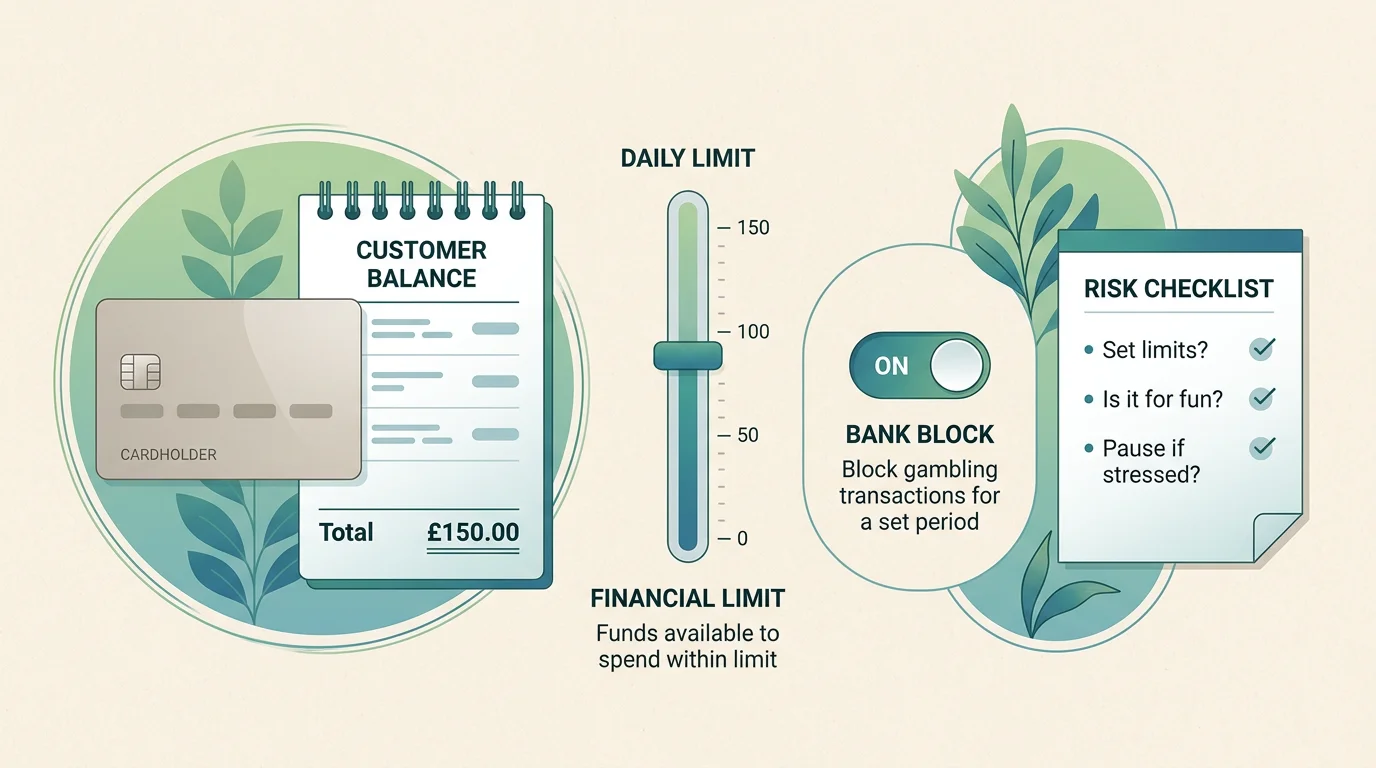
- Check a gambling site before depositing
- Understand ID checks and withdrawal complaints
- Use support if limits or blocks are under pressure
- Read bonus terms before risking money
The payment boundary in Great Britain
Credit-card gambling is banned in Great Britain for covered gambling, and the boundary also covers e-wallet routes where credit-card funds would be used for gambling. Treat that as a protection rule, not a puzzle to solve. If you are looking for a way to route money around a credit-card block or a bank gambling block, the safer answer is to strengthen the barrier and use support routes.
Covered remote casino, bingo and betting licensees must use payment methods involving payment service providers under the payment-services rules. That matters because a payment route is not just a convenience feature. It is part of the regulated account environment. A site that is vague about payment handling, asks for unusual transfers, or pushes a user toward unclear alternatives should not be treated as normal simply because it is willing to accept money.
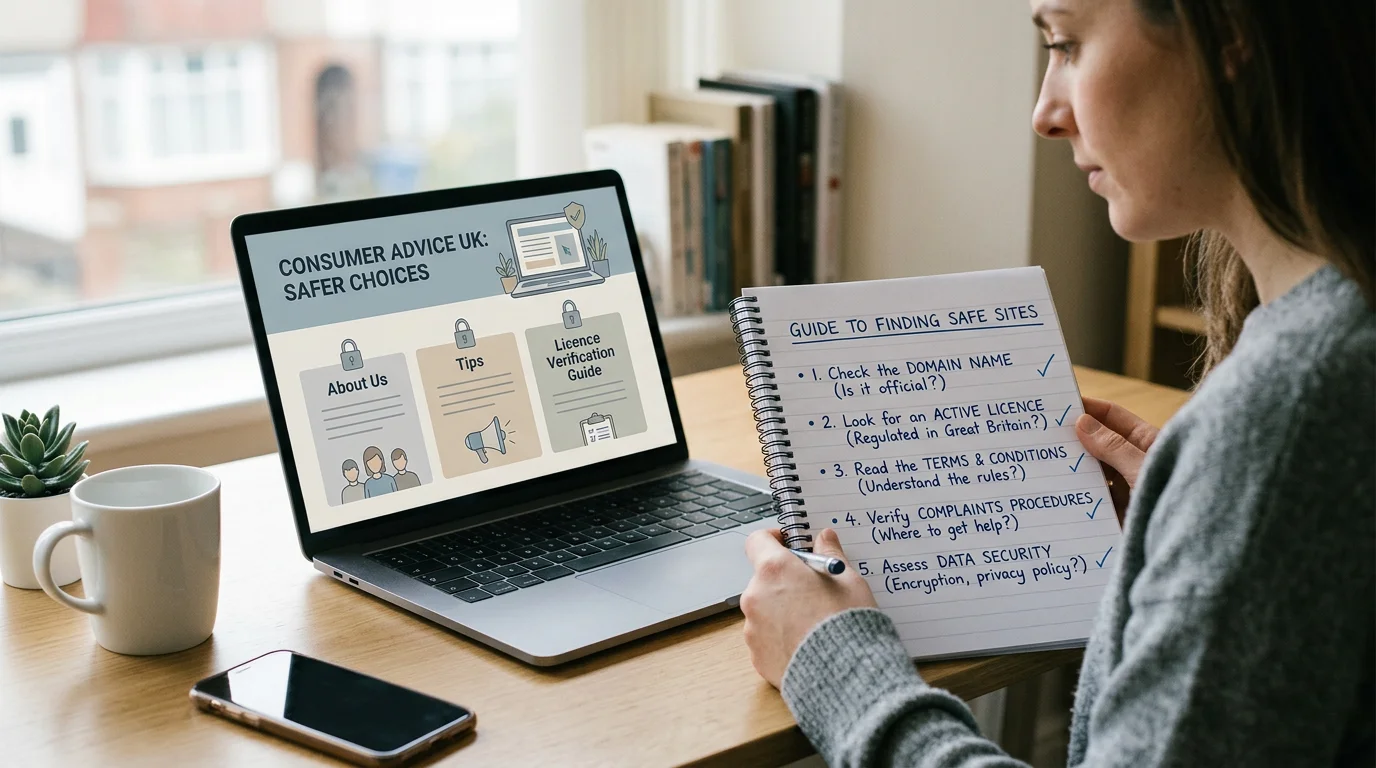
Do not judge a site by the number of payment logos shown on a page. Logos can be outdated, copied or misunderstood. The more useful check is whether the business itself can be matched, whether the account terms explain deposits and withdrawals clearly, and whether the payment flow makes sense for the account you are opening. If those basic points are unclear, pause before you deposit.
Payments, customer funds and limits — More on this topic at casino not on gamstop.
Customer funds are not the same as a guarantee
Customer-fund information tells you how the business says customer balances are protected if the business fails. The applicable customer-fund protection rating must be clear in terms and conditions. This is a check worth doing before depositing, because a balance on a gambling account is not the same as cash held in your own bank account.
Read the wording carefully. The point is not to turn a rating into a promise that every outcome is safe. The point is to understand what the business is saying about account balances, where that statement appears, and whether it is clear enough for an ordinary customer to understand. If the terms bury the information, use confusing language or make broad comfort claims without clear detail, treat that as a practical warning sign.
Customer-fund information also belongs next to other checks. A clear rating does not tell you that a promotion is fair, that a withdrawal will be smooth, or that gambling is affordable for you. It only answers one money-protection question. Combine it with the licence check, the withdrawal terms, the complaint route and your own financial limits before making a decision.
Comparison table: what each money check does
| Check | What it protects against | What it does not prove | Where to look |
|---|---|---|---|
| Credit-card boundary | Using borrowed card money for covered gambling in Great Britain. | That another payment route is sensible, affordable or safe for you. | Payment terms and the actual payment flow, with no attempt to route around the rule. |
| Payment-service route | Unclear or informal payment handling on covered remote gambling accounts. | That the site is good value, honest in every term, or quick to pay out. | The business identity, account terms and payment process before deposit. |
| Customer-fund rating | Misunderstanding what may happen to account balances if the business fails. | That balances are fully protected in every circumstance. | The customer-fund information in terms and conditions. |
| Financial-limit tools | Depositing more than you meant to or losing track of account-level spend. | That gambling becomes risk-free once a limit is set. | Account controls before the first deposit and whenever gambling patterns change. |
| Bank gambling block | Impulsive card payments and repeated attempts to gamble through a bank account. | That every gambling route is blocked automatically. | Your bank or card provider, then the support page if the urge to bypass it appears. |
Financial limits should be used before pressure builds
Financial-limit tools must be available for licensed remote systems. Since 31 October 2025, customers must be prompted to set a financial limit before the first deposit. That prompt should not be treated as a box-ticking annoyance. A limit is most useful when it is set before a loss, a bonus offer or a withdrawal delay changes the way you make decisions.
A practical limit is clear, affordable and separate from hopes about winning. It should not be based on a planned recovery, a promotion you expect to complete, or money that is needed for rent, bills, food, travel or debt payments. If setting a low limit feels impossible, or if you keep raising limits after losses, that is not just a settings problem. It may be a sign that stronger barriers and support are needed.
Limits also need to be understood alongside bonuses. A promotion can make a deposit feel less risky than it is. Before accepting any offer, read the eligibility rules, wagering requirements, time limits and withdrawal restrictions. The bonus page explains that part in more detail; this page stays focused on the money controls around the account.
Bank blocks and blocking tools
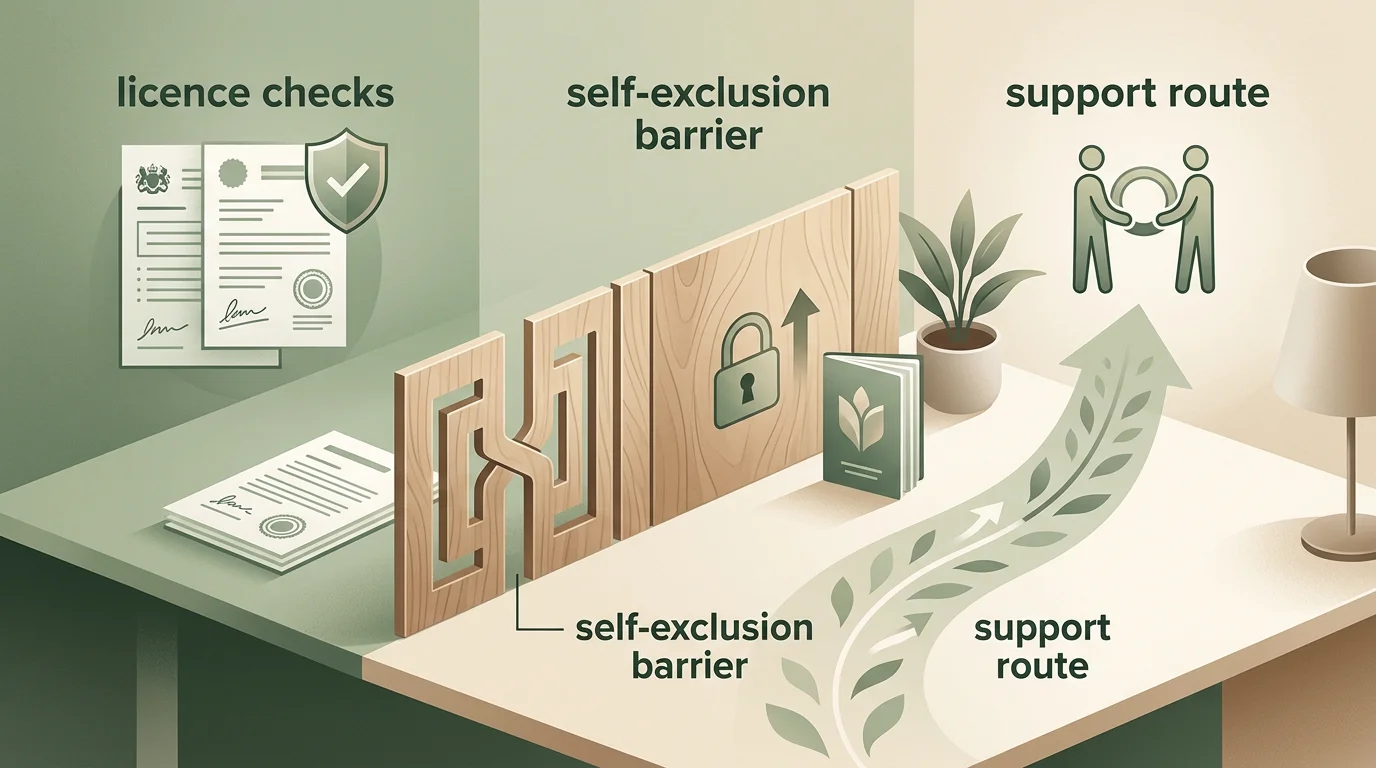
Bank gambling blocks, website or app blocking and self-exclusion can create extra barriers to gambling. They are especially useful when the problem is not a lack of information but a repeated urge to deposit. A block is not a personal failure. It is a practical friction point that can slow down a decision long enough to make support possible.
If a bank block is already active, do not look for ways around it. The block exists to create distance between the urge and the transaction. If a site or advert encourages you to bypass a payment control, treat that as a serious warning sign. A business that benefits from weakened barriers is not acting in your interest.
Blocking tools work best in layers. A person may combine self-exclusion, bank gambling blocks, website or app blocking, lower account limits and support from a helpline or treatment route. No single tool has to be perfect to be useful. The aim is to reduce the number of moments where gambling can happen automatically.
See also When gambling feels hard to control.
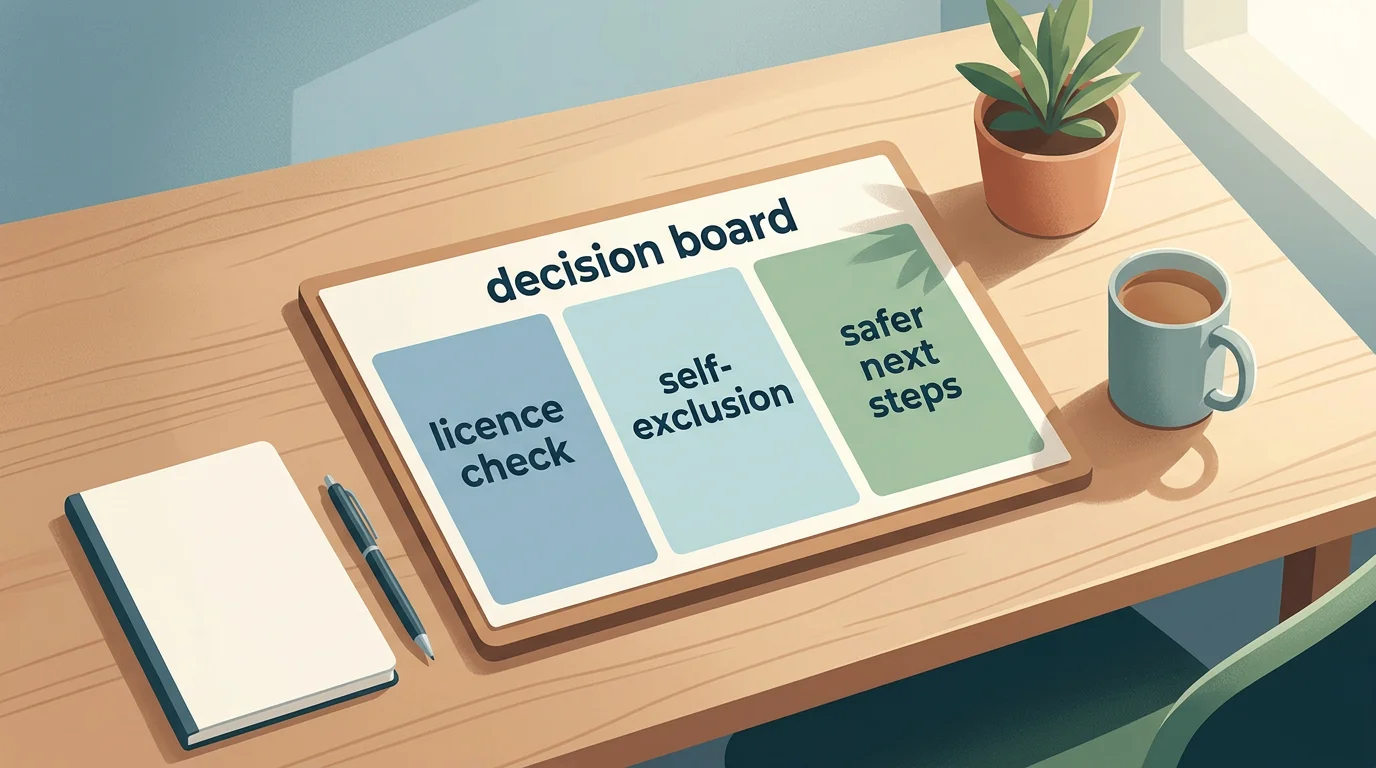
Before you deposit: a money checklist
- Match the site and business through official checks before sending money.
- Read the payment and withdrawal terms, not only the deposit page.
- Find the customer-fund information and understand what it does and does not promise.
- Set a financial limit before the first deposit, and choose an amount that would not create pressure if lost.
- Do not use credit-card routes for covered gambling in Great Britain.
- Do not try to bypass bank blocks, card blocks, self-exclusion or account limits.
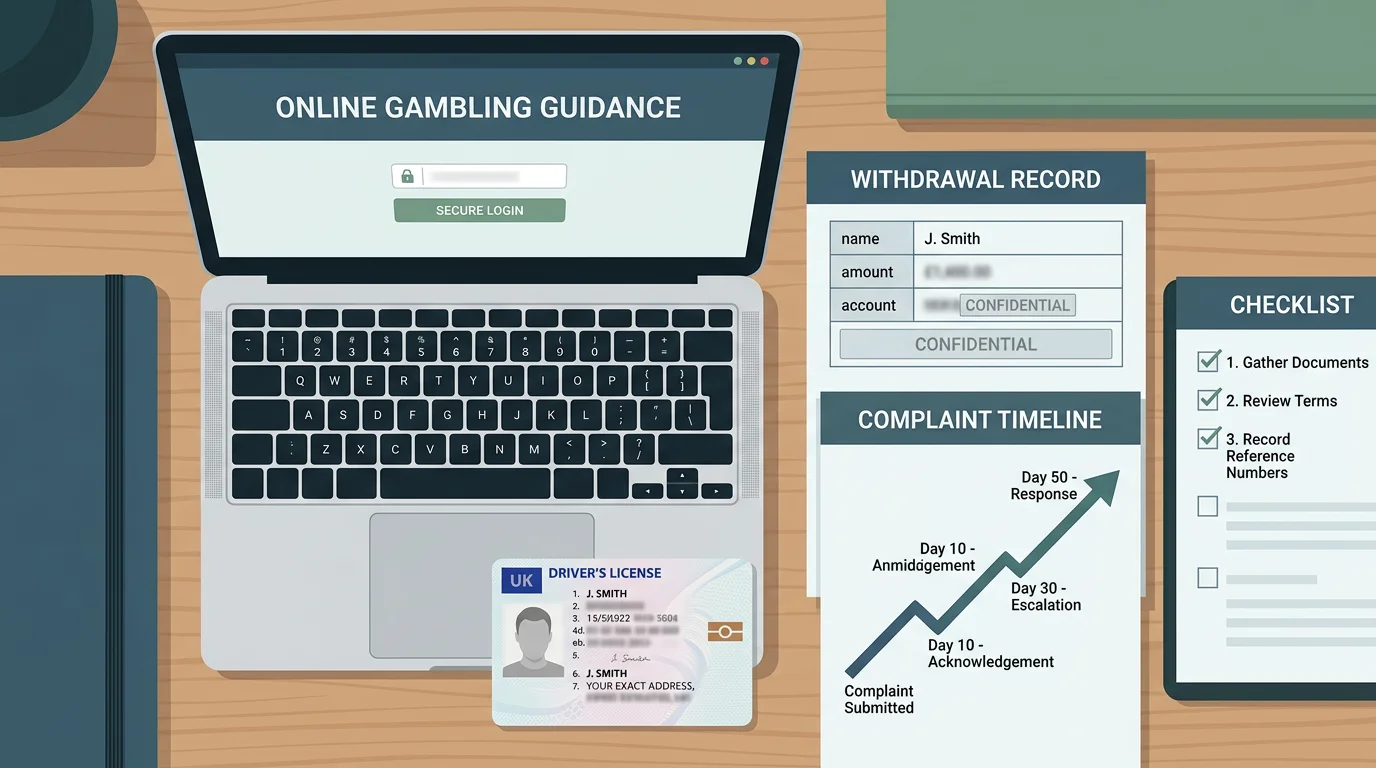
- Save a record of deposits, withdrawals, limits and account messages.
- Use the support page if money pressure, debt, chasing losses or repeated deposits are part of the situation.
Questions people often ask
Does a payment logo mean a gambling site is safe?
No. A logo may tell you that a payment option is being presented, but it does not replace the licence check, customer-fund information, terms, withdrawal rules or support safeguards.
Are customer funds guaranteed?
Do not assume that. Read the customer-fund protection information in the terms and treat it as one specific check, not a promise that every balance is fully safe in every situation.
What if I am trying to get around a block or limit?
Stop and use the support route. A block or limit is there to create protection. Looking for a workaround usually means the safer next step is stronger barriers, not another payment method.