
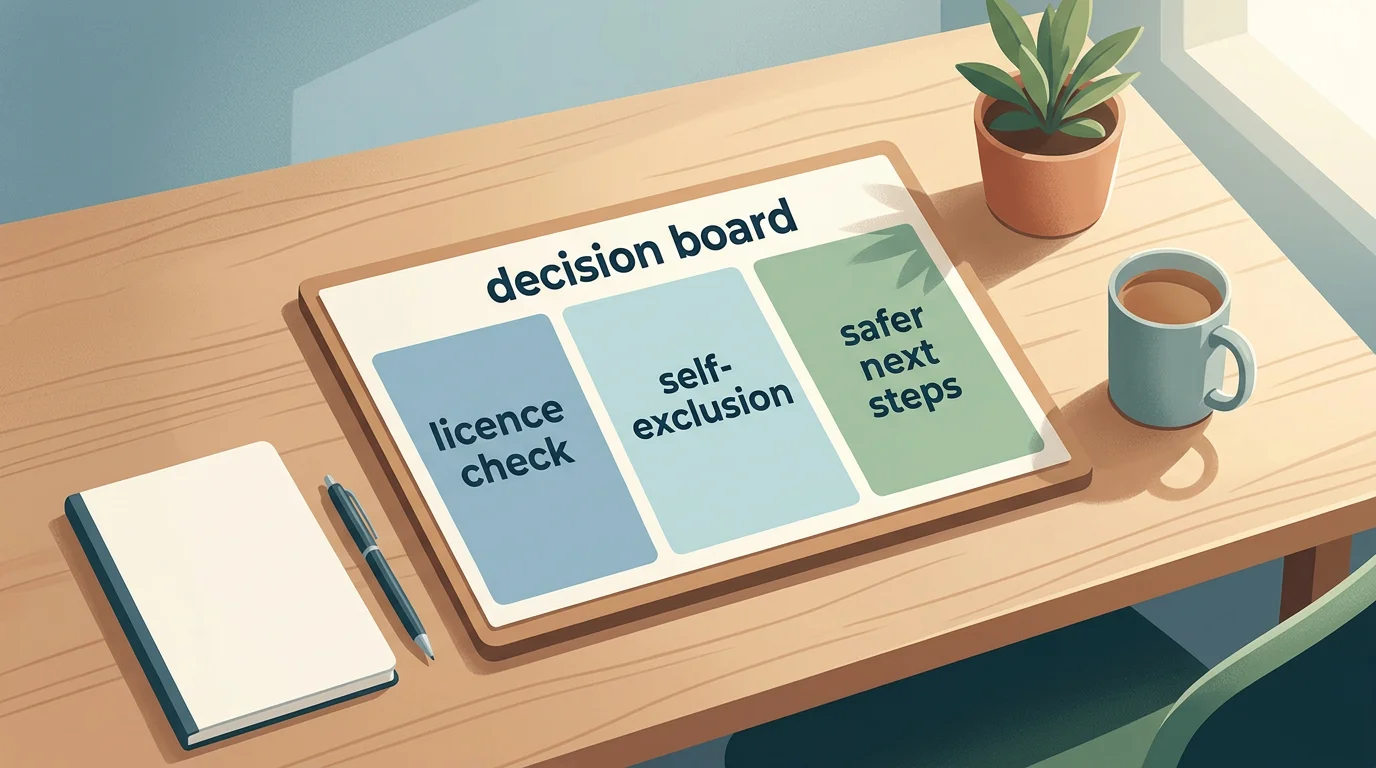
- Check a gambling site before depositing
- Understand payment, fund and limit checks
- Find support when gambling feels hard to control
The plain meaning
In everyday use, “not on GAMSTOP” usually points to an online gambling site that is outside the GAMSTOP self-exclusion system. Sometimes the claim is used because the business is not licensed by the Gambling Commission for Great Britain. Sometimes it is used loosely in advertising copy, review pages or forum discussions. Either way, the phrase should not be read as proof that a site is safer, more private, easier to withdraw from or more suitable for someone who is self-excluded.
For remote gambling aimed at Great Britain consumers, a Gambling Commission licence matters. The official position is that remote gambling businesses serving Great Britain consumers need a Gambling Commission licence, including businesses based abroad. Another-country licence does not by itself permit a business to offer gambling to Great Britain consumers. That is why a phrase that sounds like “outside the system” should make a reader pause and verify, not assume that the site is simply a different version of the same protection framework.
The difference is important because player-protection rules are not decorative. They affect self-exclusion, complaint routes, identity checks, customer-fund information and how a consumer can check who they are dealing with. A site can look polished and still leave unanswered questions about the legal identity behind it, the domain listed on official records, and the route available if a withdrawal or account dispute arises.
What “not on GAMSTOP” means for UK players — More on this topic at casino not on gamstop.
Why this matters if you have self-excluded
If you are looking at this phrase because a GAMSTOP exclusion is active, the safer interpretation is that the protection is doing the job it was chosen to do. GAMSTOP describes its service as a self-exclusion tool with selected duration options, and the minimum exclusion period is not framed as something that can be removed early. Trying to find an account outside that protection can turn a moment of frustration into a bigger money, health or relationship problem.
That does not mean the person searching is doing something wrong by asking questions. People often look for information when they are stressed, when an account is blocked, when they are chasing a loss, or when they feel embarrassed about admitting gambling has become difficult. A useful page should meet that moment clearly: do not turn the search into a route around a protective system. Use the moment to slow down, check official information, and consider support that reduces harm.
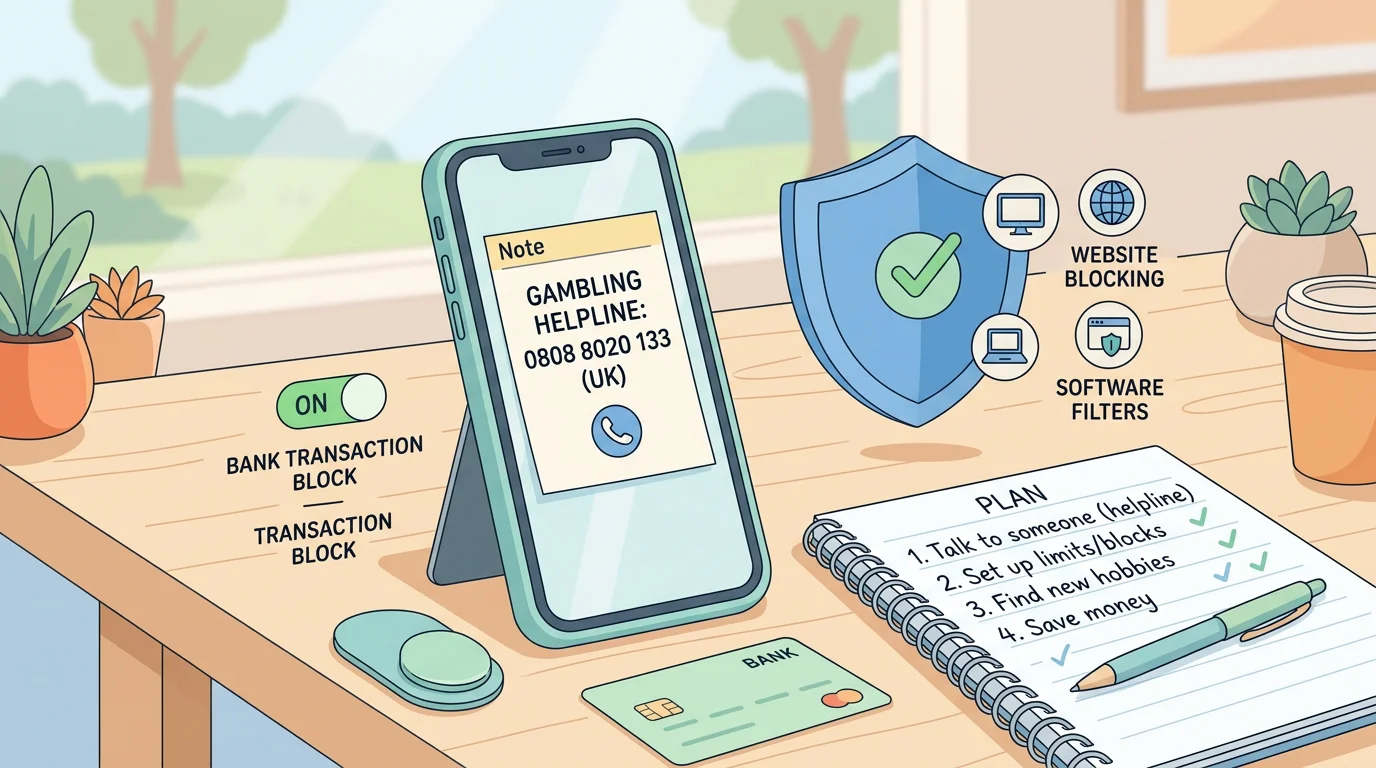
If the immediate reason is an urge to gamble, a debt pressure, a recent loss or a feeling that “one more deposit” will fix the problem, the most practical next step is not another account. It is to use support routes such as GAMSTOP, bank gambling blocks, blocking software, the National Gambling Helpline, NHS support or trusted money guidance. The right choice depends on the situation, but the direction is the same: keep the barrier in place and get help around it rather than trying to weaken it.
Risk map for common claims
| Phrase or claim seen | What it may imply | What to check | Safest next step |
|---|---|---|---|
| “Not on GAMSTOP” | The site may sit outside the expected self-exclusion framework for licensed remote operators. | Check whether the exact business, trading name and domain appear on the Gambling Commission public register. | Do not create an account until the official check is clear. If you are self-excluded, use support instead of opening a new route to gamble. |
| “Offshore licence” | A foreign licence is being used as a trust signal. | Check whether the business is licensed for Great Britain consumers. A licence from another country is not the same thing. | Treat the claim as incomplete unless it matches the Great Britain licensing position. |
| “No verification” | The site may be inviting the reader to ignore normal identity and account checks. | Check the account terms, withdrawal rules and identity requirements before paying or sending documents. | Avoid any site that makes unclear promises about avoiding checks, because the promise can collapse when money is already inside the account. |
| “Fast withdrawals for everyone” | A broad promise is being made before the reader has seen the terms. | Look for withdrawal conditions, identity checks, complaint routes and customer-fund information. | Save the terms before depositing, or do not proceed if the terms are missing or hard to understand. |
| “For excluded players” | The marketing may be aimed directly at people who have chosen a protective barrier. | Ask why the offer is aimed at that situation and whether it encourages a harmful return to gambling. | Step away from the offer and use a support route that protects the exclusion period. |
What this page can and cannot tell you
This page can explain the warning signs and the official checks that matter before you trust a gambling website. It cannot tell you that a named casino is safe, legal, generous or suitable. It also cannot make a legal judgement about a specific site without checking the exact current records. Names, domains and trading identities can change, and a logo or badge on a website is not enough by itself.
The important habit is to separate three different questions. First, is the business licensed for Great Britain consumers? Second, if it is licensed, what do its terms say about deposits, withdrawals, complaints and account checks? Third, if your interest is driven by self-exclusion, loss of control or financial pressure, is gambling at all the right next step? The third question matters even if the first two seem clear.
Someone who is simply trying to understand terminology may go next to an official-register check. Someone who is considering a deposit should read the terms, customer-fund information, privacy information and complaint route before giving money or documents. Someone who is trying to get around an active exclusion should treat that urge as a support signal, not as a shopping task.
How to respond without rushing
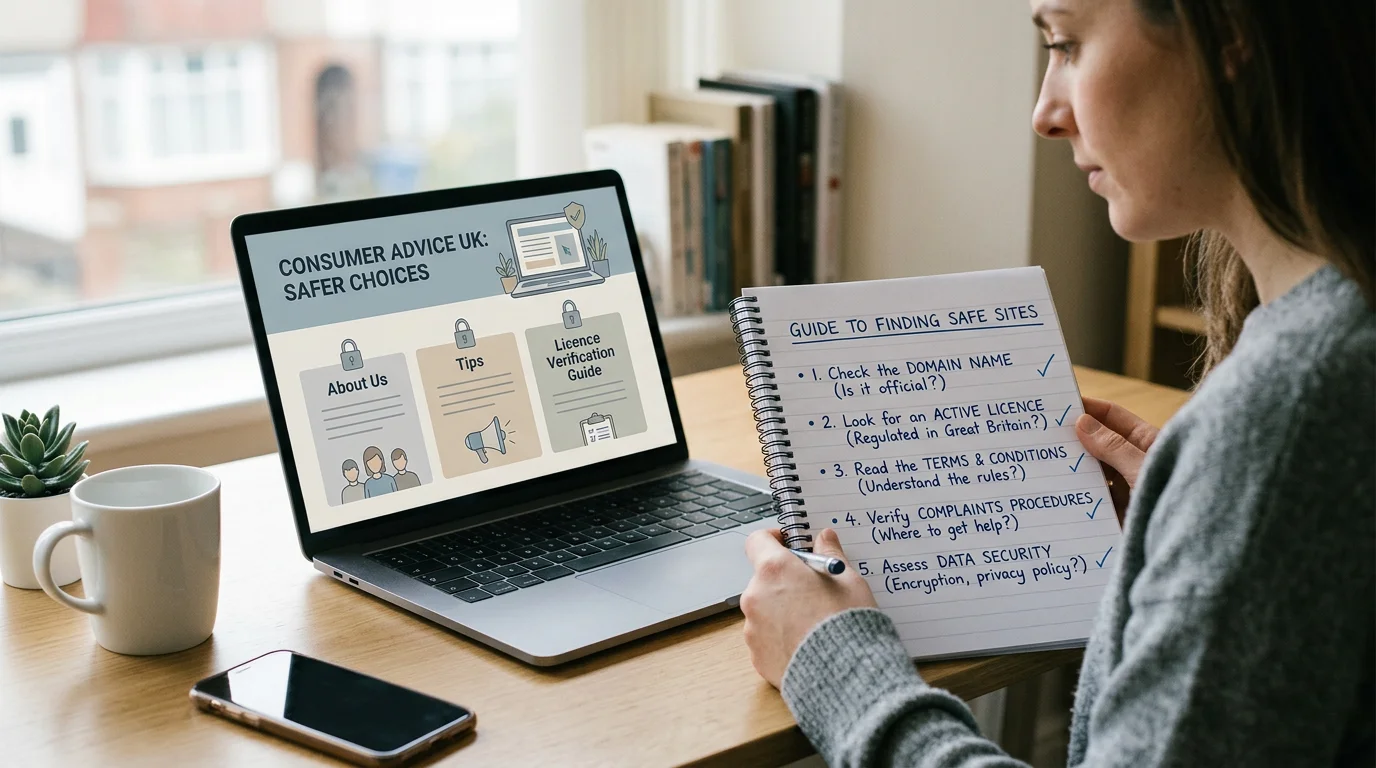
- Write down the exact domain. Do not rely on a shortened name, review-page label or copied logo. The exact domain matters when checking who is behind the site.
- Check the licence position. Use the official public register before accepting any claim that a business can serve Great Britain consumers.
- Read the account terms before paying. Look for withdrawal conditions, identity checks, complaint handling and customer-fund information. If these are missing or difficult to find, that is a practical warning sign.
- Notice the reason you are looking. If the reason is self-exclusion, chasing losses, debt pressure or feeling unable to stop, do not treat the phrase as a solution.
- Choose the safer route. That might mean leaving the site alone, using blocking tools, speaking with a support service, or asking your bank about gambling blocks.
None of these steps requires trusting a review badge or a sales page. They are basic checks that put control back with the reader. They also help avoid a common mistake: treating the lack of a protection as a benefit. In gambling, the absence of a barrier can be exactly the thing that increases risk.
When to move straight to support
Move straight to support if the main attraction is that a site may accept you despite a self-exclusion, a bank block or a previous attempt to stop. Also move to support if the money involved would affect rent, bills, debt repayments, food, family commitments or mental health. A gambling page cannot safely solve those pressures by pointing to another account.
Support does not have to begin with a dramatic step. It can begin by keeping GAMSTOP active, adding a bank gambling block, using blocking software, talking to someone trusted, or contacting a recognised gambling-support service. If debt is part of the pressure, money guidance can be more useful than any gambling decision. The aim is not to judge the person; it is to reduce the chance that a stressful moment becomes a larger loss.
Useful next pages
- Use an official-check sequence before depositing or sending ID.
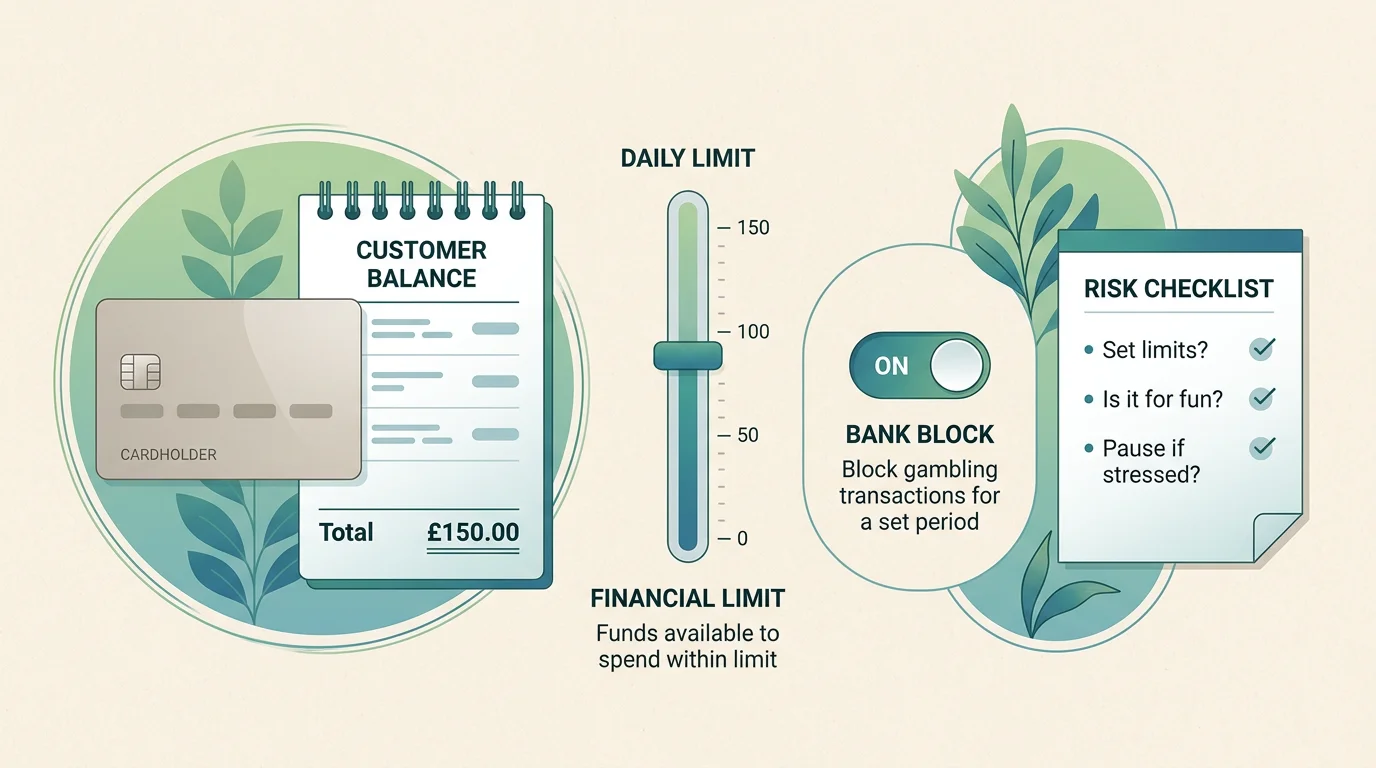
- Understand customer funds, payment boundaries and limit tools.
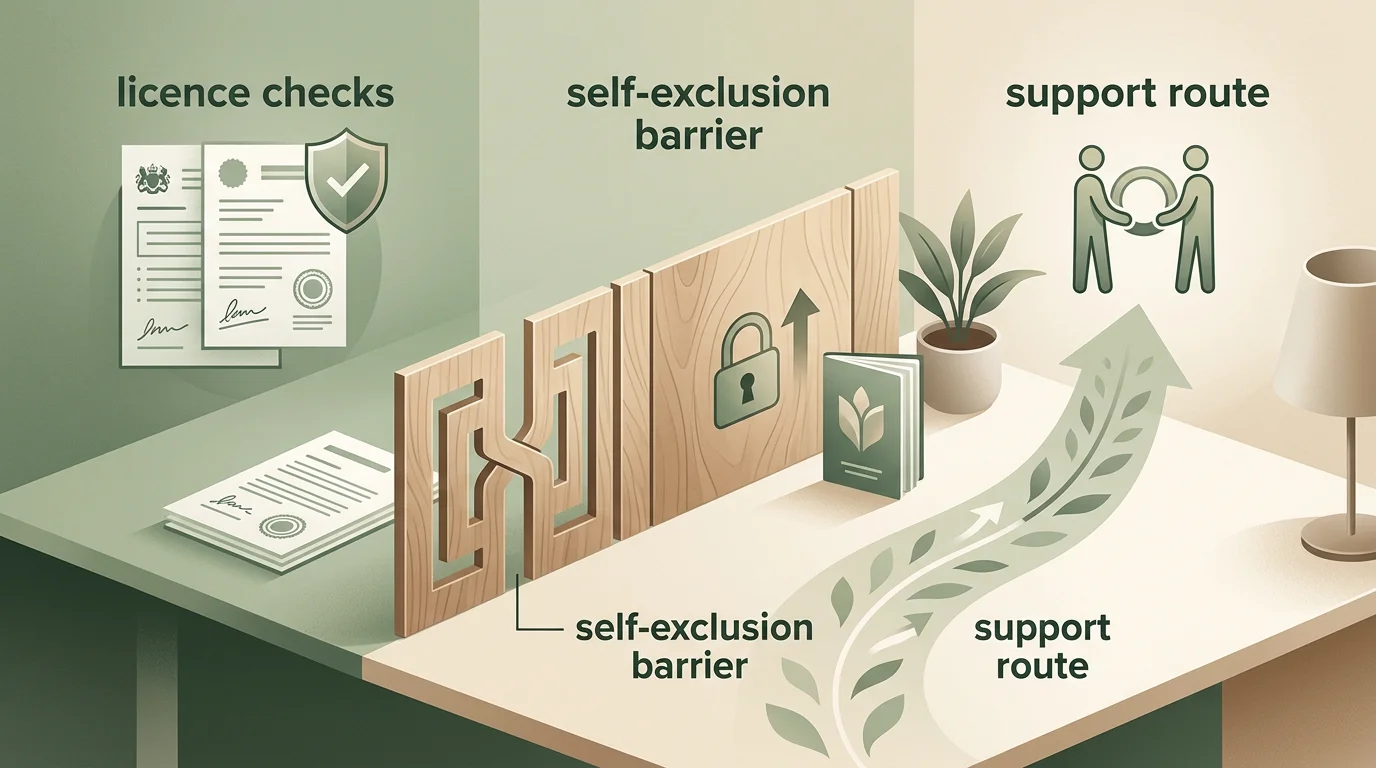
- Read the support route if gambling feels difficult to control.