Compare game formats, licensing, real-money and crypto options, randomness claims, and what can be checked before play.

How Casino Game Types Differ
Casino games can be grouped in more than one way. One label may describe how an outcome is generated; another may describe the equipment or setting used to play. A third distinction is about who you are competing against. These categories overlap, so treating them as one simple list can make different kinds of games seem more alike than they are.
A useful starting point is the source of the outcome. In a random-number game, selected numbers are generated by a computer or other gaming equipment. Those numbers determine an outcome or combination of outcomes under the game’s rules. The important point is that “random-number game” describes how the result is produced. It does not, by itself, say whether the game is presented on a machine, dealt at a table or played through another format.
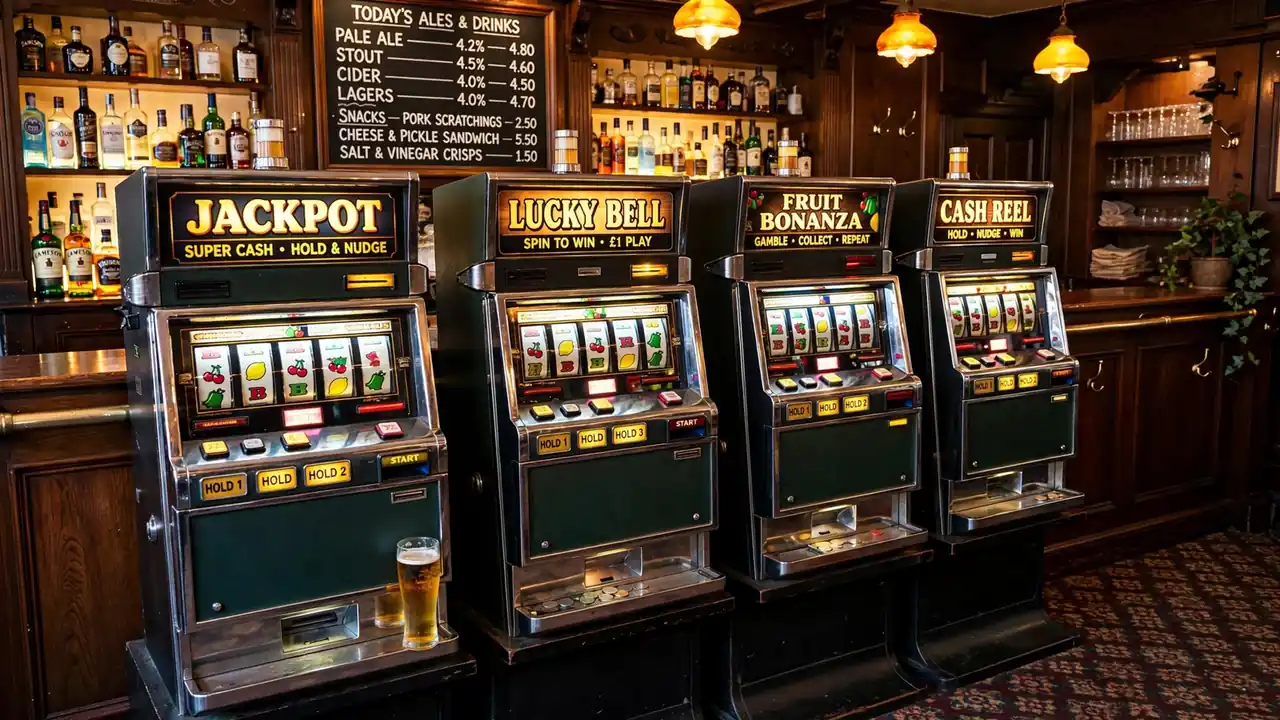
Gambling machines describe a different feature: the way a player interacts with the game. They are usually used by one player at a time and do not require a casino employee to operate them. A machine may use computer-generated results, but the category is not simply another name for random-number games. One label concerns the method used to produce results; the other concerns the equipment and the player’s interaction with it.
Table games are defined more by their setting and conduct. They are usually run by a croupier or dealer, and players compete against the casino rather than against one another. The dealer conducts the game, but that does not mean the dealer is the player’s opponent. The casino is the opposing side under the game’s structure. This differs from a machine game, where a player can generally take part without a casino employee being involved in each play.
Crazy Time live casino game show in the UK
These distinctions matter when you encounter a label such as “crash casino games”. The word “casino” identifies a broad gambling context, but it does not tell you whether a game uses a machine-like interface, a table arrangement, or a particular method of generating outcomes. Nor does it tell you whether players are competing with the casino or with each other. Those are separate questions, and the game’s rules and format determine the answers.
The opponent is a particularly useful way to separate casino games from games organised around competition between players. In a house game, the player’s result is settled against the casino’s position or rules. In a player-versus-player game, participants compete with one another instead. The casino can still earn revenue from the latter, but its role is different: in games such as poker, it usually earns a commission called a rake rather than acting as the player’s opponent.
Live Baccarat Online Casinos in the UK: What to Check
That difference changes what a result means. If the casino is the opponent, a player’s outcome is assessed against the house’s game structure. If players compete against each other, one player’s position may be affected by the others’ actions and results, while the casino takes its commission for facilitating the game. The presence of a casino venue or platform therefore does not automatically mean that every game is a contest between a player and the house.
The format also should not be confused with the type of decision a game asks you to make. In hi-lo, for example, a player predicts whether the next card will be high, low or the same. That describes the prediction involved, not whether the game is a table game or machine game, and not who ultimately provides the opposing side. To understand a game, you need to keep these dimensions separate: what decision you make, how an outcome is produced, how you interact with the game, and who you are playing against.
Online presentation can make these distinctions less visible. A screen may display a game without a physical machine, table or dealer in front of you. The appearance alone therefore cannot settle its category. Instead, look at the game’s rules and operation: whether a computer or other equipment generates selected random numbers, whether a dealer conducts play, and whether the rules set the casino or other players as your opponents. These are more informative than a broad label or visual style.
To understand a game, you need to keep these dimensions separate: what decision you make, how an outcome is produced, how you interact with the game, and who you are playing against.
For someone comparing casino crash games with other casino formats, the practical lesson is to avoid assuming that a shared setting means a shared structure. Two games may both be offered by a casino while differing in how they operate and whom the player faces. Conversely, two games that look different may share a feature such as computer-generated random numbers. Classifying each feature separately gives you a clearer account of what kind of game you are considering, without treating “machine”, “table”, “random-number” and “player competition” as interchangeable terms.
UKGC-Licensed and Offshore Casinos
A crash game’s presence on a casino site does not tell you whether the operator is authorised to serve customers in the UK. The key distinction is the operator’s regulatory position: a UKGC-licensed casino is within the UK Gambling Commission’s system, while an offshore casino operates outside it. A specialist market review described the 2026 online casino landscape as having these two parallel spaces. That description is a snapshot of the market, not a change to the legal requirement for operators targeting British customers.
For real-money gambling offered to customers in England, Scotland and Wales, the operator must hold a UKGC licence. The Gambling (Licensing and Advertising) Act 2014 established the requirement for operators wishing to take bets from British residents to be licensed. The operator’s location does not remove that obligation: selling gambling to customers in Great Britain requires the relevant UK licence. A website being available to visit, or accepting a registration from a UK player, is not the same as being authorised to provide gambling to that player.
Chicken Road Game Casinos in the UK: How Play Works
This distinction matters when you encounter crash casinos described as offshore or as non-GamStop sites. Such platforms may accept UK players, but they operate outside the UKGC system and do not hold a UKGC licence. Their willingness to take a UK customer does not make them UK-licensed. Nor does a reference to a licence from another jurisdiction establish that the operator has the authorisation required to serve customers in Great Britain.
The two descriptions therefore refer to different regulatory positions, not simply to different styles of website. A UKGC-licensed operator is subject to the British licensing framework for its covered gambling activity. An offshore operator accepting UK players remains outside that framework. The practical point is that access and authorisation are separate questions: a player may be able to reach an offshore site, while the operator still lacks the licence required to offer real-money gambling to people in Great Britain.
When reading about online crash casinos, keep the claim precise. “Accepts UK players” describes what the site permits or appears to permit; it does not establish that the operator is licensed here. “UK casino” may also be used loosely in promotional descriptions, so the phrase alone is not proof of UKGC status. The relevant distinction is whether the operator holds the UKGC licence required to serve customers in Great Britain. This is a market and licensing issue, separate from the rules or presentation of any individual crash game.
This licensing requirement concerns the operator, not a guarantee about a particular game or outcome. A casino’s regulatory status does not, by itself, explain how a crash title works, establish its fairness, or indicate what a player might win. Those are separate questions. For the market distinction, the decisive point is whether the business taking the bet is authorised under the UK system, rather than whether its site can be opened from a UK connection or whether it lists crash games.
Licensing
An offshore operator accepting UK players remains outside the British licensing framework. Accessing a site does not mean the operator is authorised to provide gambling to people in Great Britain.
Northern Ireland has a separate legal position from Great Britain, so the licensing statement above is specifically about customers in England, Scotland and Wales. In those parts of the UK, a foreign location does not exempt an operator from the UKGC requirement if it offers real-money gambling to local customers. An offshore casino can still accept UK players in practice, but that access should not be confused with permission to operate under a British licence.
What Changes When You Play Crash Games Online
An online casino moves the playing environment onto a website or app. You access the game through a connected device rather than attending a physical venue, and the casino account becomes the point where you manage both play and funds. Casino games are available online where the law permits them; the fact that a game is accessible through a screen does not, by itself, establish that every operator offering it may serve you.
The practical difference is that getting started involves two connected but separate processes: accessing the game and moving money into or out of your casino account. A deposit transfers funds from a payment method to that account. A withdrawal sends funds back through a method the operator accepts. The game’s availability and the payment route are therefore distinct questions. Being able to open a game does not tell you which payment methods are supported, or how long a transaction will take.
Open Banking and Faster Payments have made it easier to move funds between bank accounts and online casinos. These payment systems can reduce the steps involved in a transfer, but they do not make every deposit or withdrawal instantaneous. The payment route, the casino’s own handling of transactions and any checks it applies can all affect the time before money appears in the relevant account. A fast deposit also does not establish that a withdrawal will follow the same timetable.
Fast Payout Online Casinos in the UK: What to Know
Payment wording needs to be read precisely. “Instant deposit” describes the time a deposit may take to reach the casino account; it does not necessarily describe how quickly a withdrawal is processed. A specialist review reports that many platforms offer instant deposits and withdrawals that are completed within hours rather than days. Treat that as a report about the platforms covered by that review, not as a promise that every casino or every transaction will meet that timing. If a particular payment method or processing time matters to you, check the operator’s current information before transferring money.
The online setting also means you may see a balance update on screen before you can assume that money has moved through every part of the payment chain. The account display reflects the casino’s record of your funds; your bank or payment service maintains a separate record. If the two do not appear to match, the relevant details are the transaction status shown by the casino and the status shown by the payment provider. Do not infer a general withdrawal speed from how quickly a deposit appeared.
Do
- Check which methods the casino accepts for both deposits and withdrawals
- Confirm if a payment method is consistent with the operator’s rules
- Verify the transaction status with both the casino and your payment provider
Don’t
- Assume a fast deposit means a withdrawal will be just as quick
- Infer a general withdrawal speed from how quickly a deposit appeared
- Treat an account balance update as confirmation that money has moved through the entire payment chain
Before using an online crash game, consider the payment route as part of the wider account experience rather than as a feature of the game itself. Check which methods the casino accepts, whether the same method can be used for withdrawals, and what processing information it gives. On UK-licensed platforms, credit cards cannot be used to gamble. The payment option shown at the point of deposit should therefore be consistent with the rules applying to that operator.
These distinctions matter because online access combines game access with account and payment systems, but one does not determine the performance of the others. The game may load while a deposit is still pending; a deposit may arrive quickly while a withdrawal takes longer. Treating each step separately gives you a clearer picture of what online play involves, without assuming that the speed or availability of one part guarantees the same result elsewhere.
How to Assess Crash Casino Offers
A crash game offer is worth assessing by its conditions, not by its headline. A large-looking bonus does not tell you how much wagering it requires, which products count towards that requirement or whether the offer combines casino play with another form of gambling. Those details determine what you would have to do to meet the terms.
Start with the wagering requirement. This is the total amount of bets you must place before bonus funds, or winnings linked to them, can be withdrawn under the offer’s rules. Since 19 January 2026, the wagering requirement on gambling incentives cannot exceed 10 times the bonus funds. A specialist review of the rule change describes this cap; in practical terms, a £20 bonus at 10x requires £200 in total stakes. That figure is the amount wagered, not a promised loss or a guaranteed route to a withdrawal.
Check how the offer defines the bonus amount and which bets count. The displayed terms should make the requirement and its application clear enough for you to work out what the offer entails before accepting it. If the wording leaves you unable to tell what counts towards wagering, the headline alone cannot resolve that uncertainty.
Next, check whether the incentive is restricted to one gambling product type. A single offer cannot require you to gamble across different types, such as casino games and betting, to unlock its reward. A specialist review of the incentive rules describes this restriction. For a casino promotion, read the terms to see whether the qualifying activity is casino play or whether the offer attempts to attach another product to the same reward.
This distinction matters when a promotion is presented alongside a crash game. The presence of the game on a casino site does not show that bets on it count towards an offer’s wagering requirement. Only the displayed conditions can establish which activity is eligible. Do not assume that a game qualifies merely because it appears in the casino catalogue, or that activity on another product can be combined with it.
Wagering Example
Example: £200 total stakes = £20 bonus × 10x wagering requirement.
Read the full terms before opting in, rather than relying on a banner or short description. Look for the stated wagering requirement, what funds it applies to, the eligible gambling product and any conditions that affect whether the reward can be used or withdrawn. The offer should present its terms clearly and fairly. If an important condition is difficult to locate or its meaning is unclear, you do not have enough information to judge the promotion from its headline.
The same method applies whether you are comparing offers associated with a crash casino game, a slot-style game or another casino product. There is no useful “best” offer independent of its conditions: a bonus is only comparable once you know its wagering requirement and what activity is permitted. If two promotions use different terms, compare those terms directly instead of comparing their headline values alone.
An offer paid in a particular currency does not change the need to inspect its conditions. For example, a Bitcoin casino promotion still needs clear terms explaining its wagering requirement and eligible product. The payment method and the promotion rules are separate things; one does not tell you what the other requires.
Before accepting any casino incentive, use a simple test: can you identify the wagering requirement, understand how it applies, and confirm that the offer does not make you combine different gambling product types? If not, pause rather than treating the advertised bonus as a complete description. A clear set of conditions lets you assess what the offer asks of you; the headline cannot.
Crash Casino Games in the UK: What the Term Covers
“Crash casino game” is a label for a type of casino game, not a complete description of its rules. The phrase can help you identify the subject, but it does not by itself tell you how a particular game works, what outcomes are possible or how a round is presented. Those details depend on the game’s own rules.
Mines Casino Game in the UK: Demo Limits
The wider meaning of a casino game is more concrete: you stake cash or chips on possible random outcomes, or combinations of outcomes. A game described as a crash casino game belongs in that context when it is offered as casino gambling. The label does not change the basic nature of the activity: you are wagering on an outcome rather than simply watching a display or playing a game with no stake.
This distinction matters when you compare information about different titles. A shared name or category does not establish that two games have the same rules. Nor does it establish that a particular feature appears in every game described as a crash game. To understand an individual title, you need its own rules and game information; the category name alone is not enough.
The term also does not identify a particular casino, game provider or payment method. “Casinos with crash games” is a broad description, not a guarantee that a specific operator offers a particular title. Likewise, calling a site a crypto casino does not explain what crash games it carries or how any game behaves. Those are separate details to establish for the individual casino and game.
A “best crash casino” label is not meaningful without stated criteria. A ranking might refer to game availability, terms or some other feature, but the category name alone supplies no basis for comparing casinos. Treat claims about a named title or operator as claims that need their own supporting details, rather than assuming they follow from the phrase “crash casino”.
Defining Crash Games
A crash casino game is a casino game presented under the crash label, considered within the wider category of gambling on possible outcomes.
There is also a risk context common to casino gambling. The casino has a predictable long-term advantage, while a player may still have short-term gains. That general relationship does not predict the result of an individual play, and the words “crash game” do not make an outcome certain.
So, in this guide, “crash casino game” means a casino game presented under the crash label, considered within the wider category of gambling on possible outcomes. It is a useful way to describe the subject, but not a substitute for a game’s rules. Before treating two titles as alike—or assuming a casino offers the one you have in mind—look at the information attached to that specific game.
Our top casino picks for the UK
- DieselwinBonus: Welcome Pack 250% up to £4000 + 200 FS · Payout speed: 1-3 business days
- SpinFormulaBonus: 550% Up To £15,000 + 550 FS · Payout speed: 1-3 business days
- x3betBonus: Welcome Pack 100% Up to £1.000 + 200 Free Spins · Payout speed: 1-3 business days
- BeOnBetBonus: 100% up to €500 + 100 FS · Payout speed: 1-3 business days
- BritsinoBonus: Welcome Package – Get your £2,200 + 2,000 FS · Payout speed: 1-3 business days
- ChanzeBonus: Slots Welcome Bonus #1 200% up to €500 · Payout speed: 1-3 business days
- SlotoSportBonus: 500% up to £ 10 200+ 777 FS · Payout speed: 1-3 business days
- WinBeastBonus: €5000 + 500 FS + €650 Freebet · Payout speed: 1-3 business days
- Revery PlayBonus: 100% up to€1,000+ 100 FS · Payout speed: 1-3 business days
Playing for Real Money
When you play a crash casino game for real money, you put cash or chips at risk on possible outcomes. The stake is the amount exposed to the result of that play. If the outcome is favourable, you may gain; if it is not, you may lose what you staked. The possibility of a gain is real, but it does not remove the financial risk.
The important distinction is between an individual result and the pattern across continued play. A player can come out ahead in the short term, because casino games allow for short-term gains. That result does not show that the game will keep producing gains. Across play over time, casino games typically give the casino a predictable advantage. In practical terms, the game’s financial structure favours the casino over the long run, even though individual outcomes can vary.
Live Casino UK: How Online Tables Work
This means a winning session and a favourable long-term expectation are not the same thing. A short run of gains can occur within a game that still carries a long-term advantage for the casino. Equally, a loss in one session does not establish what the next result will be. Treating recent outcomes as a reliable guide to future ones can lead you to stake more than you intended.
A crash casino strategy cannot remove the underlying financial risk. Decisions about how much to stake may change how much money you expose, but they do not turn the casino’s long-term advantage into a player advantage. No approach to staking can make a possible outcome certain. The same distinction applies whether you describe the activity as real-money crash games or casino play with cash: the stake is at risk, and any gain is possible rather than assured.
Before placing a real-money stake, decide what amount you can afford to lose and do not treat potential winnings as money already earned. Keeping that boundary separate from the result matters because a win can encourage further play, while a loss can prompt an attempt to recover it. Neither reaction changes the structure of the game.
A free version, where available, would not involve the same financial exposure as staking cash or chips. Its outcomes should not be treated as evidence that real-money play will produce a particular result. For real-money online gambling in the UK, play is legal only with an operator holding the required UKGC licence.
Real Money Play
- Decide what amount you can afford to lose
- Separate potential winnings from money you have already earned
- Confirm the operator holds a required UKGC licence
Randomness, Providers and Fairness Claims
A casino game described as random-number based uses selected numbers generated by a computer or other gaming equipment. Those numbers form part of how the game produces outcomes. That general description does not, by itself, explain the specific process used by a particular crash game or show that its results can be independently checked.
The word “provider” identifies the company associated with supplying a game; it is not a fairness certificate. A provider name can help you identify who is behind a title, but the name alone does not establish how its outcomes are generated, whether the process has been examined independently, or what evidence supports a claim of fairness. Those are separate questions.
This distinction matters when you encounter a claim that a crash game is “provably fair”. The phrase implies that a player can verify something about the outcome-generation process, but the claim needs a defined method and evidence to mean more than a label. Without details of the method, what information is available for checking, and how a check is performed, the wording cannot establish that an individual game is verifiable. A claim about one game also should not automatically be extended to every title from the same provider.
Randomness and verifiability are related but not interchangeable. A game may use computer-generated random numbers, yet that description alone does not tell you whether a player can validate a particular result. Conversely, a fairness claim should be judged by the explanation and evidence attached to it, not simply by the presence of a provider name or technical-sounding terminology.
Fastest Payout Online Casinos in the UK: Claims Explained
When comparing statements about providers or provably fair crash games, separate three points: who supplies the title, what is said about how outcomes are generated, and what a player can actually verify. If a description does not explain the verification process, treat “provably fair” as an unsubstantiated assertion rather than proof. This approach avoids treating a general feature of random-number games as confirmation of a specific crash game’s design or fairness.
Crypto Payments on Alternative Platforms
A crypto casino offering crash games may present cryptocurrency and conventional payment methods side by side, but the available options depend on the platform. A specialist review reports that some alternative platforms accept Bitcoin, Ethereum and Litecoin, alongside cards and e-wallets. Treat that as a description of particular platforms, not a guarantee that every site supports those currencies or payment routes.
The payment method affects how you fund an account, but it does not change what the game is. If you are considering a crypto crash casino, first establish which currency the account uses and whether the platform accepts the specific asset you intend to send. The stated availability of a coin does not, by itself, explain how a transfer is processed or what conversion arrangements apply. Do not assume those details; look for the platform’s own payment terms before deciding whether to proceed.
Conventional options can include cards and e-wallets, according to the same specialist review. In Britain, however, UK-licensed operators cannot accept credit-card payments for gambling. A reference to “cards” does not tell you whether a particular card type is supported, so distinguish the payment method shown in the terms rather than treating all cards as interchangeable.
Regulatory Note
Operators selling remote gambling to people in Great Britain must hold a relevant UKGC licence, regardless of whether they are based in locations like Curaçao, Malta, or Gibraltar.
Some non-traditional platforms may hold a licence from Curaçao, Malta or Gibraltar. A foreign licence is not a UKGC licence: operators selling remote gambling to people in Great Britain must hold the relevant UKGC licence, regardless of where they are based. Cryptocurrency acceptance does not alter that requirement. A platform’s payment menu and its legal status are separate questions.
For a crash game using crypto, the practical comparison is therefore between the asset accepted, any conventional alternatives listed, and the operator’s applicable terms. Avoid inferring a payment speed, fee, exchange rate or withdrawal condition from the fact that a coin appears in a list. Those details need to be stated by the platform itself, and can differ between payment methods.
Trying a Crash Game in Demo Mode
A demo mode, when a casino offers one, is a way to try a game without staking cash. That distinction matters: casino gambling involves putting cash or chips at risk on possible outcomes, whereas a demonstration may let you interact with a game without making that kind of wager. The word “demo” alone does not establish what a particular version includes or whether a specific casino provides it.
Before using a crash-game demo, check what the operator means by the label. It may describe access to a game without real-money stakes, but you should not assume that its controls, available features or results match a cash-play version. A “free” label also does not tell you whether registration is required or whether the mode is available at that casino.
Most importantly, demo results are not evidence of what will happen when money is at stake. A sequence seen in a demonstration cannot tell you what a later sequence will be, or establish that cash play will reproduce the same outcomes. Treat it as an opportunity to inspect whatever the demo actually shows, not as a way to predict results or assess the chance of winning.
Casino Dice Games in the UK: How the Wagers Work
If you cannot find clear information about the mode, do not infer its features from the name. Check the game and operator’s displayed information, and distinguish between a no-stake demonstration and gambling with cash. A crash slot demo may sound like a standard feature, but availability and operation depend on the particular offering. The label is not a promise that every casino has one, nor a guarantee that it behaves in a particular way.
What You Can Establish Before You Play
Casino play has a basic structure: you stake cash or chips on a possible outcome, or on a combination of outcomes. The stake is put at risk because the result may not match the one you want. That description applies broadly to casino games, but it does not by itself explain the rules of a particular crash game.
Before playing, separate the general idea of gambling from the instructions for a specific title. The name “crash” does not tell you what choices the game offers, how a round ends, or how a stake is settled. Those details depend on the game’s rules. Read the instructions shown for the title you are considering, and make sure you understand what action places a stake and what determines the result before committing money.
This is also why a generic guide cannot substitute for the game’s own rules. Two games can share a broad label while differing in their controls and outcomes. Treat the displayed rules as the operating instructions for that particular game, rather than assuming that another casino’s version behaves identically.
In practical terms, you can establish that playing a crash casino game involves gambling on an outcome. To know what each control does, what ends a round, and how any result affects your stake, you need the rules for that specific game. If those rules are unclear, do not stake cash or chips until you can understand them.