A practical guide to sign-up details, verification triggers, bonus terms and the trade-offs of using crypto casinos in the UK.

What “Anonymous” Means at a Crypto Casino
“Anonymous” at a crypto casino usually describes what you are asked to provide when creating an account, not a promise that nobody can ever connect your play to you. A no-KYC casino may let you register with an email address or connect a cryptocurrency wallet, then deposit digital coins without uploading a passport or a utility bill during sign-up. The practical distinction is between opening an account with minimal personal information and completing the document-based identity checks associated with conventional registration.
The label can therefore be misleading if you read it as “no personal information exists anywhere.” An email address is an account identifier, and a wallet is an address used to send and receive cryptocurrency. Neither is the same as submitting a standard identity document, but neither makes the account literally information-free. In this context, “anonymous” generally means that the initial account process does not ask you to prove your identity with documents.
What you may need to open an account
A no-KYC registration commonly centres on one of two routes: entering an email address or connecting a wallet. The precise steps depend on the casino. With email registration, you use that address to create or access the account. With a wallet connection, the wallet becomes part of the way you interact with the site. In either case, the point is that registration may be possible without entering the personal details and providing the documents requested in a standard identity-check process.
That difference is easiest to understand by separating three stages: account creation, funding and play. A site may allow you to create an account with an email address or wallet, then accept cryptocurrency as a deposit. Once funds are available in the account, you can use them to wager on the casino’s games. UK players can wager in Bitcoin or other digital coins at offshore crypto casinos; the use of cryptocurrency is the payment method, while the reduced-document process is the registration feature.
These stages are related but not interchangeable. Connecting a wallet is not itself a deposit: it provides a way for the site and wallet to interact. A deposit is a transfer of cryptocurrency to fund play. Registering with an email address does not mean you have deposited, and depositing cryptocurrency does not mean you have supplied identity documents. Keeping these steps separate helps you understand what a casino means when it advertises a no-KYC sign-up.
Casinos That Accept Boku in the UK: Payment Guide
What the label does and does not describe
The word “anonymous” often compresses several different ideas into one. In practical use, it may refer to a short sign-up form, the absence of passport or utility-bill uploads at registration, and the ability to fund an account with cryptocurrency. Those are specific features you can look for in the registration and payment instructions. They are more precise than treating anonymity as an all-or-nothing quality.
A wallet address is not a name or a passport number. It is the address involved in a cryptocurrency transaction. But the fact that you can use a wallet without typing your legal name into a registration form does not change what the wallet is: a payment tool, not proof that play is untraceable or that no account information is involved. Likewise, an email-only sign-up removes some document requirements at the outset; it does not turn an email-based account into an account with no identifier.
The term also does not tell you which coins a casino accepts, how its games work, or what its other account conditions are. Those details need to be read separately. “Anonymous crypto casino” is a broad description of a registration and funding approach, not a complete specification of the service. Two sites using similar wording could still have different sign-up options and payment instructions.
For a UK reader, the most useful plain-English interpretation is this: a no-KYC casino may let you begin with an email address or wallet and use cryptocurrency without submitting standard identity documents at sign-up. That is the limited claim the label can support. It describes the information requested at the entry point, rather than establishing that every part of your interaction is anonymous.
When assessing the wording, focus on the actual sign-up steps. Does the form request an email, or does the site ask you to connect a wallet? Does the stated registration process require a passport or utility bill before you can create an account? Does the casino accept Bitcoin or another digital coin for funding? Answers to those questions give the phrase a concrete meaning. The label alone cannot answer them, and it should not be read as a guarantee of complete anonymity.
In this context, "anonymous" generally means that the initial account process does not ask you to prove your identity with documents, rather than a guarantee of total untraceability.
Our top casino picks for the UK
- DieselwinBonus: Welcome Pack 250% up to £4000 + 200 FS · Payout speed: 1-3 business days
- SpinFormulaBonus: 550% Up To £15,000 + 550 FS · Payout speed: 1-3 business days
- x3betBonus: Welcome Pack 100% Up to £1.000 + 200 Free Spins · Payout speed: 1-3 business days
- BeOnBetBonus: 100% up to €500 + 100 FS · Payout speed: 1-3 business days
- BritsinoBonus: Welcome Package – Get your £2,200 + 2,000 FS · Payout speed: 1-3 business days
- ChanzeBonus: Slots Welcome Bonus #1 200% up to €500 · Payout speed: 1-3 business days
- SlotoSportBonus: 500% up to £ 10 200+ 777 FS · Payout speed: 1-3 business days
- WinBeastBonus: €5000 + 500 FS + €650 Freebet · Payout speed: 1-3 business days
- Revery PlayBonus: 100% up to€1,000+ 100 FS · Payout speed: 1-3 business days
UK Access, Licensing and the Protection You Give Up
A website opening on your device does not establish that its operator is authorised to serve you. Access and licensing are separate questions: you may be able to visit an offshore crypto casino from the UK, but that does not place the casino under UK regulation or make it a legal UK-licensed operator.
The UK Gambling Commission regulates gambling, including online casino activity. For remote gambling offered to consumers in Great Britain, the operator’s location and the location of its equipment do not remove the licensing requirement. An operator targeting British customers must hold the relevant UKGC licence. In 2026, the Commission does not license or supervise casinos that accept cryptocurrency payments. A foreign licence therefore does not substitute for a UKGC licence.
Offshore crypto casinos accessible to UK players may operate under licences from Curaçao, Anjouan or Costa Rica. Those licences belong to different regulatory systems; they are not UK authorisations. A site may display a foreign licence and still operate outside UKGC oversight. The key distinction is not whether a licence is shown, but whether the operator holds the licence required to serve customers in Great Britain.
The legal positions of the operator and the individual player are also different. Operating a casino that targets British customers without a UKGC licence is illegal for the operator. For an individual player, visiting or playing at an unlicensed offshore casino is not a criminal offence. That does not make the site a lawful UK casino or give you the protections that apply when gambling with a UKGC-licensed operator. Check the laws that apply where you are before using a no-KYC Bitcoin casino; access from the UK should not be treated as permission in every location.
Casinos That Accept POLi in the UK: How to Check
What falls outside UK protection
If a dispute arises with an offshore operator, UK consumer law does not protect you in the way it does in a dispute with a UK-regulated gambling business. The site does not provide UK-backed consumer protection or formal UK dispute resolution. You cannot rely on access to a UK alternative dispute resolution service or an ombudsman through the UKGC system.
That matters if the operator refuses to pay winnings, closes an account or interprets its terms against you. A foreign licence does not give you a UK complaint route, and winnings are not guaranteed merely because a site advertises them. You may have to use a process set by the operator or the foreign regulator, if one is available. Its scope and effectiveness are not the same as UKGC oversight.
You also give up UK regulatory protections relating to how gambling businesses are supervised, including the safeguards associated with segregated customer funds. A UK licence does not guarantee that every dispute will be resolved in your favour, but it does place the operator within a defined UK regulatory framework. An offshore casino is outside that framework. If the operator does not respond, or its regulator does not resolve the complaint, you may have few practical ways to recover funds.
UK Regulation
Using an offshore casino means you operate outside the UKGC regulatory framework and give up UK-backed consumer protections and formal dispute resolution.
This is why descriptions such as “best anonymous online casinos” or “top anonymous Bitcoin casinos” cannot answer the licensing question. A list or ranking can describe what a site claims to offer, but it cannot turn a foreign licence into UK authorisation. Nor does the word “anonymous” change the operator’s obligations when it serves British customers.
Age checks and the choice involved
UK-licensed operators must verify a customer’s age before allowing a deposit into a gambling account. Online gambling is legal in the UK for players aged eighteen and over when the operator holds a UKGC licence. A site that allows access without the same UK regulatory framework should not be assumed to follow UK age-control requirements or to offer equivalent safeguards.
Choosing an offshore site therefore involves more than accepting a different payment method. You are choosing to gamble outside UKGC supervision, without UK-backed complaint handling, UK consumer protection or the protections of the UK regulatory system. The fact that a site accepts real-money play or can be reached from Britain does not reduce those risks. Decide only after checking the law applicable to you and understanding that, if something goes wrong, UK regulatory channels may not be available.
Anonymous Online Casinos: Where Privacy Has Limits
A no-KYC casino may let you create an account without uploading a passport or proof of address. That removes a document check from the initial process; it does not make your activity invisible. An account can still be associated with information about your device, connection, wallet transactions and use of the site. “Anonymous” therefore describes a limited entry option, not a guarantee that nobody can identify or investigate you.
Casinos That Accept Giropay in the UK: What to Check
It helps to separate two ideas. Document-free registration means the casino does not ask for identity papers at that point. Anonymity would mean the operator cannot connect your activity to you. The first can be offered without the second. A casino still needs to manage accounts and transactions, and its systems may record signals even when you have not supplied your name.
One specialist review describes “soft KYC” checks that may include your location, IP address, browser and device fingerprints, on-chain tracing and withdrawal behaviour monitoring. These are ways of assessing activity without necessarily asking you to upload documents at sign-up. An IP address or device fingerprint, for instance, can help a service recognise a connection or device. On-chain tracing can examine the public transaction history associated with a cryptocurrency address. Such signals do not, by themselves, establish who you are; their significance depends on what the operator can connect them to and how it interprets them.
That distinction matters because a signal can link activity without proving a real-world identity. A casino might recognise that the same device or network has returned, or notice a pattern in transactions. Whether it can connect that pattern to a named person is a separate question. Do not treat the collection of technical data as proof that the operator knows your identity, but do not treat the absence of document submission as proof that it has no identifying information either.
The wallet is another part of the picture. A crypto address is not automatically a name, but transactions on a public blockchain can be examined and linked to other activity. If an address becomes associated with your identity elsewhere, its transaction history may offer a route to connect deposits or withdrawals with you. Using a different address does not, by itself, establish that activity cannot be linked; transaction patterns and other information may still be considered.
An absence of document submission at sign-up does not prove that an operator has no identifying information, as technical data and on-chain tracing can still be used.
Your behaviour on the account can also matter. A change in activity may lead a casino to review what is happening, even if the account began without a document check. A specialist review says some no-KYC casinos may request identification in cases involving a large withdrawal, suspected suspicious activity, or a move from cryptocurrency to fiat currency. Treat those as reported circumstances, not a universal rule: the point at which a particular operator asks for documents can depend on its own procedures and the situation.
Converting crypto to fiat also changes the privacy picture. If you use an exchange to turn cryptocurrency into ordinary currency, the exchange may require KYC checks at that withdrawal point. The casino’s sign-up process cannot remove checks imposed by a separate service handling the conversion. You should account for that before choosing a payment route rather than assuming that a no-document casino account makes the entire path private.
Nor does a request for identification mean the same thing in every case. It may be a request to confirm who controls an account or to review a transaction. The practical consequence is that you may have to provide personal information before the operator will continue with the activity under review. Read the casino’s terms and privacy information before depositing: look for what information it says it collects, when it can ask for documents, and what it may do if you do not respond. Do not assume that the phrase “no KYC” overrides those terms.
Casinos That Accept Maestro in the UK: Payment Guide
These limits apply to anonymous online casinos whether you access them from the UK or elsewhere. A specialist review’s description of technical monitoring does not establish that every operator uses every method, or that each signal will identify a player. It does show why a document-free account should not be confused with an untraceable one. Before using a no-KYC Bitcoin casino, check the laws that apply where you are and make your decision on the basis that privacy may be limited.
No-KYC Bitcoin Bonuses: What Can Trigger Verification
A no-KYC sign-up does not necessarily mean you can claim a bonus, play with it and withdraw any resulting balance without ever being asked for identification. Registration and later account checks are separate decisions. A casino may let you open an account with minimal details, then review the account when a particular transaction or activity raises a concern.
One specialist casino review has reported that some no-KYC casinos may request identity documents when a player seeks a large withdrawal, when activity appears suspicious, or when the player switches from cryptocurrency to fiat. This is a report about possible operator practices, not a rule that applies across the market. The operator’s terms and the circumstances of your account determine what it can request.
A bonus can make this distinction important because claiming an offer may lead to a balance that you later want to withdraw. The label “no verification” at registration does not establish that the casino will release every bonus-related withdrawal without checks. Before accepting an offer, look for the operator’s stated verification conditions and withdrawal rules. In particular, check whether the terms reserve the right to request documents before funds are paid. This is about when an identity check may arise, not whether the bonus conditions make wagering achievable.
Do
- Check the operator’s stated verification conditions
- Review the withdrawal rules for bonus funds
- Keep a copy of the terms accepted
Don’t
- Assume “no verification” applies to all withdrawals
- Treat instant withdrawals as a guarantee of no checks
- Ignore the separate KYC checks of currency exchanges
If the casino asks for documents, the request may affect the timing of a withdrawal while the operator reviews them. Do not treat an advertised instant withdrawal as proof that a payment will bypass account checks. The casino’s internal decision and the payment process are separate stages: a transaction cannot proceed until any required review is resolved.
There is also a separate identity checkpoint if you convert cryptocurrency into fiat through an exchange. The casino may not have asked for documents when you deposited or played, but the exchange can apply its own KYC procedures when you withdraw or convert funds. In that case, the account-level privacy offered by the casino does not carry through to the conversion.
A practical way to assess a bonus is to consider whether you would still accept it if the operator asked for identity documents before paying a withdrawal. If you would not provide them, the offer may leave you unable to access funds under the operator’s stated process. Read the verification clauses before opting in, and keep a copy of the terms that applied when you accepted the bonus. A no-KYC offer describes an entry route; it is not a promise that every later transaction will remain document-free.
No-Deposit Crypto Bonuses and the Terms That Shape Them
A no-deposit bonus can look like free playing funds, but its usable value depends on the rules attached to it. Before accepting an offer at a no-KYC casino, check what counts towards wagering, which games qualify and whether a maximum stake applies. These conditions can restrict how you play and whether bonus winnings become withdrawable.
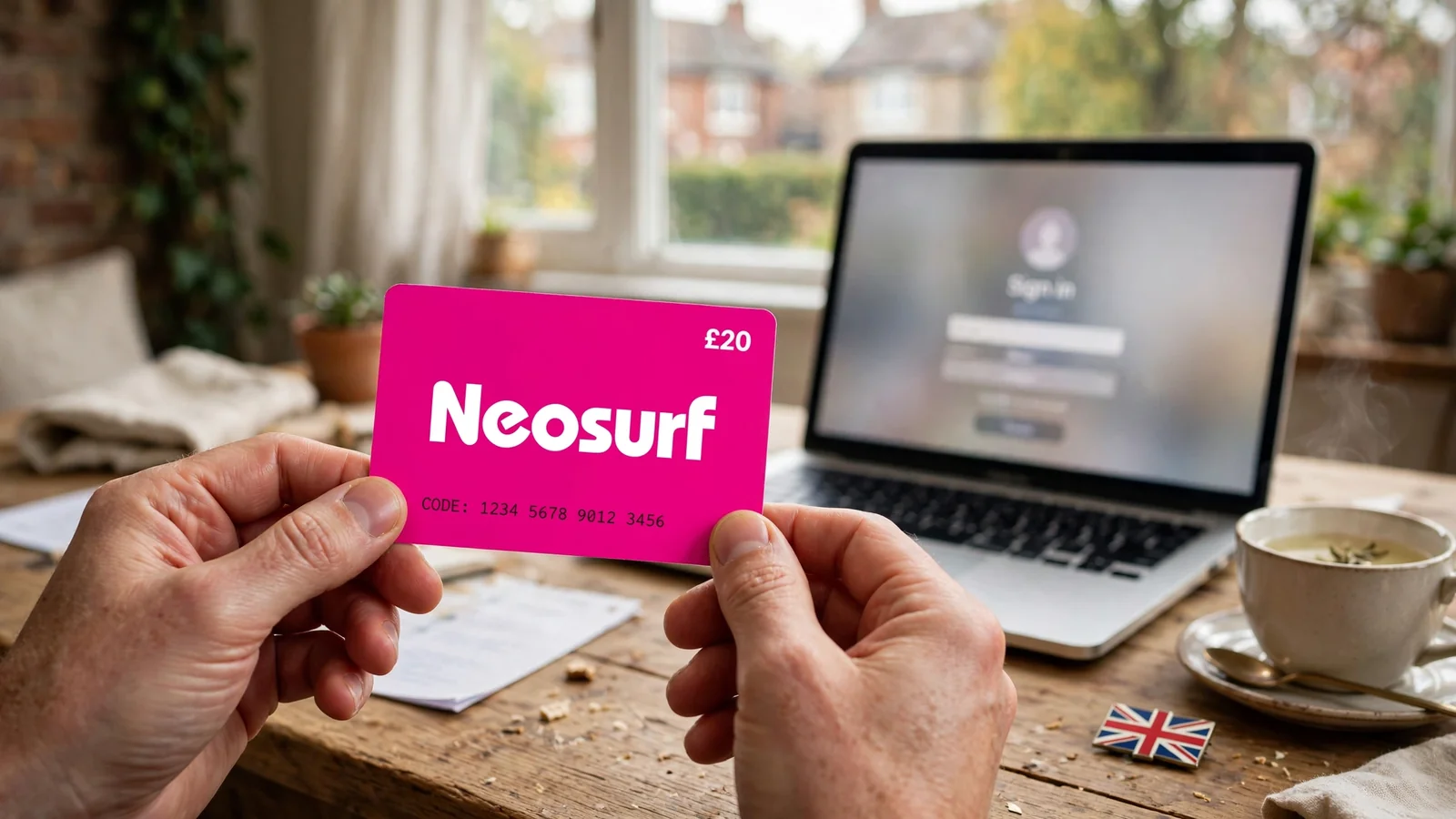
Casinos That Accept Neosurf in the UK: Payment Guide
Wagering requirements state how much qualifying play must be completed before a bonus, or winnings linked to it, can be withdrawn. A specialist review described requirements in the range of 35x to 50x the bonus amount at offshore crypto casinos. Treat that as a reported range, not a rule applying to every offer: the casino’s own terms determine the requirement for the specific bonus. Also check whether the calculation applies to the bonus alone or to the bonus plus any other amount. That distinction changes the total qualifying play required.
Game contribution matters too. A specialist review noted that some bonuses exclude live games from wagering. If a game is excluded, bets placed on it will not advance the requirement, even if the game is available in the casino. Other games may count differently, so read the eligible-games list rather than assuming every wager qualifies. If your preferred games contribute nothing, the bonus may be less useful than its headline value suggests.
Check the maximum-bet rule while wagering is active. A specialist review reported a bonus condition with a maximum bet as low as £5. That figure is an example of a reported term, not a standard limit across casinos. Exceeding an offer’s cap may breach its rules and put the bonus or related winnings at risk. The relevant limit is the one written in the terms for that promotion.
A no-deposit offer does not remove these conditions; it changes only whether you need to make a deposit to receive the bonus. Read the full terms before opting in, including any expiry condition, eligible games, stake cap and withdrawal restrictions. If the wording is unclear, ask the operator to explain it before playing. Keep a copy of the terms shown when you accept the offer, since promotional conditions can differ between bonuses.
No-Deposit Bonus
- Identify the total amount that must be wagered
- Confirm which specific games contribute to wagering
- Verify the maximum bet limit while wagering is active
- Check for any expiry conditions or withdrawal restrictions
The practical test is straightforward: identify the amount that must be wagered, confirm which games count, and make sure your intended bet size stays within the stated cap. If any condition makes the offer difficult to use, its advertised value may not reflect what you can realistically withdraw.
How to Assess a Bitcoin Casino Without Relying on a “Best” List
A ranked list can make different casinos look comparable when the criteria behind the ranking are unclear. Instead of treating a “best” label as evidence, assess the details that affect whether a particular no-KYC Bitcoin casino fits your needs. A list of sites is useful only as a starting point: each entry still needs to be checked on its own terms.
Start with the operator’s stated licence and the jurisdiction behind it. Offshore crypto casinos accessible to UK players may operate under licences from Curaçao, Anjouan or Costa Rica. That information describes the operator’s licensing context; it does not establish that the casino is suitable for you or provide UK-backed protection. Check that the licence claim is specific and consistent across the site’s information. If it is difficult to tell which company operates the casino or what licence it claims, treat that uncertainty as a reason to pause, not as a minor detail.
Next, look at the minimum deposit and the currency in which it is set. A specialist review has reported minimum deposits at offshore crypto casinos equivalent to around £10, but that figure is not a guarantee of what a particular casino will require. The amount can depend on the coin and its exchange value when you deposit. Confirm the live minimum on the operator’s own payment page before sending funds, and check whether the displayed amount is denominated in cryptocurrency or in a fiat equivalent.
Casinos That Accept Revolut UK: How to Check
Then compare the site’s stated features with what matters to you. If you want a no-KYC account, check how the operator describes registration and whether its terms qualify that claim. If you are comparing bonus offers, read their conditions rather than relying on a headline amount; wagering rules, game exclusions and bet restrictions can change the offer’s practical value.
Finally, check your own position before using an offshore service. UK players can access these casinos, but access alone does not show that an operator is authorised to serve British customers. Check the local laws that apply to you and consider what protections you would be giving up. A site’s presence on a recommendation list, a named licence or a low deposit threshold is not, by itself, a reason to trust it with your money.
What an Anonymous Bitcoin Sign-Up Actually Requires
A no-KYC Bitcoin casino may offer two ways to open an account: enter an email address or connect a cryptocurrency wallet. The first creates a login tied to an inbox; the second uses the wallet connection as the point of entry. The exact fields and steps vary by operator, so neither route should be assumed to work identically across every site.
With email registration, you provide an address and use it to access the account. Some operators let you proceed without uploading a passport or utility bill at sign-up. A crypto deposit can then be made to the account, subject to the casino’s own instructions. “No KYC” describes that initial process; it does not mean every casino accepts every wallet or coin, or that an account can be opened with no information at all.
Email Registration
Create a login tied to an inbox, often allowing you to proceed without uploading a passport or utility bill at sign-up.
Wallet Connection
Use a cryptocurrency wallet as the point of entry, reducing the amount of personal information entered directly into a form.
UKGC Process
Requires full customer due diligence and age verification before any gambling transactions are permitted.
A wallet-based sign-up can reduce the amount of account information entered directly into a form. It does not make the wallet itself invisible: a transaction is associated with a blockchain address. Nor does connecting a wallet establish that the operator is suitable for you. Check the registration and payment instructions before sending funds, and make sure you understand which wallet and currency the site accepts.
The process is different at a UK-licensed operator. Those businesses must complete customer due diligence before allowing gambling transactions, and they must verify a customer’s age before permitting a deposit. An email address or wallet connection alone is therefore not a substitute for the checks required in that setting.
For you, the practical distinction is when information is requested and what the operator requires before play can begin. An email-led or wallet-led form may make the opening step lighter, while a licensed UK service has checks to complete before gambling transactions. Do not read a short sign-up form as proof that the whole account relationship will remain document-free. Registration is only the entry point; keep the casino’s stated requirements in mind before you deposit, and ensure your use of a no-KYC Bitcoin casino complies with local law.
How Long Anonymous Crypto Withdrawals Can Take
An advertised instant withdrawal describes only part of the journey. The casino must first approve and release the request; after that, the blockchain network has to confirm the transaction before the funds appear in your wallet. These are separate stages, so a quick casino decision does not guarantee that the full transfer will be immediate.
Casinos That Accept AstroPay in the UK: How to Check
A specialist review describes crypto withdrawals as being sent promptly once the casino’s internal review is complete, with that review taking under an hour at operators it considers trusted. Treat this as a reported experience, not a service standard: an operator can take longer, and the phrase “instant withdrawal” does not tell you how long its approval stage will last. The same review notes that a first withdrawal may be held for manual review for a few hours. That adds casino processing time before the network stage even begins.
Network timing depends on the coin and the number of confirmations the receiving service requires. The specialist review gives Bitcoin confirmation times of 10–30 minutes and says Litecoin confirmations can take a few minutes. Those figures describe network confirmation, not the casino’s approval time, and they are not guaranteed arrival deadlines. Network conditions and the receiving wallet’s requirements can affect when a transfer is treated as complete.
To judge an anonymous crypto casino instant withdrawal claim, look for a clear distinction between “approved,” “sent” and “confirmed.” If the site shows only that a request is pending, the casino may not yet have broadcast the transaction. If it supplies a transaction ID, you can check whether the transfer has been broadcast and whether confirmations are accumulating on the relevant blockchain. A transaction ID cannot explain a delay before broadcast, because the network has not yet received the payment.
When estimating arrival, add the casino’s review stage to the blockchain stage rather than treating either one as the whole process. A delay can therefore arise before the transaction is sent or after it reaches the network. Keep the withdrawal details and any transaction ID so you can identify which stage is taking time.
How long do crypto withdrawals take?
Approval time varies by operator, with some trusted sites reviewing requests in under an hour, while first withdrawals may take a few hours. Network confirmation then takes 10–30 minutes for Bitcoin and a few minutes for Litecoin.
What is the difference between “approved” and “confirmed”?
“Approved” means the casino has released the request; “confirmed” means the blockchain network has verified the transaction and funds appear in your wallet.
How can I track a withdrawal?
If the casino provides a transaction ID, you can use it to check if the transfer has been broadcast and if confirmations are accumulating on the blockchain.
When a Casino Can Still Ask You to Verify
“No KYC” describes an account’s entry conditions; it is not a promise that an operator will never ask who you are. A casino may let an account become active with limited information, then apply checks when a later action raises a concern. That distinction matters: being able to play without submitting documents at the outset does not settle what will be required to keep using the account.
A specialist review has described ID requests at some no-KYC casinos in connection with large withdrawals, suspected suspicious activity, or a switch from cryptocurrency to fiat. These are reported possibilities, not a universal rule. Each operator sets its own procedures, and the request may arise after account activity changes. If you convert crypto to fiat through an exchange, that exchange can also require identity checks at the point of withdrawal.
Monitoring does not always begin with a document request. A specialist review describes soft checks that may draw on your location, IP address, browser or device fingerprint, on-chain transaction history, and withdrawal behaviour. These signals can help an operator compare activity with the account’s previous pattern or assess whether funds and access appear consistent. A flag may lead to closer review; it does not, by itself, establish that a player has done anything wrong.
If a check is requested, read the operator’s terms and the specific message explaining what it needs and why. Check how the request affects account access and funds while the review is pending, and keep copies of relevant communications. Do not assume that sending one document will resolve every concern: the operator may seek further information if its stated process requires it.
Before using a no-KYC Bitcoin casino, check the laws that apply where you live. You should also treat “without verification” as a description of a possible sign-up experience, not a guarantee of permanent anonymity. Identity checks, monitoring, and the rules for converting crypto to fiat can all affect what happens after your account is active.
Bitcoin Deposits, Withdrawals and the Value You Receive
A crypto payment has two separate parts: the casino’s account entry and the coin network’s confirmation. You send Bitcoin or another digital coin to the address shown by an offshore casino. The casino can credit the deposit after it detects the transfer and applies its own confirmation rules. A payment that appears in your wallet is not necessarily available to wager immediately.
Network timing depends on the coin and current network conditions. One specialist review reports Bitcoin confirmations taking 10–30 minutes and Litecoin confirmations taking a few minutes; treat these as reported estimates, not guaranteed arrival times. Congestion or the casino’s required confirmation count can change when a deposit is credited. For a withdrawal, the casino first sends the transaction, then the receiving wallet waits for the relevant network to confirm it.
The amount you ultimately receive can also differ in value from the amount you sent. Cryptocurrency prices can fluctuate significantly against pounds. If the coin’s value changes between deposit and withdrawal, the same number of coins may represent a different amount in sterling. Check whether the casino displays balances and winnings in coin units, pounds, or both, and note when any conversion rate is applied.
If you convert a withdrawal into pounds through an exchange, that step brings KYC procedures back into the payment route. The casino may not have asked for identity documents at sign-up, but the exchange can require verification before allowing you to trade or withdraw fiat. Account for that distinction when deciding whether a crypto balance is usable for your needs.
Before sending funds, check the selected network and destination address carefully: a transaction sent through the wrong network or to an incorrect address may not reach the intended account. Confirm the casino’s accepted coins and payment instructions, and check that using an offshore no-KYC Bitcoin casino complies with local laws. A quick transfer does not remove price risk, network delay, or the separate conditions imposed by the casino and any exchange.
Are online Bitcoin casinos legal in the UK?
You do not commit a criminal offence by playing at an unlicensed offshore casino, but an operator targeting British customers must hold a UK Gambling Commission licence. The Commission does not license or supervise casinos that accept cryptocurrency.
Will I need to submit ID at a no KYC crypto casino?
You may be able to sign up with just an email address or a wallet, without submitting ID. A casino may still ask you for documents later, such as for a large withdrawal, suspected suspicious activity, or a switch from crypto to fiat.
What is a no KYC casino?
It is a casino that may let you register using an email address or connect a wallet without submitting standard identity documents at sign-up. That does not guarantee complete anonymity or rule out later verification.
Are no KYC casino sites legal?
You do not commit a criminal offence by visiting or playing at an offshore casino, but an operator targeting British customers without a UK Gambling Commission licence is acting illegally. Offshore sites do not provide UK-backed consumer protection or formal dispute resolution.
What cryptocurrencies do no KYC casinos accept?
You can wager using Bitcoin or other digital coins at offshore crypto casinos. The specific coins accepted vary by casino.