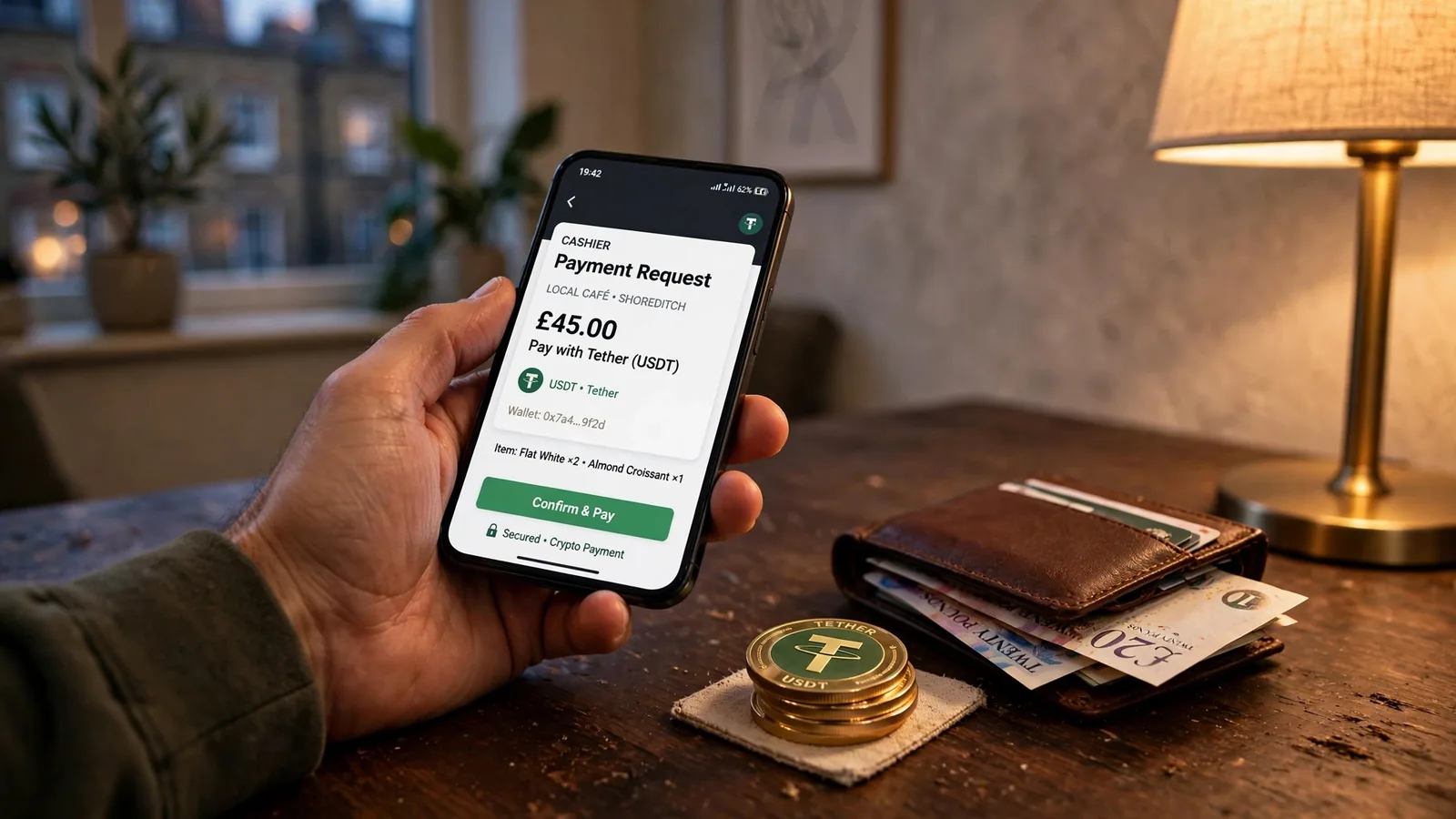
E-cheque availability can vary by account, so the cashier’s selectable deposit options are more reliable than a general payment list.
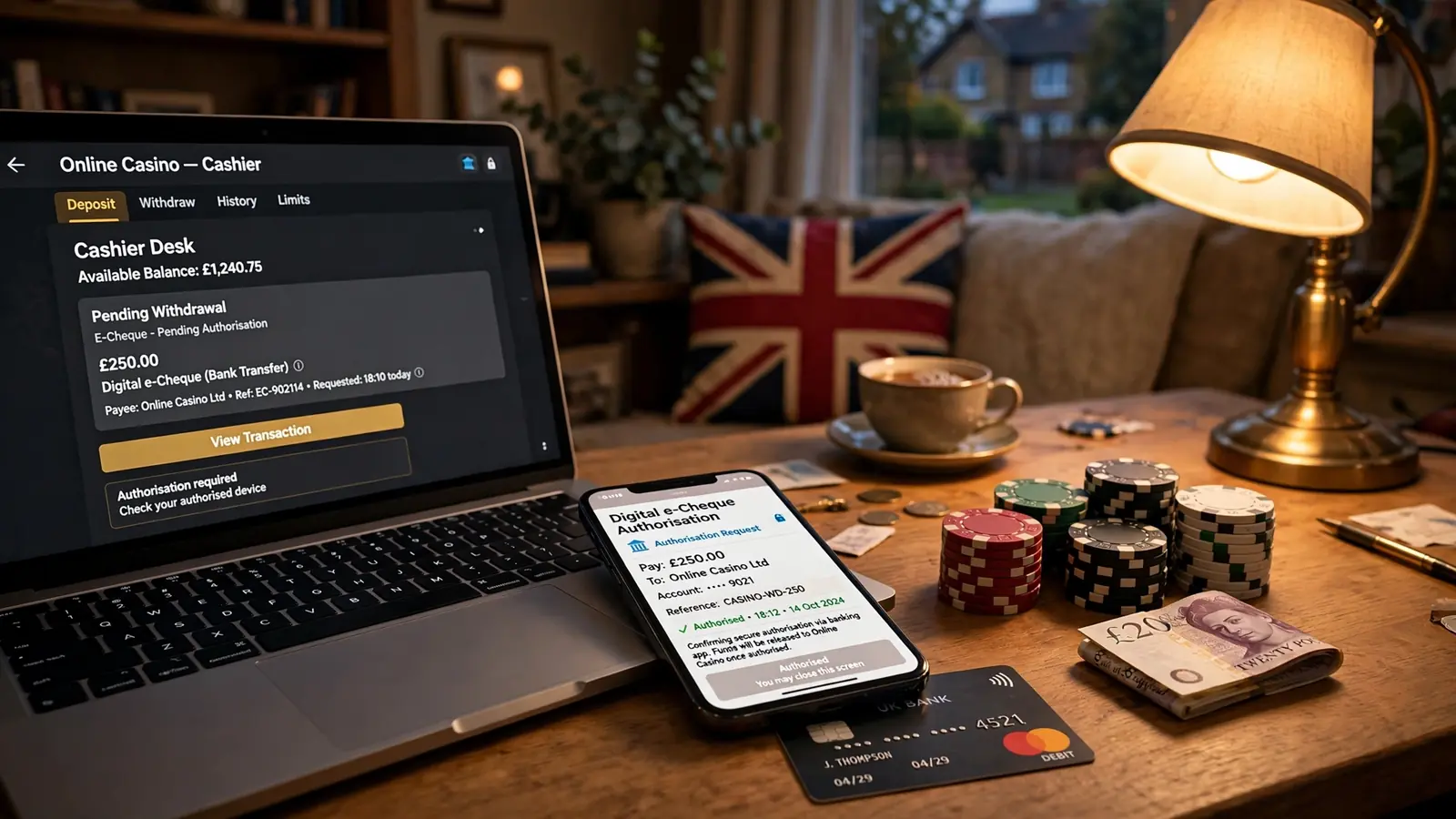
Check the Cashier Before Treating an E-cheque as Available
A casino’s general payment page is not enough to establish that you can deposit by e-cheque. Payment information may describe methods available in some markets, or present a broad overview that does not reflect the options enabled for your account. To confirm whether an e-cheque is actually available to you, check the deposit cashier after signing in.
This distinction matters when looking for UK casinos that accept e-cheques. A site can mention electronic cheques in general information without offering the method to every customer. Availability may depend on the operator’s current setup and the options displayed for your account. Unless e-cheque appears as a selectable method in the cashier, treat its availability as unconfirmed rather than assuming that a general payment list applies to you.
Why a general payment list can mislead
Payment pages serve different purposes. Some provide an overview of payment types the operator has discussed, while the cashier shows the options presented for a particular account at the time you are preparing a deposit. Those two views may not match. A general list can therefore be useful as a starting point, but it does not settle whether you can use a specific method.
The same caution applies to card information. A specialist casino review may list Visa and Mastercard, but that does not confirm current UK availability or whether your particular card product is eligible. Those details need to be checked in the cashier. The principle is the same for an e-cheque: a method being mentioned somewhere on a site is not proof that it is selectable for your account.
This is a check of availability, not a prediction about how a payment will work. Seeing e-cheque in the cashier tells you that the method is presented as an available deposit option at that point. It does not, by itself, explain the processing steps, what happens after you submit a deposit, or whether the method can be used for a later withdrawal. Those are separate questions.
Casinos That Accept Tether in the UK: Payment Checks
A practical availability check
Sign in to the casino account and open the cashier’s deposit area. Look for an e-cheque option among the methods displayed there. Read the accompanying label and any instructions shown before selecting it. If the method is absent, do not infer that it is available because it appears in a general payment overview, an old review, or information from another customer.
If the wording is unclear, contact the operator’s customer support and ask specifically whether e-cheque deposits are currently available to UK customers on your account. A precise question is more useful than asking whether the casino “accepts e-cheques” in general, because the answer should address the market and account you intend to use. If support confirms availability, check that the cashier reflects that answer before proceeding.
A casino may also change its displayed options over time. A page or review that you consulted earlier may not describe the cashier as it appears now. For that reason, repeat the check when you are ready to make a deposit rather than relying on a past description. The cashier is the relevant point of confirmation for the current transaction.
What the check does—and does not—confirm
For someone comparing online casinos that accept e-cheque deposits in the UK, use the cashier to establish whether the option is present, rather than treating an operator’s general payment information as a guarantee. You can record which accounts display the method, but avoid turning an unverified mention into a recommendation. A list labelled “best” would be misleading if it included casinos where the method is not actually available to the intended customer.
Keep the check narrow. At this stage, you are establishing whether the cashier offers e-cheque as a deposit choice. You are not determining the full transaction route, comparing what different methods can do, or calculating the total cost. Those questions require their own information and should not be answered by the mere presence of a payment logo or a line of text on a general page.
DO
- Check the deposit cashier after signing in to confirm availability.
- Contact customer support specifically about e-cheque availability for your account.
- Note which account or payment service you intend to use for consistency.
DON’T
- Assume a method is available based on a general payment list or old review.
- Treat a mention of e-cheque as proof it is selectable for your account.
- Rely on a past description rather than checking the cashier when ready to deposit.
If you cannot find e-cheque in the cashier and the operator does not clearly confirm that it is available to you, treat the method as unavailable for your present decision. That does not prove that no casino offers it; it means you do not yet have confirmation for that particular account. This careful distinction prevents a broad claim about payment support from being mistaken for a usable option.
Our top casino picks for the UK
- DieselwinBonus: Welcome Pack 250% up to £4000 + 200 FS · Payout speed: 1-3 business days
- SpinFormulaBonus: 550% Up To £15,000 + 550 FS · Payout speed: 1-3 business days
- x3betBonus: Welcome Pack 100% Up to £1.000 + 200 Free Spins · Payout speed: 1-3 business days
- BeOnBetBonus: 100% up to €500 + 100 FS · Payout speed: 1-3 business days
- BritsinoBonus: Welcome Package – Get your £2,200 + 2,000 FS · Payout speed: 1-3 business days
- ChanzeBonus: Slots Welcome Bonus #1 200% up to €500 · Payout speed: 1-3 business days
- SlotoSportBonus: 500% up to £ 10 200+ 777 FS · Payout speed: 1-3 business days
- WinBeastBonus: €5000 + 500 FS + €650 Freebet · Payout speed: 1-3 business days
- Revery PlayBonus: 100% up to€1,000+ 100 FS · Payout speed: 1-3 business days
How the Deposit and Withdrawal Route Affects Your Transaction
A payment route is easier to follow when the same named account is used for deposits and withdrawals. The casino’s transaction record, your payment-account history and your own notes then refer to a consistent route. If you change accounts or methods between transactions, you create more separate records to reconcile, even when every transaction is valid.
This is a practical point to consider when looking for an e-cheque casino in the UK. A page describing a payment method does not tell you how your own transactions would be organised, and using an e-cheque for a deposit does not by itself establish that the same route will be available for a withdrawal. The useful question here is narrower: if a route is available to you, can you keep it consistent and identify each movement of funds clearly?
Keep the route identifiable
Before making a deposit, note which account or payment service you intend to use and how it appears in the casino cashier. Use that same account for later transactions where the casino permits it. A payment method’s name may be recognisable, but the account or service attached to it is what helps distinguish one route from another.
EntroPay Casinos in the UK: Check Current Availability
Consistency reduces the number of moving parts in your records. If deposits come from one account and later transactions involve another, you may need to compare separate histories to understand what happened. That can make it harder to tell whether you are looking at a casino transaction, a payment-provider entry or a separate transfer between your own accounts. Keeping the route stable avoids introducing those extra links without a clear reason.
It also helps to record the transaction reference, date and amount shown in both relevant histories. These details give you a way to match entries when their descriptions differ. A casino may label a transaction differently from the wording used by a payment provider, so the reference and amount can be more useful than expecting the names to match exactly. Keep the records factual; do not assume that a pending entry, a completed entry and a casino balance update describe the same stage.
Know what a route change changes
Changing payment accounts can make a transaction trail less straightforward. For instance, if you deposit through one route and later select another for a withdrawal, you now have to track activity across both. That does not automatically mean something has gone wrong. It does mean that a single account history no longer gives you the complete picture.
The same applies if you move money between personal accounts before paying. The casino may show the payment it received, while your bank or payment-service history shows the earlier movement as a separate entry. If you are trying to review the route later, you will need to account for each step rather than treating the whole movement as one transaction.
A stable route is a record-keeping choice that makes the path easier for you to inspect, but it cannot override casino transaction controls or guarantee processing speed.
A stable route is therefore a record-keeping choice, not a promise about processing or an assurance that a casino will accept a particular method. It cannot make a payment method appear in the cashier, override the casino’s transaction controls or determine how quickly a transaction is handled. Its benefit is that it makes the path easier for you to inspect.
Apply the same check to e-cheques
An e-cheque reference can describe a payment category, but the label alone does not establish which account is involved or whether the route can be reused. If you see an e-cheque option, check the account details presented for the transaction and retain the confirmation. For a later transaction, compare the route shown in the cashier with the record you kept rather than assuming that the same label means the same account or arrangement.
Do not create a new route merely to make a transaction appear simpler. If you need to use a different account, keep a clear note of why the route changed and retain the records for both sides of the transaction. This makes it possible to distinguish a deliberate change from an unexplained entry. If a casino’s instructions do not make the available route clear, pause and seek clarification through its support channel before proceeding.
Casinos That Accept Bank Cheques in the UK
For an e-cheque online casino, the payment label is only one part of the decision. The more useful operational test is whether you can identify the account used, follow the transaction in the relevant records and keep the route consistent when the casino allows it. The cleanest route is often one named account used consistently for deposits and withdrawals. That approach makes your own transaction history easier to interpret, while leaving acceptance and transaction handling to the casino’s stated process.
Compare Payment Methods by What They Can Do
A payment method is not defined by a single function. For a casino transaction, the useful distinction is whether it can fund an account, receive a payout, or do both. A method displayed as a deposit choice does not, by that fact alone, establish that it can also be used to withdraw. Treat each function separately when comparing options.
Debit cards are a familiar deposit method at UK casinos. Visa and Mastercard are among the card brands commonly accepted. Their presence tells you that a card may be usable for funding, but it does not settle every question about the transaction. The casino may make a method available only to certain customers, and the cashier is where you can see which choices are currently offered to your account. Nor should the appearance of a card logo be read as proof that the same card route will be available for a payout.
Debit Cards
Visa and Mastercard are commonly accepted, but availability for both deposits and payouts must be checked in the cashier.
Bank-based Options
Open banking and bank transfers may support immediate deposits and quick withdrawals depending on the site.
Prepaid Vouchers
Services like Paysafecard are often used for deposits only and cannot be used for receiving withdrawals.
Bank-based options can have a broader role. A specialist review describes open banking and bank transfers as supporting immediate deposits and quick withdrawals at many sites. That is a report about what some sites offer, not a guarantee for every casino or every account. The important comparison is functional: a bank-based option may be presented for both directions, while a different method may appear only at deposit. Check the casino’s stated functions rather than assuming that all bank-linked services behave alike.
A prepaid voucher illustrates the distinction clearly. Paysafecard is used to put funds into an account, but it is deposit-only. It can therefore be a way to fund play without being a route for receiving a withdrawal. If you compare methods only by how easily they can be used to deposit, this limitation is easy to miss. The practical question is not simply whether a method is listed, but which part of the transaction it supports.
The same test matters when a cashier uses broad labels. “Bank transfer” and “open banking” may describe different processes, and a casino can present them as separate choices with separate functions. Read the specific option shown on the account rather than treating every bank-related label as interchangeable. If the cashier identifies a method for deposits but says nothing about withdrawals, do not infer payout support from its name.
E-cheque searches call for the same discipline. The term identifies the method someone is looking for; it does not, on its own, tell you whether a particular casino offers it, whether it is deposit-only, or whether it can receive withdrawals. Those are separate properties. A comparison that calls a site an e-cheque option without establishing the method’s role can leave out the most consequential detail: whether the method can do what you need at the point you need it.
A useful comparison can therefore be organised by function rather than by a headline ranking:
| Function to compare | What to establish |
|---|---|
| Deposits | Is the method available for adding funds to your casino account? |
| Withdrawals | Does the casino offer it for paying funds out, or is it deposit-only? |
| Both directions | Does the cashier or payment information confirm support for deposits and payouts? |
This does not rank casinos or identify a universal best method. It gives you a consistent way to compare what each option can do. A method that accepts deposits but cannot be used for payouts may still suit someone choosing only how to fund an account; it is not equivalent to a method that supports both directions. Conversely, a method described as capable of both functions at some sites should not be assumed to have that role everywhere.
When you assess an e-cheque option alongside cards, bank-based payments and vouchers, keep the comparison narrow and factual. Record the method’s stated deposit function and withdrawal function separately. If one is not confirmed, mark it as unconfirmed rather than filling the gap with an assumption based on the method’s name or on what another casino offers. That approach makes the comparison useful without turning a general payment description into a promise about a particular account.
Payment Comparison
- A method’s ability to fund an account does not guarantee it can be used for withdrawals.
- Always check the cashier for the specific functions (deposit vs. withdrawal) available to your account.
- Compare methods based on their actual roles rather than general labels.
Deposits, Withdrawals and the Return-to-Source Rule
A payment method that lets you fund a casino account does not necessarily provide a route for receiving a withdrawal. Depositing and paying out are separate stages, and a method’s role at the first stage does not establish what the casino can use at the second. This distinction matters when you are considering an e-cheque deposit: do not treat the ability to send funds as proof that winnings can be returned through the same service.
UK anti-money laundering controls generally require a payout to go back to the original payment source. This return-to-source approach helps the casino trace the movement of funds and reduces the risk that a gambling account is used to move money between unrelated people or accounts. In practice, the rule can constrain the available withdrawal route even when another method appears easier to use.
The path can be understood as a sequence. You make a deposit using a payment source; the casino records that transaction; and, when you request a withdrawal, the casino considers how the funds should be returned under its controls. If the original source can receive the payout, that may be the relevant route. If it cannot, the casino may need to establish an acceptable alternative and carry out further checks before releasing funds. An alternative should not be assumed to be available simply because it is listed as a deposit option.
Casinos That Accept MuchBetter in the UK
This is why an e-cheque casino deposit and an e-cheque withdrawal are two different claims. The first concerns whether a method can send money into an account. The second concerns whether the casino can use that method to return money, and whether its controls permit that route for your transaction. A label such as “e-cheque” alone does not settle either question; the operator’s instructions for deposits and withdrawals determine how the method is treated.
A deposit may also be only one part of the payment history relevant to a withdrawal. If the casino’s return-to-source controls require funds to go back through the original source, a different method used later should not be presumed to replace it. The practical result is that you may have less choice at payout than the deposit screen initially suggests. Where the original route cannot be used, expect the casino to explain what alternative it accepts and whether more checks are needed. Do not send funds through a different route on the assumption that this will make a later payout possible.
The requested withdrawal is not necessarily sent out as soon as you submit it. Processing includes the casino’s internal approval, and verification may still be under way. A specialist review notes that first withdrawals can take longer while those checks are completed; that timing is not a fixed promise for every account or payment route. The payment method’s own role comes after, or alongside, the operator’s decision to approve the request. A fast deposit therefore says little about when a withdrawal will be authorised or delivered.
Return-to-Source
UK anti-money laundering controls may require payouts to go back to the original payment source, which can limit your withdrawal options.
Before depositing, read the operator’s withdrawal instructions as well as its deposit information. Look for whether the method is deposit-only, whether payouts are directed back to the original source, and what happens if that source cannot receive them. If the wording does not explain the route, ask the operator before moving money. This is not a way to identify which casinos accept e-cheques; it is a way to avoid confusing an incoming payment facility with a complete deposit-and-withdrawal arrangement.
Payment Options You May Encounter Instead
A UK-facing casino cashier may show several payment categories besides an e-cheque. Their presence tells you what alternatives the operator lists; it does not establish that the casino accepts e-cheques. Payment menus vary between operators and can change, so treat each displayed method as a separate option rather than evidence about another one.
Debit cards are a familiar option: UK casinos commonly accept Visa and Mastercard debit cards. Some UKGC-licensed casinos also list Apple Pay for deposits. A card or digital wallet appearing in a general payment description does not, by itself, confirm that it is available for your account or that it supports both parts of a transaction.
Casinos That Accept Boku in the UK: Payment Guide
E-wallets are another category. PayPal is described as popular for speed and convenience in a specialist casino review, but that review also notes it may be excluded from bonus eligibility. Skrill and Neteller are available at some sites; a specialist review reports that they are often excluded from promotions. The same type of review identifies Skrill as a common deposit method at UK-friendly casinos in 2026. These are observations about particular reviews and changing operator offers, not guarantees that a named wallet will appear in a given cashier.
Prepaid vouchers work differently from bank-linked services. Paysafecard is deposit-only, so its presence should not be read as a route for receiving withdrawals. That distinction matters when you compare alternatives: a method can be available for adding funds without serving every payment purpose.
Bank transfers and open-banking services form another category. A specialist casino review describes them as capable of supporting instant deposits and fast withdrawals at many sites. The wording does not mean every operator offers the same service or processing conditions; check the cashier and the operator’s payment terms for the account you plan to use.
Some casino payment pages also mention cryptocurrency, but a category appearing in a general description is not confirmation that it is available to you. The same principle applies across the menu: cards, wallets, vouchers, bank-linked services and other listed methods are alternatives to investigate, not proof of e-cheque support.
Casinos That Accept Ethereum in the UK: What to Check
If you are specifically looking for an e-cheque casino in the UK, assess that option on its own terms. Do not infer availability from the presence of a bank transfer, an e-wallet or another familiar method. A list of alternatives can help you understand what else may be offered, but only the operator’s current cashier can confirm the choices presented for your account.
Deposit Amounts and Account Limits
A minimum deposit is a threshold for a particular payment method, not a standard amount that applies to every account. A specialist casino review puts the starting point at £10–£20, while noting that the figure depends on the method selected. Treat that range as an indication from the review, not as a promise that an e-cheque deposit will be accepted at either amount. The applicable minimum is the one shown for your account and chosen method when you prepare the transaction.
Deposit Readiness
- Check the minimum deposit threshold for your chosen method.
- Confirm if a maximum deposit limit applies to your account or transaction.
- Verify if the amount you intend to send complies with all stated limits.
The minimum can affect how you plan a deposit. If the amount you intend to send is below the displayed threshold, the payment may not be available for that transaction. If it is above the minimum, that still does not establish that the full amount will be accepted: a separate maximum may apply. Check the limits attached to the method before confirming, and do not assume that a figure shown for one option also applies to another.
Maximum deposits can be set per transaction, per day or per month. Their levels vary with the payment method and the status of your account, according to a specialist review. These are different constraints: a transaction may fit within the per-payment ceiling but exceed a daily or monthly cap once earlier deposits are counted. Where several caps apply, the tightest one determines what you can deposit at that point.
Account status can also affect the permitted maximum. A limit shown before an account is fully reviewed may not remain the same after its status changes, and an account-specific cap can differ from the general limit associated with a method. Read the figures displayed for your own account rather than relying on a casino list or a limit described for another player. A general list can help you identify questions to check, but it cannot confirm the amount available to you.
Casinos That Accept Interac in the UK: What to Check
For an e-cheque deposit, separate the method’s minimum from its maximum and from any account-level cap. Check the required minimum, the largest permitted single transaction and any period-based cap that is displayed. If the amount you plan to send is close to a stated boundary, confirm which limit applies before authorising the payment. This avoids treating a headline minimum as evidence that a larger deposit will go through, or treating a per-transaction maximum as the only restriction.
Limits describe what the account may accept; they do not establish that a payment method is available or suitable for every transaction. Use the figures shown for the selected method and your account, and revise the planned amount if those limits do not accommodate it.
UK Payment Rules and Deposit Controls
An e-cheque is still a gambling payment, so choosing that route does not remove the controls that apply to a UK-licensed casino account. The payment method and the account rules are separate: a cashier may display a method, but the operator must still apply the relevant restrictions before accepting a deposit.
Remote operators must ask new customers to set a financial limit before their first deposit. They must also make account-level limit controls accessible, so you can review or change the controls available to you through your account. Treat this as part of setting up the account, not as a payment-provider setting: the limit is attached to your gambling account rather than being determined solely by the payment method.
Credit Cards
Attention Credit-card payments for gambling are strictly prohibited in the UK.
Credit-card payments for gambling are prohibited. The ban took effect on 14 April 2020 and remains in force. It also covers credit-card funding routed through a money service business, so changing the intermediary does not make the underlying credit-card payment acceptable. Remote operators cannot accept a wallet payment where that wallet allows credit-card funds to be used for gambling. A debit card is distinct from a credit card, but the casino cashier must still show whether a particular card product can be used.
Operators must verify a customer’s age before allowing a deposit. In Great Britain, remote gambling licensees serving consumers must hold the relevant UK Gambling Commission licence; the legal framework differs in Northern Ireland. These requirements apply to the operator and account, not only to one payment route.
When assessing an e-cheque casino payment in the UK, separate two questions: whether the cashier offers the method for your account, and whether the deposit complies with the account and payment controls. A method’s appearance in general information does not override those controls, and no payment route can be used to bypass the credit-card restriction or the required financial-limit prompt.
Ownership Checks and Payment Security
An e-cheque payment is linked to a bank account, so the casino may need to establish that the account and gambling account belong to the same person. If your casino profile uses one name while the bank account is held under another, basic ownership checks may not match. That can create avoidable questions before a transaction is accepted or funds are released.
Use your own account details and make sure they are entered consistently. A payment route belonging to you is easier to reconcile with your casino account than one belonging to another person. This applies even if the other person has given permission to use their bank account: permission does not make them the account holder named on your casino profile.
The same principle matters when checking casino sites that accept e-cheque deposits in the UK. An e-cheque icon or payment description does not tell you whose account may be used, or what evidence the operator could request. Read the payment terms and account-verification instructions before entering bank details. If the requirements are unclear, ask the operator how it checks ownership rather than attempting a payment through someone else’s account.
Returning money to its original payment source is a common anti-fraud and anti-money-laundering control. It helps connect the outgoing funds to the account that supplied them, rather than allowing an unrelated destination to be substituted. If that source cannot receive the money, an alternative route may be considered, but it can involve additional verification. Do not assume that a different account will be accepted simply because it is also yours.
Keep the account holder’s name and payment details accurate, and respond to any request for supporting information through the operator’s stated process. These checks are about confirming who controls the funds and where they came from. They are separate from whether an e-cheque option appears in the cashier: availability does not remove ownership requirements.
Understanding Costs
Costs can include casino fees, provider charges, bank fees, currency-conversion spreads, or network fees.
To understand the total cost, trace the payment from your account to the casino and identify every party involved in the movement of funds.
What Can Affect the Total Cost of a Payment
A payment’s cost is not always the amount shown beside a casino cashier option. A specialist payment review identifies several possible charges: a fee from the casino, a charge from the payment provider, a fee from your card issuer or bank, a currency-conversion spread, or a network fee. Which ones apply depends on the transaction and the organisations processing it.
A flat fee is easy to spot, but it is only one part of the calculation. If a payment crosses currencies, the provider or bank may apply an exchange rate that includes a spread: the difference between its rate and a reference market rate. A specialist payment review notes that this spread can cost more than a visible flat charge. That does not mean it will in every case; compare the actual rate and fee for the transaction you intend to make.
To compare costs, trace the payment from your account to the casino and identify each party that may charge for handling or converting it. Check the casino’s payment terms, then review the provider’s fee information and your bank or card issuer’s charges. If the transaction involves a conversion, check the rate offered before confirming rather than relying on a fee label alone.
The useful comparison is the total amount leaving your account against the value credited to the casino balance. A method with no stated casino fee may still involve provider, bank, issuer or network charges; a method with a flat fee may have a more favourable conversion rate. Neither label establishes which route costs less.
For a payment method such as an e-cheque, do not assume that the fee structure is uniform across casinos or providers. Assess the specific transaction terms available to you, including any charge applied outside the casino. This gives you a like-for-like cost comparison without treating a headline fee as the full price.
Casinos That Accept USDC in the UK: Payment Checks
Check Currency and Transfer Timing Before You Pay
Before making a deposit, check which currency the casino account will use. A specialist casino-payment review reports that GBP is supported on the pages it examined, but that does not establish the currency setting for every account or every site. Confirm the currency shown during registration or in your account details, then check it again in the cashier before confirming a transaction. If your account is denominated in another currency, a payment sent in pounds may be converted, or the amount you see may be converted before it reaches your balance.
Currency can affect both the value credited and the time a bank transfer takes to arrive. A specialist review of payment processes identifies cut-off times, weekends and currency conversion as factors in bank-transfer delivery. These are separate stages: your bank may send the funds, but the receiving bank or payment process may still need to handle the transfer and any conversion. A payment initiated after a processing cut-off may not move on the same schedule as one sent earlier; a weekend can also interrupt banking operations.
Treat any displayed arrival estimate as conditional on the route and account details being used. Check whether the cashier specifies a transfer currency, whether your bank will convert the payment, and whether the casino’s account currency matches the one you intend to use. If the currencies differ, review the confirmation screen before authorising the transfer so you can identify the amount and currency being sent.
The same check matters when withdrawing by bank transfer: the casino account currency and the destination account’s currency may not match. Confirm the details before requesting a payout, and allow for operational timing rather than assuming that a transfer starts and finishes as soon as you submit it. This check is relevant whether you are comparing e-cheque casinos for UK players or another payment route; it does not establish that any particular casino accepts e-cheques.
Why must withdrawals return to the deposit method?
Returning funds to the original payment source is a common anti-fraud and anti-money-laundering control. An alternative route may require additional verification.
What is the fastest withdrawal method for UK casinos?
PayPal, open banking services and debit cards linked to fast payout systems are generally among the quickest options. The casino’s approval process and your verification status also affect how quickly you receive the money.
Are fast casino withdrawals guaranteed?
No. Withdrawal speed depends on the casino’s approval process and whether your account is fully verified.
Which payment methods are accepted in Great Britain?
UK casinos commonly accept Visa and Mastercard debit cards. Depending on the casino, options may also include PayPal, open banking, bank transfers, Paysafecard for deposits, Skrill, Neteller and Apple Pay for deposits; check the cashier for current availability.