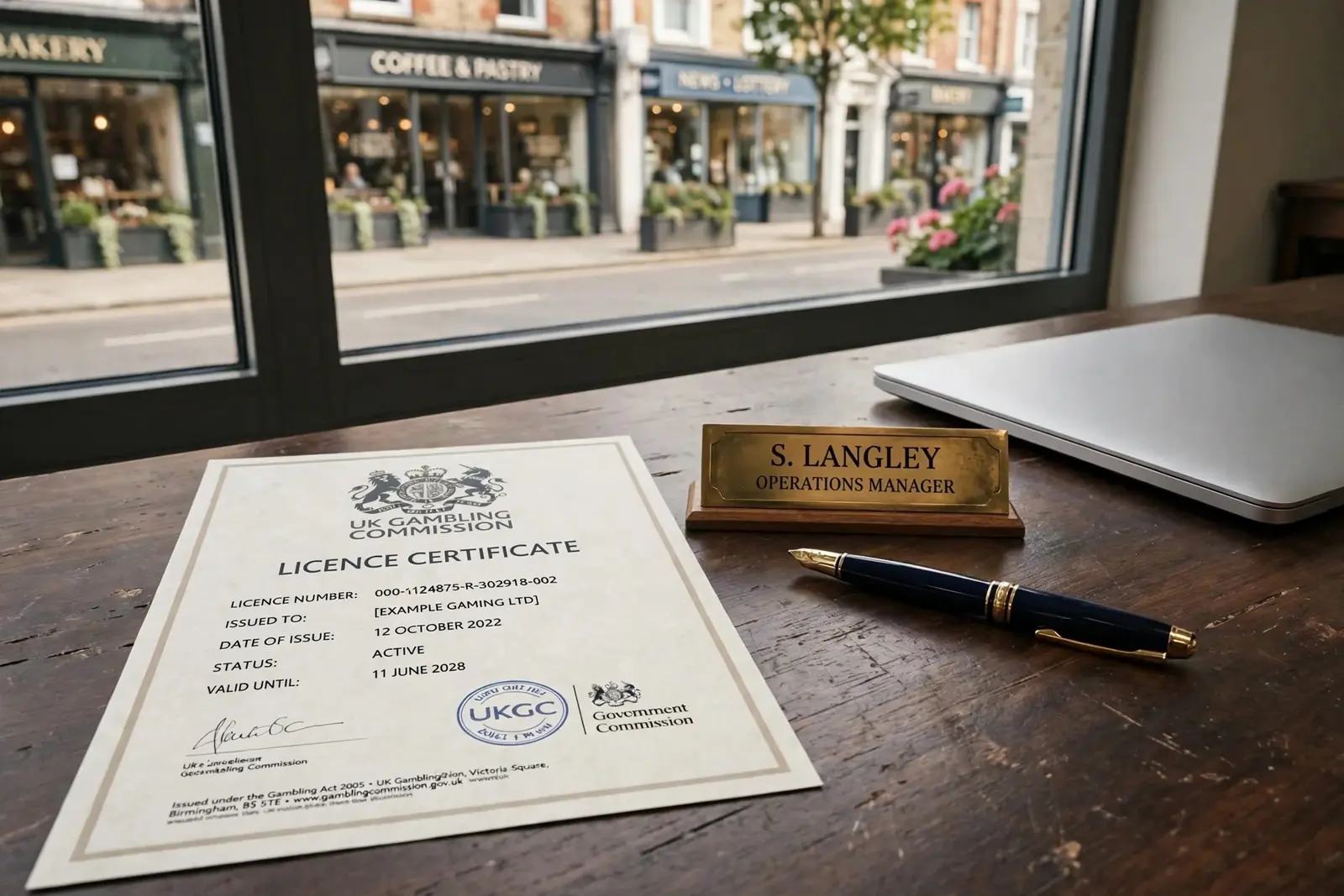
The guide explains what live-casino wording can signal and which Hi-Lo details require independent confirmation before treating them as facts.

What “Live” Means for Hi-Lo Casino Searches
When you look for a live-casino version of Hi-Lo, the word “live” expresses an important part of what you want to find: a casino experience associated with live play, rather than a general page about online casinos or the game name alone. It describes the focus of your search, not evidence that a particular Hi-Lo game exists in that format or is available from a particular site.
That distinction matters because a phrase such as “live Hi-Lo casino” combines two ideas without explaining how they relate. “Hi-Lo” identifies the subject you have in mind; “live casino” narrows the kind of casino experience you are seeking. The combined wording tells you what to investigate, but it does not establish the game’s rules, presentation, provider or availability. Those details need independent confirmation before you treat them as facts.
A page about Hi-Lo could discuss a game concept, a casino category, or a site’s broader offering. A page using live-casino language could refer to a casino section without confirming that it includes Hi-Lo. The terms appearing together in a heading or description do not, by themselves, show that the page provides the specific experience you expect. Read the surrounding information for what it actually states, and separate a clear description from a suggestive label.
“Live” is about the requested format
The live element makes your interest narrower than a general search for Hi-Lo online. You are not merely looking for information connected with Hi-Lo; you are looking for an association with live-casino play. That is a useful way to define your own requirement when assessing a page. It is not a basis for assuming the game is streamed, hosted by a person, played in real time, or built around any particular interface. None of those details follows from the word alone.
JetX Casino Game in the UK: How It Works
The distinction also helps prevent a category error. A site may describe itself as an online casino, while a page or menu may use live-casino wording. Neither label confirms that a particular game is part of that area. Likewise, finding material about Hi-Lo on a casino-related page does not establish that the material concerns a live version. Treat each claim as specific: does it identify Hi-Lo, does it identify a live-casino context, and does it connect the two explicitly?
A useful reading test is to look for a direct statement rather than infer a product from adjacent terms. If a page mentions live casino and Hi-Lo in separate places, that alone may not say that Hi-Lo is offered as a live game. If a page uses a broad casino label, that does not settle what individual games or formats it contains. The wording can express a subject or an intended category without confirming an actual offering.
“UK” adds a separate question
Adding “UK” changes the focus again. It signals that you are interested in a UK context, but it does not explain whether the page is about a UK-facing casino site, a game accessible to people in the UK, or information written for a UK audience. These are different claims. A location word in a title is not proof of where a service is available or how it is regulated.
It is therefore helpful to keep two dimensions separate. “Live” describes the kind of casino experience you are seeking; “UK” describes the geographic context you want considered. Neither term verifies the other. A page might discuss live-casino terminology without establishing UK availability, or use UK wording without confirming that it has identified a live Hi-Lo offering. Do not treat a combined label as if it had already answered both questions.
The same applies when the wording includes “online”. That term may clarify that you are looking for an internet-based casino context, but it does not resolve whether the intended Hi-Lo subject is live, what the game involves, or whether any site provides it. Each added word narrows the intended subject only to the extent that the page supports it with a clear statement.
Keep the label separate from the evidence
You can use “live” as a precise description of what you are trying to find while remaining cautious about what a page proves. Start by identifying whether the page is actually discussing Hi-Lo, rather than simply using related casino language. Then check whether it explicitly connects Hi-Lo with a live-casino setting. Finally, treat any claim about UK availability as a separate point requiring its own support.
Plinko Casino UK: Games, Terms and How to Assess
This approach does not require you to guess what a game looks like or how it works. It keeps the meaning of the terms clear while leaving unconfirmed details open. A live-focused description can help you recognise relevant material, but it is not a substitute for a direct account of the offering. Nor does a UK label alone establish that a site serves UK customers or meets the requirements that apply to online gambling in Great Britain.
In short, the live wording identifies the format you are seeking, while the UK wording identifies the market context you want addressed. Both are useful boundaries for interpreting a page; neither, on its own, confirms a particular Hi-Lo game, provider or site.
How to Read UK Live-Casino Search Results
When you look for a live Hi-Lo casino in the UK, the wording combines two separate ideas. “Live” describes the kind of casino experience you are seeking; “UK” identifies the market you have in mind. Neither part, by itself, confirms that a particular site is available to you or that it offers a Hi-Lo game.
That distinction matters because a result can match only part of your intended meaning. A page about live casinos may say nothing about Hi-Lo. A page about Hi-Lo may not concern a live-casino setting. And a page using UK language may not establish that its operator is authorised to serve people in Great Britain. Read each claim for the specific point it supports rather than treating the wording in a heading as proof of all three.
Separate the format from the location
The broader live-casino terminology describes an area of interest, but adding the UK makes the intended market more specific. You are not only looking for material about live casino experiences; you are looking for information relevant to someone seeking access from the UK.
That is a question about the intended audience and the market an offer claims to serve. It is not resolved by the physical location of equipment, a website address, or wording such as “UK players welcome”. For remote gambling offered to consumers in Great Britain, the Gambling Commission’s regulatory remit applies regardless of where the key equipment is located. A location claim on a page and the regulatory status of the business are therefore different things.
Keep that distinction in mind when reading descriptions. A page can be written for a UK audience without establishing that the service described is properly available to that audience. Conversely, a broad live-casino page may be relevant to the format but leave the UK aspect unaddressed. The label tells you what the page is claiming to cover; it does not independently verify the claim.
For remote gambling offered to consumers in Great Britain, the Gambling Commission’s regulatory remit applies regardless of where the key equipment is located.
Treat combined wording as an intent, not a confirmation
A phrase such as “live Hi-Lo casinos in the UK” expresses a fairly narrow aim: information about a Hi-Lo option presented in a live-casino context and intended for the UK market. But a search result that repeats those words has not thereby demonstrated that the option exists on the named site, that the site serves UK customers, or that the description is current.
Check what the page actually says. Does it identify a specific offering, or does it discuss live casinos generally? Does it explain which market it addresses, or does it use “UK” only in a title? Does it make a clear claim about access, or merely include the phrase in promotional text? These are separate tests; passing one does not answer the others.
The same care applies when the wording varies. “Hi-Lo casino” can refer broadly to a casino-related subject, while adding “live” narrows the intended context. Adding “UK” narrows the intended market. A different word order does not make the underlying claim more reliable. The meaning comes from the combination of ideas, while evidence has to come from the content and relevant records.
Notice what a result does not establish
A result may be useful for locating material, but its appearance is not an endorsement or a verification. A prominent position, a UK-focused heading, or a confident description cannot prove that a named operator offers Hi-Lo in a live format. No particular operator or Hi-Lo offering can be confirmed from the wording alone.
This is especially important when a page moves between general and specific language. It might introduce live casino services as a category and then imply that a particular game is included, without showing what supports that implication. Keep the claims separate: the existence of a live-casino section does not establish the availability of Hi-Lo within it, and the mention of Hi-Lo does not establish that it is presented live.
Best RTP Casino Slots UK: Returns and Volatility
For a UK-focused search, the practical reading is therefore simple: identify whether the page addresses the live context, the Hi-Lo subject, and the intended market, then look for evidence for each claim rather than inferring one from another. If a result does not support all of those points, it may still answer part of your interest, but it should not be read as confirmation of a UK live Hi-Lo casino.
Our top casino picks for the UK
- DieselwinBonus: Welcome Pack 250% up to £4000 + 200 FS · Payout speed: 1-3 business days
- SpinFormulaBonus: 550% Up To £15,000 + 550 FS · Payout speed: 1-3 business days
- x3betBonus: Welcome Pack 100% Up to £1.000 + 200 Free Spins · Payout speed: 1-3 business days
- BeOnBetBonus: 100% up to €500 + 100 FS · Payout speed: 1-3 business days
- BritsinoBonus: Welcome Package – Get your £2,200 + 2,000 FS · Payout speed: 1-3 business days
- ChanzeBonus: Slots Welcome Bonus #1 200% up to €500 · Payout speed: 1-3 business days
- SlotoSportBonus: 500% up to £ 10 200+ 777 FS · Payout speed: 1-3 business days
- WinBeastBonus: €5000 + 500 FS + €650 Freebet · Payout speed: 1-3 business days
- Revery PlayBonus: 100% up to€1,000+ 100 FS · Payout speed: 1-3 business days
Assessing “Best” Hi-Lo Casino Claims Without a Verified Shortlist
Calling an online casino the best place to play Hi-Lo is a conclusion, not a fact that can be read from the label. To support it, a ranking would need to identify the casinos being assessed, explain what evidence was used and show how that evidence produced the order. Without a substantiated shortlist, there is no sound basis for placing one named site above another or endorsing a particular casino for this game.
A polished list can still look authoritative when its method is unclear. A heading, badge or position near the top does not show that the site offers the game, that the offer is current, or that the ranking reflects a consistent assessment. Treat “best” as a claim to examine, rather than as proof that a casino has been checked and found superior.
What a ranking would need to establish
The first question is whether each listed casino is actually relevant to the claim. A casino’s general online presence does not, by itself, establish that it offers Hi-Lo. Nor does a mention of the game in search results prove that the offer is available to you. Those are separate points that would need reliable confirmation before a site could be included in a game-specific ranking.
Requirements for a substantiated ranking
To be reliable, a ranking must identify the casinos being assessed, explain the evidence used, and show how that evidence produced the final order.
The second question is what “best” means. A ranking might refer to the availability of a particular game, the quality of account protections, payment arrangements, or another defined feature. If the criteria are not stated, you cannot tell what the order represents. If the criteria change from one entry to the next, the positions cannot be compared on a consistent basis.
A third requirement is evidence that supports each claim. The name of a casino beside a confident description does not show where the information came from or whether it is up to date. The method should make clear which details were checked, when they were checked and what would cause a listing to change. Without that, a ranked list may be an advertisement or an editorial opinion presented in a form that looks like a measured result.
These points are not a request to accept a different list on trust. They describe the minimum logic needed to interpret a ranking: confirmed relevance, clear criteria and evidence applied consistently. If any part is absent, the order should not be treated as a reliable verdict on which casino is best.
Why “best” cannot be inferred from a name
A casino may be well known, have a large catalogue or present itself as suitable for UK customers. None of those facts alone establishes that it is the best choice for Hi-Lo. A general reputation does not prove a specific game offer, and a game offer would not by itself establish overall suitability.
Video Slots in the UK: Reels, Paylines and Play
The same caution applies to superlatives in promotional material. “Top,” “leading” and “recommended” can describe the publisher’s view, but they do not reveal the basis for that view. Look for a disclosed method rather than relying on the strength of the wording. If the method cannot be examined, the claim cannot be independently assessed.
There is also a difference between a casino being listed and being endorsed. Inclusion may reflect a commercial relationship, a broad directory entry or a claim made by the casino itself. Unless the source explains how inclusion was decided, it is not safe to read a listing as confirmation that the site has been tested for Hi-Lo or judged better than alternatives.
For a UK player, a “best” label must not replace checks that apply to any online casino. The UK Gambling Commission regulates remote gambling offered to consumers in Great Britain, wherever the key equipment is located. That regulatory context does not create a Hi-Lo ranking: a licence is a matter to verify separately, not evidence that one casino is better than another.
Attention: A UK Gambling Commission licence is a matter to verify separately and is not evidence that one casino is better than another for a specific game.
When a ranking gives no verifiable basis for its order, the careful conclusion is limited: it expresses a preference, but does not establish a winner. You can assess the claim by asking what was checked and how the result was reached; if those answers are absent, do not treat the ranking as a dependable recommendation.
What to Check When Comparing Online Hi-Lo Casino Options
A comparison is useful only when you are looking at the same kind of thing on each site. A casino’s general description, a game title in a menu and an offer to play a particular product are different pieces of information. Treating them as interchangeable can make two options appear comparable when the evidence does not support that conclusion.
Start by checking what each site actually identifies. Look for a specific Hi-Lo title in its own game catalogue, rather than relying on a page heading, search snippet or broad casino category. If you cannot find a title in the site itself, do not count that site as a confirmed option. A result that mentions Hi-Lo does not, by itself, establish that the site currently offers a corresponding game.
Chicken Road Game Casinos in the UK: How Play Works
Then compare like with like. If one site describes a particular product and another only uses Hi-Lo as a general label, the descriptions do not provide equal evidence. Record what each site states and where it states it. Do not fill gaps by assuming that products with similar names work alike, or that a site’s use of a term proves a particular format.
Use evidence you can inspect
For each candidate, keep the comparison tied to information available on that site. Useful checks include:
- whether the site identifies a specific Hi-Lo product;
- whether the product’s own information is accessible before you create an account;
- whether the site explains the product’s terms separately from general promotional wording;
- whether the information appears to refer to the same product throughout the site.
These checks establish what is being presented, not whether one option is better. If a detail is absent or ambiguous, mark it as unresolved rather than substituting an assumption. For instance, a promotional page that names a game but does not clearly connect its conditions to that game is not enough to compare those conditions with another site’s.
Be careful with broad labels such as “online,” “casino” or “live.” They can describe the setting or category of a page without identifying the product available within it. A site may use a label in navigation or marketing, but that alone does not tell you what is offered, how it operates or whether it matches another site’s listing. The comparison should follow the product information, not the wording of a headline.
Keep a comparison record
A short record helps separate observations from conclusions. For each site, note the exact product name shown, the page where it appears, and any linked information that explains what the site is offering. Add a separate note for anything that remains unclear. This makes it harder to turn a vague resemblance into a supposed product match.
Verify Hi-Lo Options
- Find a specific Hi-Lo title in the site’s own game catalogue
- Access the product’s information before creating an account
- Check for product terms separate from general promotional wording
- Confirm the information refers to the same product throughout the site
Do not compare a detail on one site with a different kind of detail on another. A general description is not equivalent to a product-specific explanation; a promotional statement is not a full set of terms. If the pages do not provide corresponding information, the fair result is that the point cannot be compared on that evidence.
The same discipline applies to claims that one option is “best.” That label has no fixed meaning unless the basis for comparison is stated. One person may care about whether a product is clearly identified; another may prioritise the amount of information available before signing up. Without a defined criterion and comparable evidence, a ranking is an assertion rather than a useful comparison.
This approach does not require you to decide from a list of names. It gives you a way to test whether each candidate is identifiable and whether the information shown is genuinely comparable. Where the product or its description cannot be matched across sites, keep the conclusion narrow: the available pages do not establish a like-for-like comparison.
Checking a Hi-Lo Casino Site’s UK Licence
Before depositing at a casino site that presents itself as available to players in the UK, verify its operator against the UK Gambling Commission’s public register. The Commission oversees gambling in the UK, including online casino activity. For remote gambling offered to consumers in Great Britain, its remit applies even when the equipment used to provide the service is located elsewhere.
Start with the licence information displayed on the site. Find the operator’s legal name and licence number, then look up the number on the Commission’s register. Check that the registered business matches the operator named on the site. A familiar brand name alone is not enough to establish which business holds the licence: the brand and the licensed company may have different names.
The register lets you check whether the operator has a relevant operating licence. The Commission grants operating licences to businesses and personal licences to individuals who carry out regulated roles. For a customer assessing a casino, the business’s operating licence is the central point to verify; a personal licence is not a substitute for it.
Check the licence information before making a deposit, not only after creating an account. If the number is absent, does not match the register, or points to a different business, you have not confirmed that the site is operating under the licence it claims. Do not treat a logo, a statement in promotional material, or a link that simply leads to the regulator’s homepage as proof. The operator’s details need to correspond to the public register entry.
The Commission is the regulator responsible for commercial gambling across Great Britain. That matters when a site serves customers there: the location of its servers or other key equipment does not remove remote gambling from the Commission’s oversight. A licence issued to a business in another jurisdiction is not the same as a UK Gambling Commission operating licence.
Verify UK Licence
Find operator details
Locate the operator’s legal name and licence number displayed on the casino site.
Search the register
Look up the licence number on the UK Gambling Commission’s public register.
Match the business
Confirm that the registered business matches the operator named on the site.
This check establishes the operator’s regulatory status; it does not confirm that the site offers a particular Hi-Lo game, or that any description of one is accurate. Treat claims about a specific game as separate from the licence check. A registered operator’s licence should not be read as verification of every product or statement shown on its website.
If you cannot match the site’s operator and licence number to the public register, pause before depositing. The register is the reference point for checking the business, while the licence details displayed on the site give you the information needed to make that comparison.
What to Verify Before Using a Live Hi-Lo Casino Site
Before putting money into a live-casino account, check how the operator handles age verification, financial limits and payment methods. These safeguards apply to remote gambling accounts; the live format does not remove them. A page describing a live Hi-Lo option is not, by itself, evidence that the account process meets these requirements.
An operator must verify your age before allowing you to deposit. Look for a clear verification step during registration or before the deposit function becomes available. If you are asked to provide information or documents, use the operator’s stated process and do not try to bypass it. You should not be able to fund an account before the required age check has been completed.
A new customer must also be prompted to set a financial limit before making a first deposit. Check that the prompt lets you make an informed choice rather than being easy to overlook. After setting a limit, you should be able to find and manage account-level limit controls through your account. These controls matter because they let you set a boundary on your gambling funds; a general statement about responsible gambling is not a substitute for an accessible control.
Payment restrictions are another practical check. Remote gambling operators must not accept credit-card payments for gambling. The restriction also covers credit-card funding routed through a money service business. A payment option labelled as a wallet is not automatically permitted: operators cannot accept wallet payments for gambling when that wallet allows credit-card funds to be used. If the funding route is unclear, check the operator’s payment information before attempting a deposit. Do not assume that a card-funded wallet is acceptable simply because the casino does not take the card directly.
These checks concern the account and the route by which funds enter it, not how a Hi-Lo game is played. They also do not establish that a particular site offers a live Hi-Lo game. For a live Hi-Lo casino in the UK, treat the game description and the account safeguards as separate questions: confirm what the site actually offers, then check that age verification, limit-setting and payment handling are visible before depositing. If the site’s information leaves you unable to tell whether a funding method uses credit-card funds, pause rather than treating the uncertainty as approval.
Payment Restrictions
Remote gambling operators must not accept credit-card payments for gambling, including funds routed through a money service business or card-funded wallets.
Hi-Lo Casino Game Searches: What Can Be Confirmed
The phrase “Hi-Lo casino game” points to a game-related subject, but the wording alone does not establish what a player would see or do. A name is not a ruleset: it cannot tell you what choices are available, how an outcome is determined, or what conditions apply to a particular game.
That distinction matters when you are assessing a description. A page may use “Hi-Lo” as a label, but the label does not verify a particular game, its rules or its mechanics. Treat claims about specific features as claims that need evidence, rather than as details implied by the name.
A useful description would need to identify the actual game and explain its operation in clear terms. It should state what the player can do, what determines the result and how any relevant conditions are presented. Without those details, it is not possible to tell whether two pages refer to the same game or merely use similar wording. Nor can the title establish that a game is available at a particular casino.
This is a limit on what the label can tell you, not evidence that every game using it follows one standard format. Avoid filling gaps with assumptions drawn from the ordinary meaning of “high” or “low”, or from a familiar-sounding name. Those words do not, by themselves, define a prediction, a sequence of play, a payout structure or any other mechanic.
When you encounter a Hi-Lo game description, separate what is explicitly stated from what the title suggests. If the rules and game identity are not clearly set out, you do not have enough information to describe how that particular game works. A precise account requires details tied to an identified game, not an interpretation of its name.
“Hilo” and “Hi-Lo”: Search Terms, Not Verified Game Details
“Hilo” and “Hi-Lo” are spelling variants that can lead a reader to similar-looking pages. The difference in spacing and punctuation is not evidence that the terms refer to separate games, or that they describe the same specific product. Nor does either spelling confirm that a particular casino offers a game under that name.
Treat the wording as a label to investigate, not as a description of what happens during play. A page may use “hilo” in its title and “Hi-Lo” in its text, but that variation does not establish a game’s rules, features, provider or availability. Those details require direct, reliable confirmation; they cannot be derived from the spelling.
When you encounter either form, check what the page actually identifies. Does it give a specific game title, and does the information clearly apply to that title? Is the page describing a casino site generally, or making a claim about a particular game? A label by itself answers neither question. If the page uses the terms interchangeably without identifying what they refer to, you have no sound basis for treating that as proof of a particular offering.
"Hilo" and "Hi-Lo" are alternative written forms; variations in spelling, capitalisation, or punctuation do not provide evidence of different game rules or providers.
Capitalisation and punctuation can also vary between headings, page text and site menus. That variation may affect how a term is presented, but it does not supply missing evidence. Avoid assuming that a hyphen signals a particular format or that the unhyphenated spelling names a distinct version.
The practical distinction is narrow: “hilo” and “Hi-Lo” are alternative written forms, while the details of any game or casino offering must be confirmed separately. Keeping those points apart prevents a familiar-looking label from being mistaken for verified information.
Account Controls and Complaints at a UK Casino Site
A casino account should give you practical controls over gambling, not just a record of deposits and play. At a UK-licensed online casino, check whether financial-limit settings are easy to find within your account and whether you can change them without contacting support. Remote operators must prompt new customers to set a financial limit before their first deposit and provide accessible account-level limit controls. The exact options can vary, so read what each setting covers and when a change takes effect before relying on it.
Responsible-gambling tools should also be available from the account area. Self-exclusion is a key control: it lets you restrict your own access to gambling with that operator. Check how to activate it and what information the site provides about its effect. Do not treat a limit or exclusion tool as a substitute for support if gambling is causing harm; services such as GamCare can provide help.
Complaints follow a separate route from account controls. UK-licensed casinos must provide an internal complaints process and access to an approved Alternative Dispute Resolution service. If you have a dispute, first follow the operator’s stated complaint procedure and keep copies of relevant messages and account records. The operator should explain how to take an unresolved complaint to its approved ADR service. Check the site’s complaints information so you know where to submit a complaint and how the next step is described.
High-Volatility Slots in the UK: What to Know
These safeguards are useful only if you can locate and understand them before a problem arises. Review the account settings, responsible-gambling section and complaints page, rather than assuming that a control exists because the site has an account menu. If information is unclear, ask the operator to explain the specific setting or process in writing. That gives you a record of what was said and helps distinguish a financial limit, a self-exclusion request and a complaint; they serve different purposes and should not be treated as interchangeable.
How to Approach Hi-Lo Casino Searches Without Assuming the Rules
If you want instructions for playing Hi-Lo at a casino, first separate the name of the game from an explanation of its rules. A title alone does not establish what you must do, what choices appear during play, or how a round ends. Without confirmed rules for a specific game, giving a sequence of actions would mean guessing.
That distinction matters because instructions only help when they match the game in front of you. Before acting, look for the rules supplied with that game and check that they explain its objective, available choices, and how outcomes are determined. If any of those points is unclear, do not fill the gap with assumptions based on another game or on the words “high” and “low”.
A reliable guide should describe the exact game it covers and use terms that match its displayed rules. General advice about a game with a similar name cannot confirm that the same mechanics apply. Nor does a casino listing, by itself, show how a round works.
Treat “how to play” as a request for specific guidance, not as evidence that one standard method exists. The useful next step is to consult the rules presented for the particular game before taking part. If those rules do not explain the choices and outcomes clearly, you do not yet have enough information to follow a dependable play sequence.