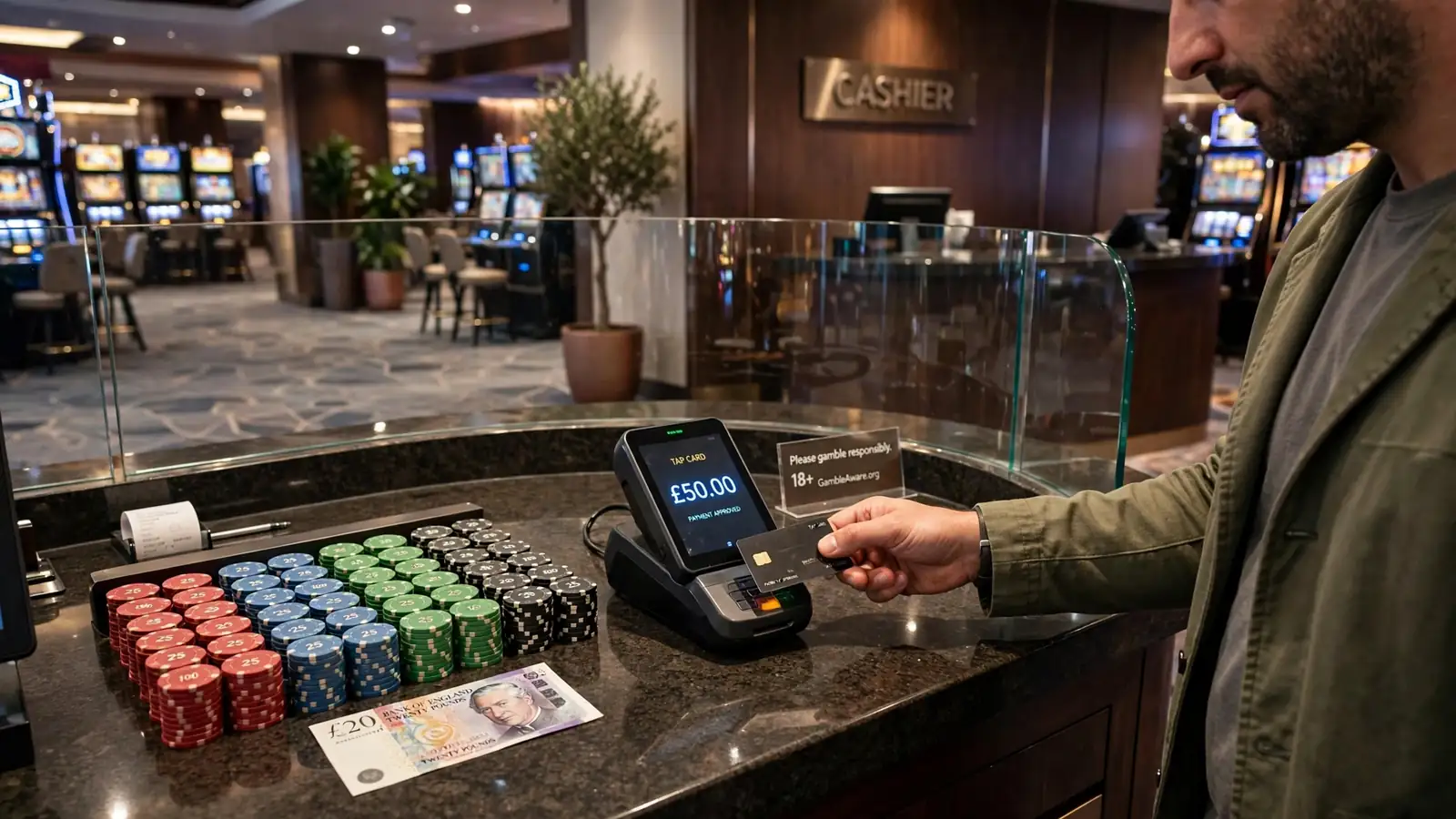
Availability, promotion eligibility and payout support can differ by operator, so assess the cashier and terms before choosing an e-wallet.
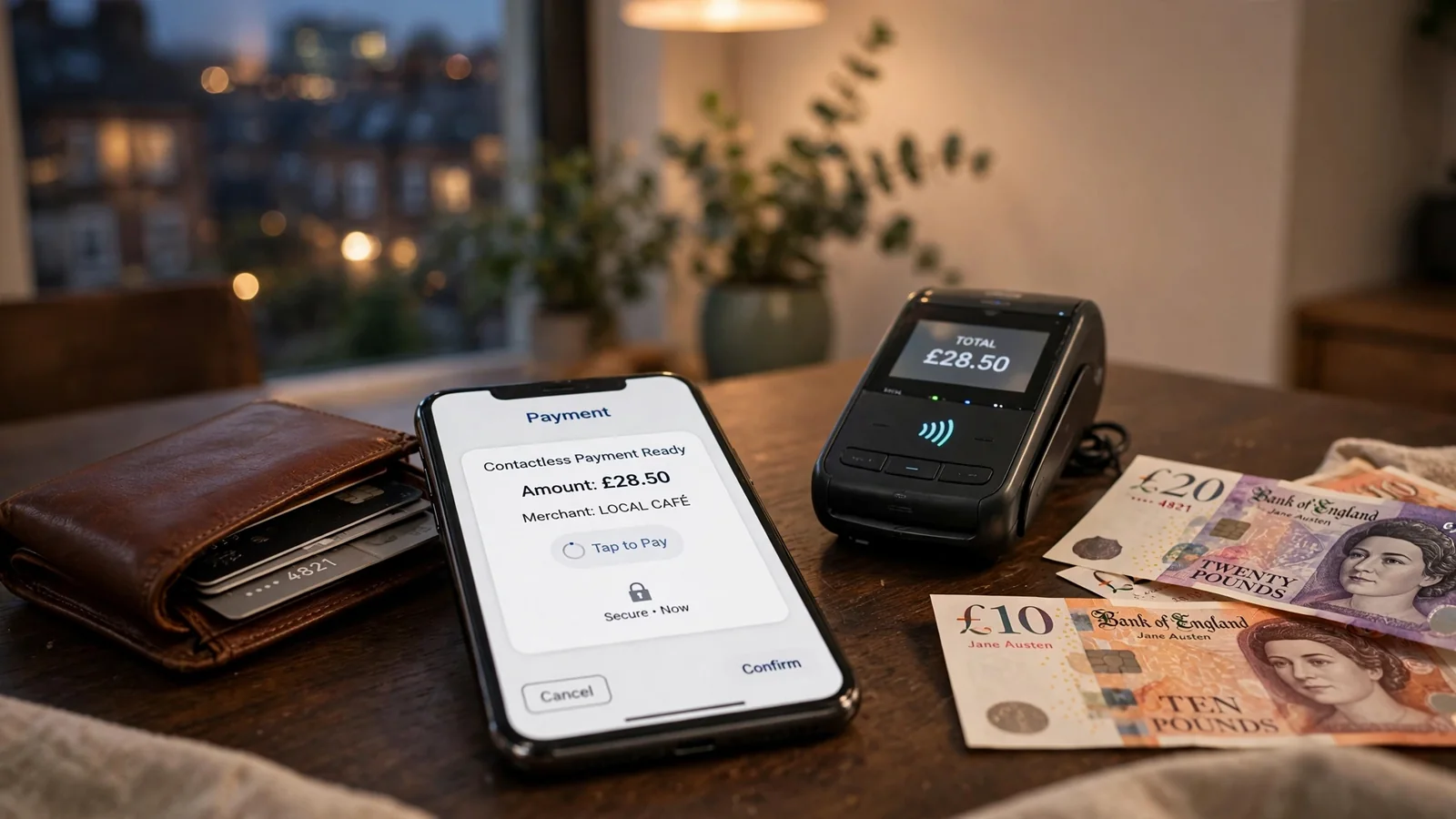
Which e-wallets appear at UK casino cashiers
The e-wallet names you may encounter at a UK casino cashier include PayPal, Skrill, Neteller, Paysafecard, Payz and Jeton. Their presence is not consistent across sites: a payment brand appearing in a general casino description does not establish that you can use it at a particular cashier. Treat the names as an overview of methods reported in the market, not as a guaranteed list for every account.
Skrill is described in a specialist casino review as one of the most common deposit methods at UK-facing casino sites in 2026. That is a market signal, not confirmation that every operator supports it or that it will be available to every customer. The cashier is the relevant place to see whether Skrill is offered for your account.
Neteller is another e-wallet reported at some sites. Skrill and Neteller are also described in a specialist review as methods that may be excluded from promotions. That condition can depend on the operator and the offer: the payment method’s name alone does not tell you whether a particular promotion applies. Check the terms shown by the casino rather than treating the reported exclusion as universal.
PayPal is often recognised as a wallet option, and a specialist review characterises it as popular for speed and convenience. The same kind of review reports that PayPal may be excluded from bonus eligibility. Because these are site- and offer-dependent conditions, neither availability nor promotion treatment should be assumed from the provider’s name.
Paysafecard differs from these account-based wallet names in one important respect: it is a prepaid voucher used for deposits only. Its appearance in a cashier therefore signals a deposit route, not a general promise that the same method can receive a withdrawal. Whether it is offered at a particular casino still varies.
Payz may appear under a different name in older material. EcoPayz changed its name to Payz in 2022, so references to EcoPayz can be historical rather than evidence of a separate current wallet. When comparing descriptions, look for the current name and confirm what the cashier actually displays.
Casinos That Accept Giropay in the UK: What to Check
Jeton has a narrower reported footprint. A specialist casino review says it remains available at a handful of UK online casinos in 2026. This does not identify every site that supports it or establish that it will be offered to every customer. It is a sign that Jeton may still appear, not a broad availability claim.
These examples show why “e-wallet” is not a single payment option. It is a category containing providers with different levels of reported availability and different stated conditions. One casino may show a wallet that another does not; a provider may also be listed in general payment information without appearing as an option for your account. The category label cannot resolve those differences.
The cashier is therefore more informative than a broad claim that a site accepts e-wallets. A description can help you recognise names such as Skrill or PayPal, but it cannot establish the current selection at every casino. Nor does one wallet’s reported popularity prove that another is unavailable: visibility in the market and availability at an individual site are separate questions.
Casinos That Accept USDC in the UK: Payment Checks
When you see a wallet name, read it as a specific provider rather than as a promise about all wallet functions or conditions. In particular, the stated deposit-only status of Paysafecard should not be confused with methods described as supporting other transaction types. Promotion eligibility also needs to be read separately from whether the method is listed.
For a general picture of casinos that accept e-wallets in the UK, the useful signal is the range of names that can appear and the fact that coverage varies. Skrill, Neteller, PayPal, Paysafecard, Payz and Jeton are not interchangeable, and no single name can stand in for the whole category. Current availability is determined site by site, so a market overview can orient you but cannot substitute for the cashier’s own method list.
Our top casino picks for the UK
- DieselwinBonus: Welcome Pack 250% up to £4000 + 200 FS · Payout speed: 1-3 business days
- SpinFormulaBonus: 550% Up To £15,000 + 550 FS · Payout speed: 1-3 business days
- x3betBonus: Welcome Pack 100% Up to £1.000 + 200 Free Spins · Payout speed: 1-3 business days
- BeOnBetBonus: 100% up to €500 + 100 FS · Payout speed: 1-3 business days
- BritsinoBonus: Welcome Package – Get your £2,200 + 2,000 FS · Payout speed: 1-3 business days
- ChanzeBonus: Slots Welcome Bonus #1 200% up to €500 · Payout speed: 1-3 business days
- SlotoSportBonus: 500% up to £ 10 200+ 777 FS · Payout speed: 1-3 business days
- WinBeastBonus: €5000 + 500 FS + €650 Freebet · Payout speed: 1-3 business days
- Revery PlayBonus: 100% up to€1,000+ 100 FS · Payout speed: 1-3 business days
How to assess an e-wallet casino site without a ranking
A casino described as accepting e-wallets is not necessarily compatible with the particular wallet you use. The label may refer to one payment service, several services, or a general category on a review page. To confirm whether a method is available to you, check the individual casino’s cashier rather than relying on the label.
Practical Site Check
- Find the operator’s payment information section
- Open the cashier to see methods actually offered
- Match the wallet name exactly with your intended service
- Confirm the method is selectable for a transaction
- Recheck the cashier status right before you transact
Start with the casino’s own payment information, then compare it with the options displayed in the cashier. A payment page can be useful for identifying what the operator says it supports, but the cashier is the practical check: it shows the methods presented for a transaction at that site. If the wallet you intend to use is not shown there, do not assume that another wallet, a similarly named service or a general e-wallet category will work instead.
This distinction matters even when a site appears to have a broad payment range. A specialist review may list Visa and Mastercard for a casino, but that description does not confirm which card products are currently available to UK customers. Check the cashier for the current options and whether your card product is eligible before treating a listed method as usable. The same principle applies to wallet services: a mention in a general description is a lead to verify, not confirmation of availability for your account.
A practical check at the individual site
Use a short sequence so that each check answers a separate question:
- Find the operator’s payment information. Look for the payment or banking section on the casino site. Note the exact wallet name rather than assuming that a broad label covers every service.
- Open the cashier. Check the methods actually offered there. If access to the cashier requires an account, use the site’s normal account process; do not treat a marketing page as a substitute for the cashier display.
- Match the name exactly. Confirm that the option shown is the wallet you intend to use. Similar categories or other payment brands are not interchangeable simply because they are digital payment methods.
- Check for a clear selection path. If the cashier displays the method but does not let you select it, availability has not been established. Look for the operator’s explanation or ask its support team to clarify before relying on that route.
- Recheck when you are ready to transact. Payment information can be revised, so a saved note or an older description should not override what the current cashier shows.
These checks help separate three different claims: a casino advertises a method, the cashier displays it, and the method can be selected for your transaction. Only the latter stages provide a useful site-specific indication. If the cashier does not make the status clear, the accurate conclusion is that availability remains unconfirmed, not that the casino accepts every e-wallet.
What a site label can and cannot tell you
A category such as “e-wallet casino” is too broad to answer the practical question on its own. It does not identify the exact service available at a particular casino, and it cannot establish whether the option appears in that casino’s current cashier. Nor does the word “accepts” explain whether the method is selectable for your account. Treat descriptions as navigation aids: they can point you towards a site to check, but they do not replace that check.
This is why a comparison based only on labels can produce a misleading result. Two casinos may both be described as accepting e-wallets, while their cashiers show different named options. Conversely, a site may mention a payment method in general information that is not displayed when you check its cashier. Rather than infer equivalence from the category, compare the exact method names shown by each operator.
DO
- Record the exact method name displayed in the cashier
- Verify if the cashier lets you select the method
- Check each casino’s cashier separately
DON’T
- Rely on broad category labels like “e-wallet”
- Assume a high ranking confirms specific wallet support
- Transfer findings from one casino to another
A ranking does not resolve this uncertainty. A site placed near the top of a list is not thereby confirmed to support the wallet you want, and a high-level list may not reflect what is currently available at each cashier. For a useful comparison, record the casino name, the exact method displayed and whether the cashier lets you select it. If any of those details is unclear, leave the option marked unconfirmed until the operator provides a definite answer.
The same approach applies whether you are considering one site or reviewing several. Check each cashier separately; do not transfer a finding from one casino to another, even when their payment descriptions use the same broad wording. Availability is a property to verify at the individual site, not something that can be safely inferred from a general label.
Follow the money from deposit to withdrawal
A deposit and a withdrawal are separate transactions, even when you use the same e-wallet for both. The deposit moves money from your payment account into the casino account. A later withdrawal starts a new process: you request a payout, the casino reviews it, and the approved amount is sent through the payment route it permits. The time taken for the first movement does not, by itself, tell you how long the second will take.
It helps to think of the casino balance as an intermediate stage, not as money already held in your e-wallet. After you deposit, the funds appear in the gambling account for play. If you later request a withdrawal, the casino must process that request before the payment provider can deliver funds to your account. A deposit confirmation therefore confirms the incoming transaction; it does not confirm that a future payout has been approved or sent.
Casinos That Accept iDEAL in the UK: What to Check
What happens after a withdrawal request
A payout request can pass through more than one stage. The casino first handles its internal approval process. It may need to review the account or complete KYC before releasing the funds. A specialist review describes internal approval as part of withdrawal processing and says a first payout can take longer when verification is still being completed. That means the time shown for a payment method, if one is provided, may not represent the entire period from clicking “withdraw” to receiving the money.
Once the casino approves a payout, the payment provider and the receiving account still have a part to play. These are distinct steps: casino approval is not the same as the provider completing delivery. If a request is still being reviewed, waiting for the provider will not resolve that stage. If the casino has approved it but the money has not arrived, the outstanding part may instead be the transfer after approval. Checking the transaction status can help you identify which stage is pending.
The exact sequence and labels vary between casino account pages, so read the status shown for your own request rather than treating every “pending” message as the same event. A request awaiting casino approval has not necessarily been sent to the payment provider. A request marked as processed may indicate that the casino has completed its part, but it does not necessarily mean the receiving account has already been credited.
Withdrawal Stages
A payout request involves both internal casino approval and the payment provider’s delivery process. A "pending" status may refer to either stage.
Why a payout may return to the original source
UK anti-money laundering rules generally require a casino to return funds to the original payment source. This is why a withdrawal may be routed back to the account or payment method used for the deposit rather than sent wherever you prefer. The control helps keep the movement of funds traceable; it is not simply a continuation of the deposit transaction.
The return route can also depend on the casino’s payment rules and on whether that source can receive payouts. If an alternative route is proposed, the casino may ask for additional verification before using it. Do not assume that a different destination will be accepted just because it belongs to you or appears in the cashier. Follow the instructions attached to the withdrawal request and check the casino’s stated process if the original route is unavailable.
This closed-loop approach explains why deposit and payout options should not be treated as interchangeable. A method visible for adding funds does not, on that fact alone, establish how a later withdrawal will be delivered. The payout route is determined when the casino processes the withdrawal under its rules and applicable controls.
When you track a transaction, separate three questions: has the casino received the deposit, has it approved the withdrawal, and has the payment provider delivered the approved funds? Those checkpoints describe different parts of the journey. Keeping them distinct makes delays easier to understand without assuming that a fast deposit guarantees an equally fast payout.
Casinos That Accept Revolut UK: How to Check
Why using one payment route can reduce transaction friction
A payment route has two parts: the casino account in your name and the payment account or service used to move funds. When those details belong to the same customer, the operator can compare them without encountering a basic ownership mismatch. That does not guarantee a transaction will pass every check, but it can avoid an extra question about who controls the money.
A consistent route is therefore simpler to explain and verify. If you deposit from an e-wallet registered to you and request a withdrawal through that same named account, the connection between the casino customer and the payment recipient is clear. By contrast, using another person’s wallet or switching between accounts with different ownership details can make that connection harder to establish.
This is the practical reason to keep payment details aligned with your casino account. The relevant issue is not just whether a payment option appears in the cashier; it is whether the account and route you use are attributable to you. Using accurate, consistent details gives the operator fewer ownership discrepancies to resolve.
Why a casino may return funds to the original source
Casinos may apply closed-loop rules: money is returned to the payment source used for the deposit. Returning funds to their origin is a common anti-fraud and anti-money-laundering control. It helps maintain a traceable link between the person who funded the account and the person receiving the return.
That means a different withdrawal route is not automatically interchangeable with the deposit route. Even if you can access another payment account, the operator may not be able to send funds there without checking who owns it and why it is being used. An alternative route may require additional verification before the operator can proceed.
Ownership Mismatch
Using a wallet that does not belong to you can cause ownership discrepancies and transaction delays. Always ensure the payment account is registered to you.
The distinction is between a route that already matches the account’s payment history and one that introduces a new ownership detail. The first is often the cleanest route: one named account used consistently for deposits and withdrawals. The second may still be possible, but it can create more work because the operator must resolve the difference rather than rely on the existing link.
Keep ownership details consistent
Before paying, check that the casino account and the payment account are both yours and that the details you enter are accurate. Avoid using a wallet belonging to a family member, partner or friend, even if they have agreed to let you use it. Their permission does not make the account yours, and it does not remove the ownership mismatch.
If you have more than one payment account, consistency means using a route whose account details correspond to your own casino profile. It does not mean that every casino must accept the same route, or that a payment method can be used for both deposits and withdrawals at every site. Those are separate questions to confirm with the operator.
If a withdrawal cannot be returned through the original source, follow the casino’s instructions rather than choosing a different destination without checking. An alternative may call for further verification, and providing the requested ownership information helps the operator assess the route. Do not assume that changing payment accounts will bypass a check: the purpose of the control is to establish where funds came from and who should receive them.
Casinos That Accept Ukash in the UK: What to Know
A consistent, clearly owned route cannot prevent every review. It does reduce the chance that a transaction is delayed by avoidable uncertainty over whose account was used or where the money should go.
Compare the full cost of an e-wallet payment
A payment can look free at the casino cashier and still carry costs elsewhere in the transaction. To compare e-wallets fairly, add up the charges that may apply at each stage: the casino’s fee, the wallet provider’s fee, any issuer or bank charge, the cost of converting currency, and network fees where relevant. A specialist payment review identifies these as possible components; which ones apply depends on the transaction and the parties handling it.
Start with the amount you intend to move and check the casino’s payment terms for charges on deposits or withdrawals. Then check the wallet provider’s own fee schedule. A zero fee at one end does not show that the whole transaction is free: a provider or bank may charge separately, or the casino’s terms may differ by payment method. Treat each charge as a separate line rather than assuming one visible fee covers the process.
Currency conversion can be less obvious than a stated charge. If one stage converts the payment, the rate used may include a spread: the difference between the exchange rate applied and a reference rate. A specialist payment review notes that this spread can cost more than a visible flat fee. The cashier may show no separate conversion charge, yet the amount credited or returned can still reflect the rate used. Compare the value received after conversion, not just the fee label.
Casino Fee
The charge applied by the operator for using a specific method.
Wallet Provider Fee
The cost charged by the e-wallet service itself.
Currency Conversion
The cost resulting from the exchange rate spread when moving between different currencies.
Network Fees
Fees that may be applied by the underlying payment network.
Network fees can also matter where a transaction uses a payment network. They may sit outside the casino’s own terms, so check whether the provider or another party applies them. Do not assume every listed cost applies to every e-wallet; the useful comparison is the set of charges relevant to the route you plan to use.
For a practical comparison, use the same transaction amount and consider the same direction of payment for each option. Record the casino charge, provider charge, issuer or bank charge, any network cost, and the conversion effect. If a charge is expressed as a rate rather than a fixed amount, calculate its effect on that transaction instead of comparing the rate with a flat fee in isolation. This avoids treating two different pricing structures as equivalent.
There is no single payment method that is cheapest in every case. A method with no visible casino fee may still incur provider costs or an exchange-rate spread; another may have a stated fee but fewer other charges. Compare the total for the actual amount and route, using the casino’s terms and the payment provider’s schedule. If either party’s charges are unclear, do not count them as zero: confirm them before authorising the payment. The result is a transaction-specific estimate, not a permanent ranking of e-wallets, because charges and applicable rates can change.
Check currency and account details before you pay
Before funding an account, check which currency the casino account uses and which currency your e-wallet or bank account will send. A specialist review of casino payment pages reports that GBP is supported, but that does not establish the currency setting for every account. Confirm the currency shown in your own account before your first transaction.
Casinos That Accept E-Checks in the UK
If the casino account and payment source use different currencies, the payment may involve a conversion. That can change the amount credited or returned, so do not assume that a UK address automatically means the account is set to pounds sterling. Check the currency displayed in the cashier and in your account settings, then confirm the amount and currency shown by the payment service before authorising a transfer.
Keep the customer details consistent across the casino account and the payment account. The account holder’s name should match; use your own e-wallet or bank account rather than another person’s. Differences in names or other basic account details can prompt checks and make a transaction harder to reconcile. This is a setup matter: matching details helps establish that the payment source belongs to the casino customer.
Review the information before confirming a payment, especially if you have changed a profile setting or opened a new payment account. Check that the casino account is yours, that the payment account is registered to you, and that the selected currency is clear. If a payment screen presents a currency you did not expect, pause and resolve the discrepancy instead of approving it on the assumption that it will be converted on favourable terms.
These checks do not determine which payment methods a casino offers. They help ensure that the chosen route is compatible with your account details and intended currency. A GBP setting can avoid an unnecessary conversion when the payment source also sends pounds, while consistent account ownership makes the transaction easier to identify as yours. Confirm both before paying, rather than trying to correct a mismatch after the transaction has started.
Summary Checklist
- Confirm the casino account currency matches your e-wallet currency to avoid conversion costs.
- Ensure the name on your casino profile matches the name on your payment account.
- Verify all details before authorising a transfer to prevent mismatches.
Deposit minimums and limits depend on the payment method
The smallest amount accepted for a deposit and the largest amount permitted are separate settings. A specialist review puts the stated starting minimums in the £10–£20 range, with the selected payment method affecting the figure. Treat that as a guide to the range described, not as a single threshold shared by every casino or every e-wallet. The cashier’s displayed minimum is the amount that applies to the method you select.
Check the minimum after choosing the payment route, before entering an amount. A site may display several methods together, but the amount accepted for one does not establish the threshold for another. If your intended deposit is below the displayed minimum, the transaction may not proceed; changing to another listed method could mean a different minimum applies. Do not assume that a figure shown on a general payments page is still current for your account.
The maximum is a different constraint. A specialist review describes limits as varying by payment method and account status, and notes that a casino may set them per transaction, per day or per month. These periods measure different things: a per-transaction cap applies to one payment, while a daily or monthly cap concerns the total accepted within that period. A deposit can therefore fit within the single-payment maximum but still exceed the remaining allowance for the relevant period.
Your account status can also affect the maximum available to you. A limit displayed before signing in, or on a general information page, may not match the figure shown in your cashier. Check the amount and the period attached to it; a bare maximum without its time basis is incomplete information. If the cashier presents separate caps, consider each one before submitting a deposit.
Casinos That Accept Tether in the UK: Payment Checks
For a practical comparison of casino sites that accept e-wallet deposits, assess the limits shown for the specific method you intend to use, rather than treating a general description as proof that every route has the same terms. Record the minimum, the transaction ceiling and any daily or monthly cap separately. This makes it easier to see whether the payment size you have in mind fits the selected method and your account’s current limits.
What “3 e-wallet casino” can mean in practice
A request for a casino with three e-wallet choices can mean that you want to compare payment routes before deciding where to play. It does not establish that any particular casino supports three wallets, or that the same three appear across UK sites. Payment menus differ, so a count alone says little about which options are available to you.
PayPal, Skrill and Neteller are examples of wallet names that may come up in this comparison, but their presence and terms are not interchangeable. A specialist review describes PayPal as popular for speed and convenience, while also noting that it may not qualify for a casino bonus. Specialist reviews also report that Skrill and Neteller are offered at some sites and may be excluded from promotions. These are reports about changing site conditions, not a guarantee that a given cashier will show those methods or apply the same bonus rules.
The practical comparison is therefore not simply “which casino has three wallets?” Consider what you need each option to do, then read the relevant payment and promotion terms. A method displayed for deposits may not necessarily be available for withdrawals, and an offer’s terms may treat payment methods differently. Counting logos without reading those conditions can leave you with a choice that does not match your intended use.
Does a casino with three e-wallets mean it is better?
Not necessarily. A count of options does not guarantee they fit your specific needs or that they all support both deposits and withdrawals.
Why can’t I use my credit card for gambling?
UK regulations prohibit licensed casinos from accepting credit card payments for gambling. Even using a wallet to route credit card funds is not permitted.
Nor does a larger number of wallet options automatically make a site more suitable. If only one of the listed methods fits your needs, the other entries add no practical value. Treat “three e-wallets” as a comparison goal, not as a quality score or a promise that a particular combination will be available. The useful outcome is to understand which supported route fits your intended payment and whether using it affects the promotion you are considering.
When an e-wallet can be used for UK gambling
An e-wallet can be used for online casino payments only when the payment route complies with the UK restriction on credit-card payments for gambling. The ban took effect on 14 April 2020 and remains in force. Routing a credit-card payment through a wallet or another money service does not make it acceptable: UK-licensed casinos cannot take credit-card funds for gambling through an intermediary.
The same boundary applies when a wallet can be funded from different sources. A wallet is not a way to convert a prohibited credit-card payment into an allowed casino deposit. Remote gambling licensees must not accept wallet payments where the wallet permits credit-card funds to be used for gambling. This is a restriction on the funding route, not simply on the name displayed in the casino cashier.
That does not mean every e-wallet is barred. The relevant distinction is whether the wallet payment can involve credit-card funds for gambling. A route funded without credit-card money may be usable where the casino accepts it and the payment meets the operator’s requirements. You should not assume that a wallet is suitable just because it appears as a payment option; its funding rules matter too.
For a UK player, the practical check is therefore about the source of the money, not only the final transfer. If a wallet is connected to a credit card, do not use that card-funded balance for gambling. Choose a permitted funding route instead, and follow the casino’s instructions. The restriction applies to credit-card payments for gambling regardless of whether the card is presented directly or its funds pass through a wallet.
Casinos That Accept POLi in the UK: How to Check
Deposit-only and deposit-and-payout options are not interchangeable
A payment method shown in a casino cashier is not automatically available for both directions of travel. “Deposit-only” means you can use it to add funds, but it is not offered as a route for receiving a withdrawal. A method that supports deposits and payouts can serve both purposes, subject to the casino’s rules.
Paysafecard is a prepaid voucher used for deposits only. Treat it as a way to fund play, not as a withdrawal destination. If you choose it, consider separately how the casino handles a payout; the voucher itself does not provide a route for receiving one.
Apple Pay is another deposit option at some UKGC-licensed casinos. Its presence in the cashier confirms that you may be able to use it to add funds, but does not establish that Apple Pay can receive withdrawals. Do not infer payout support from a deposit button or from a method’s appearance in a general list of payment options.
This distinction matters when you are comparing online casino e-wallets in the UK. A wallet or payment service may be presented alongside deposit-only tools, but the label alone does not tell you whether it supports withdrawals at that casino. Look for separate deposit and withdrawal information in the cashier. If a method is listed only for deposits, plan on a different payout route if you later withdraw.
Keep the direction of each payment clear: a deposit option sends money into your gambling account; a payout option sends money back out. The names may appear in the same payment menu, but their functions are not interchangeable. Only treat a method as suitable for both when the casino explicitly offers it for deposits and withdrawals.
Why must withdrawals return to the deposit method?
Returning funds to the original payment source is a common anti-fraud and anti-money-laundering control. Using a different route may require additional verification.
What is the fastest withdrawal method for UK casinos?
PayPal, open banking services and debit cards linked to fast payout systems are generally among the quickest options. The casino’s approval process and whether your account is verified also affect how quickly you receive the money.
Which method has the lowest fees?
There is no universally cheapest method. Compare the casino’s charges, provider or bank fees, currency-conversion spread and any network costs for the amount you plan to transfer.
Are Visa and Mastercard deposits definitely debit cards?
No—not from the brand name alone. Check the cashier to confirm which card products are eligible; credit cards cannot be used for gambling in the UK.
Is Skrill available?
Skrill is offered at some UK-facing casino sites and is a common deposit option, but availability varies. Check the casino’s cashier to see whether it is available for your account.
Why can a fast payout casino still delay my withdrawal?
The casino must approve the withdrawal, and a first payout may take longer while your identity and account are verified. An account that is not fully verified can also slow payment.