The cashier minimum determines whether a payment can be submitted; game stakes and promotion terms are separate rules.
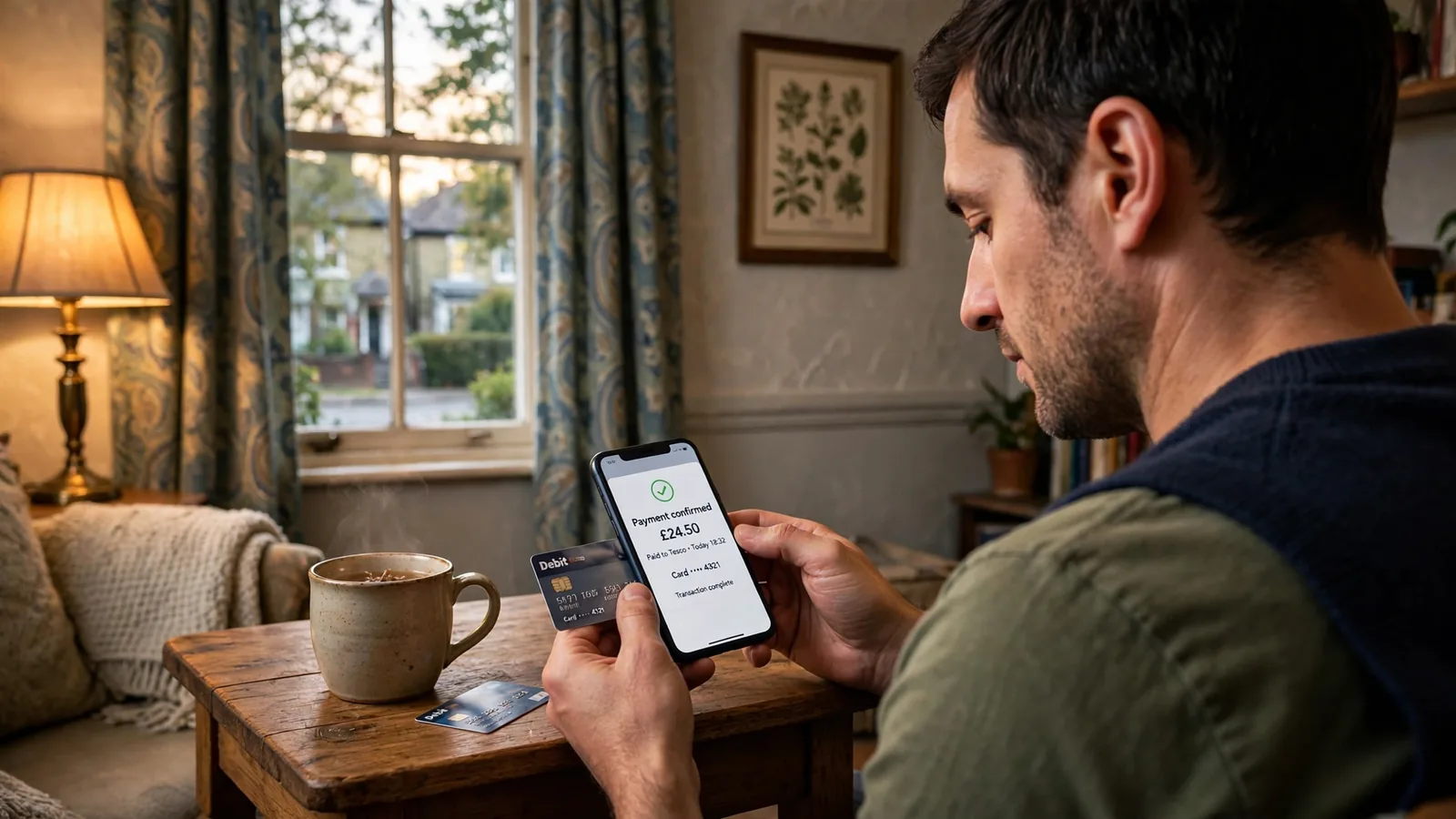
What a £10 minimum deposit means at a UK casino
A £10 minimum deposit is a cashier rule: it sets the smallest payment the casino will accept under the relevant conditions. If the cashier displays £10 as the minimum and you enter a lower amount, the deposit may be rejected or the amount field may prevent you from proceeding. The rule concerns money going into your account; it does not mean you must wager £10 on a single game, or that the casino will add a bonus when the payment arrives.
The figure is best understood as a threshold rather than a description of how the casino works in every respect. A platform may accept a deposit at that level while applying separate rules to games, promotions and withdrawals. Those rules answer different questions. The cashier minimum tells you whether a payment can be submitted; the stake shown in a game tells you how much you can bet; promotion terms determine whether a deposit qualifies for an offer. One amount does not establish the others.
Where £10 sits among deposit thresholds
UK casinos do not all set the same cashier minimum. Some accept deposits starting at £1, so £10 is not the lowest possible entry point. At the other end, a specialist review of direct-banking casinos describes £10 as a common threshold in that category, with some operators setting it at £5 and others at £20. That account is a snapshot of one category, not a rule that applies to every casino or every payment route.
This range explains why the phrase “£10 minimum deposit casino” needs a little care. It may describe an operator whose cashier will not take less than £10, or a particular deposit route with a £10 threshold, rather than every way to fund that account. The amount shown before you confirm a payment is the operative rule for that transaction. If another route is available, its threshold may differ; the operator’s cashier terms are what you need to inspect.
Non-UKGC Licensed Casinos: Rules and Risks
A £10 threshold can therefore be neither unusually low nor unusually high in isolation. It sits above the £1 entry point offered by some casinos and below the £20 threshold set by some direct-banking operators. Whether it suits you depends on the amount you intend to deposit and the operator’s stated conditions, not on the label alone.
Deposit amount is not stake size
The deposit is credited to your casino balance, from which you can choose how much to wager. It does not automatically become one bet. Many slots allow stakes in the range of 10p to 20p per spin, so a £10 balance can be used across multiple small wagers, subject to the game’s controls and any applicable rules. Your balance will then rise or fall as play takes place; the original deposit threshold does not prescribe the size of each bet.
This distinction matters if you are comparing a £10 minimum with a casino that accepts a smaller payment. The minimum tells you what amount you must put in to make a deposit, not how quickly the money must be played or how many bets it will cover. Those outcomes depend on your chosen stakes and the results of play. Treating the cashier minimum as a required stake would confuse the entry condition with what happens after funds reach the account.
Acceptance does not mean promotion eligibility
A casino can accept a payment without attaching a welcome offer to it. A specialist review notes that some promotions require a qualifying deposit of £10 even when the cashier accepts deposits of £5. In that situation, the smaller payment can still fund the account, but it does not meet that offer’s stated entry condition. Conversely, depositing £10 does not by itself prove that an offer will be applied: you may need to select it, meet other terms or fall within its eligibility rules.
Keep the two thresholds separate when reading an offer. The cashier minimum is the lowest amount the operator accepts for a transaction. The qualifying deposit is the amount specified by a particular promotion. They can match, but they need not. If you are depositing specifically to claim an offer, check its terms before paying rather than assuming that the cashier’s acceptance of your amount activates it.
Do
- Check the cashier’s minimum for your specific payment route
- Read the promotion’s qualifying deposit terms separately
- Treat the cashier minimum as a transaction threshold
Don’t
- Assume the deposit amount is the required stake size
- Assume a £10 deposit automatically activates an offer
- Treat the cashier minimum as a promise of bonus eligibility
In practical terms, a £10 minimum means you need to commit at least that amount for the deposit route and conditions displayed by the casino. It does not tell you what your individual bets must be, and it does not settle whether a promotion applies. Reading those as separate rules makes the cashier threshold easier to interpret and avoids treating one number as a promise about the rest of the account.
Our top casino picks for the UK
- DieselwinBonus: Welcome Pack 250% up to £4000 + 200 FS · Payout speed: 1-3 business days
- SpinFormulaBonus: 550% Up To £15,000 + 550 FS · Payout speed: 1-3 business days
- x3betBonus: Welcome Pack 100% Up to £1.000 + 200 Free Spins · Payout speed: 1-3 business days
- BeOnBetBonus: 100% up to €500 + 100 FS · Payout speed: 1-3 business days
- BritsinoBonus: Welcome Package – Get your £2,200 + 2,000 FS · Payout speed: 1-3 business days
- ChanzeBonus: Slots Welcome Bonus #1 200% up to €500 · Payout speed: 1-3 business days
- SlotoSportBonus: 500% up to £ 10 200+ 777 FS · Payout speed: 1-3 business days
- WinBeastBonus: €5000 + 500 FS + €650 Freebet · Payout speed: 1-3 business days
- Revery PlayBonus: 100% up to€1,000+ 100 FS · Payout speed: 1-3 business days
How online and mobile casino deposits work
The deposit process begins in the casino cashier, whether you open it on a computer or through a mobile browser or app. You choose a payment route, enter an amount and submit the transaction. The cashier checks the amount against the minimum set for that operator and payment route. If it is below the applicable threshold, the transaction cannot proceed at that amount; you need to enter an amount the cashier accepts or choose another available route.
A £10 minimum deposit is therefore a rule applied at the point of payment, not a setting on your phone or computer. The device gives you access to the cashier, but the operator determines which methods appear and what minimum applies to each. A mobile screen may arrange the options differently from a desktop screen, yet the underlying rule is still the one shown by the operator for that account and transaction.
How the cashier checks the amount
After you select a method, the cashier presents the fields and instructions needed for that payment. Enter the amount before confirming. The cashier compares it with the minimum for the selected route; where the amount does not meet that threshold, it should indicate that the transaction cannot be made as entered. The accepted amount may depend on the method, so changing payment route can change the minimum shown.
£2 Minimum Deposit Casinos in the UK: What to Know
At many UK operators, the same cashier minimum applies across the available payment methods. There are exceptions: a casino can set a higher minimum for direct banking than for a debit card or e-wallet. This is why the amount displayed beside one option should not be assumed to apply to every option in the cashier. If a £10 minimum appears for a card payment, check the direct banking option separately before choosing it.
The transaction has two distinct checks. First, the casino applies its own minimum to the amount you enter. Then the payment must be made through an accepted route and authorised by the relevant provider. Passing the cashier’s minimum check does not itself mean the payment has been authorised; conversely, a payment method being available does not mean every amount will meet its minimum.
Online and mobile screens
On a computer, the cashier may show several payment options together. On a mobile device, options and amount fields may be arranged across separate screens or menus. Read the selected method and its displayed minimum before submitting, especially if you have switched methods after entering an amount. The amount in the field is not necessarily revalidated against a different route until that route is selected.
Visa and Mastercard debit cards are accepted by almost all UK casinos and can support low minimum deposits. The specific cashier still controls which card options it offers and the minimum it applies. Do not treat availability of a card brand elsewhere as confirmation that it is enabled for the account you are using.
Prohibited Funding
Gambling deposits cannot be made with credit cards in the UK; you must use permitted routes such as debit cards or e-wallets.
The payment route also has to comply with UK gambling rules. Gambling deposits cannot be made with credit cards. Permitted funding routes include debit cards, e-wallets funded by debit and bank accounts. A wallet that allows credit-card funds to be used for gambling cannot be used to get around the restriction. Before submitting, make sure the selected route is a permitted funding source, rather than assuming that a successful payment screen makes it compliant.
Checks before the first deposit
A legal online casino serving Great Britain must hold a current operating licence from the UK Gambling Commission. The operator must verify your age before allowing a deposit, and you must be at least 18 to gamble. New customers must also be prompted to set a financial limit before their first deposit; account-level controls must remain accessible. These steps are part of the deposit process, not payment-method settings on your device.
If the cashier pauses the transaction for a required check, changing from a computer to a phone does not remove that requirement. Follow the operator’s instructions and do not try to bypass a check by choosing another payment route. The cashier’s minimum concerns the amount it will accept; identity, age and funding checks concern whether the deposit may be accepted at all.
For an online casino with a £10 minimum deposit, the practical sequence is straightforward: open the cashier, select the intended route, read the minimum displayed for it, enter an amount that meets that rule and submit only through a compliant funding method. On mobile, take the same steps even if the layout differs. If you switch from a card to direct banking, check the threshold again, because that route may have a higher minimum.
£3 Minimum Deposit Casinos in the UK: Payment Rules
What changes when you deposit £10 in 2026
A £10 deposit adds funds to your casino account. It does not set the amount you must bet, prescribe how quickly you use the balance or automatically enrol you in a promotion. Those outcomes depend on separate rules: the game sets its available stake options, while the operator’s promotion terms determine whether a deposit qualifies for an offer.
This distinction matters when a cashier minimum and a promotional threshold appear to match. The cashier minimum controls whether the payment can be submitted. A promotion may have its own qualifying-deposit condition, which can be higher than the amount needed to fund the account. A specialist review has reported offers that require a £10 qualifying deposit even where the same platform accepts deposits of £5. Treat that as a reason to read the offer’s own terms, not as a rule that applies to every casino or promotion.
Your deposit is not your stake
Once credited, the deposit becomes part of the balance available for play, subject to the account and game rules. The amount you choose to stake is a separate decision made when you place a bet. Many slot games offer stakes in the £0.10–£0.20 range per spin, so a £10 balance does not mean that each spin must cost £10. Nor does it mean that the game will accept any stake you choose: the game’s controls determine the available options.
A balance also does not tell you how long play will last. That depends on the stakes you select and the results of play. A lower stake uses less of the balance on each bet than a higher one, but it cannot guarantee a particular number of spins or a particular outcome. The deposit figure describes money added to the account, not a playing instruction or a forecast of returns.
A £10 balance can be used across multiple small wagers, as many slots allow stakes in the range of 10p to 20p per spin.
Keep the distinction clear when an offer is involved. The deposit is the payment you make; a bonus is a separate promotional credit or benefit governed by its own conditions. A deposit can be accepted without activating an offer, and an offer may require you to opt in or meet a stated qualifying condition. Check the terms attached to the specific promotion before paying if receiving it matters to your decision.
The 2026 wagering cap
From 19 January 2026, the UK Gambling Commission’s cap on bonus wagering is 10x. This limits the wagering requirement attached to bonus funds; it does not mean that a deposit must be wagered a set number of times, and it does not turn the deposit itself into bonus money. The cap applies to the bonus-wagering condition, while the promotion’s other terms still determine eligibility and how the offer works.
That makes it important to identify what amount a promotion uses as its qualifying deposit and what amount, if any, is subject to wagering. Do not assume that depositing £10 means the full deposit becomes restricted bonus funds. Equally, do not assume that a £10 payment qualifies simply because the cashier accepts it. Read the offer wording to see whether it specifies a minimum qualifying deposit, requires an opt-in, or sets other conditions.
The cap also does not remove the need to check the terms. It places a limit on bonus wagering requirements, but it does not establish that every deposit qualifies for an offer or that every promotion has identical conditions. If the promotion is not relevant to you, the £10 can still serve as a deposit to fund the account, subject to the casino’s rules. If you are depositing specifically to claim an offer, verify eligibility before making the payment rather than relying on the cashier threshold alone.
£4 Minimum Deposit Casinos in the UK: What to Check
What the amount does not decide
A £10 minimum deposit casino is describing a payment threshold, not a recommended budget or a promise about the value of play. The same deposit amount can lead to different account experiences depending on the games selected, the stakes chosen and whether a promotion is attached. The deposit alone does not determine stake size, winnings, bonus eligibility or the terms that apply to bonus funds.
Before depositing, decide what amount you are prepared to spend and check the account controls available to set a financial limit. Then treat the cashier minimum and any promotional threshold as separate checks. If the cashier accepts £10 but the offer requires a different qualifying amount, the payment and the promotion may not produce the result you expect. If the offer’s wording is unclear, do not assume that acceptance of the deposit confirms eligibility.
How to assess a £10-minimum casino without relying on a ranking
A £10 cashier minimum is a useful filter, not evidence that one casino is better than another. To decide whether the threshold suits you, look at how the operator applies it, whether the payment rules are clear, and whether the conditions attached to any promotion match what you intend to do. A ranking cannot establish those details for your account.
Start with the cashier rules. Check the minimum shown for your chosen payment route rather than assuming the same amount applies everywhere. At a given operator, the minimum is generally shared across payment methods, but some casinos set a higher threshold for direct banking than for cards or e-wallets. If the cashier displays different limits by method, use the one that applies to your planned transaction. If the rules are difficult to locate or conflict with what the cashier displays, you cannot reliably judge whether a £10 deposit will be accepted.
Assessing a Casino
Step 1: Check Cashier Rules
Verify the minimum amount displayed for your intended payment method, as thresholds may vary by route.
Step 2: Review Offer Conditions
Read the promotional terms to see if your planned deposit meets the specific qualifying amount for the bonus.
Step 3: Set Financial Limits
Establish a personal spending limit in your account settings before making the first deposit.
Next, separate the deposit threshold from the offer conditions. A casino may accept £10 without attaching a promotion, while an offer may have its own qualifying conditions. Read the offer details before opting in or depositing: check whether the amount you plan to pay qualifies and whether accepting the promotion changes the conditions on funds or winnings. A headline offer alone does not tell you whether a £10 deposit is eligible.
Treat named examples with the same care. A specialist review has reported that Zodiac, Luxury Casino and UK Casino Club set a £10 minimum for UK accounts and do not provide a sign-up bonus. That is a report about those operators, not a permanent guarantee of their current cashier rules. Confirm the minimum and any available offers on the operator’s own site before making a decision.
A practical comparison can be made without assigning an overall winner. For each casino you are considering, record the cashier minimum for your intended method, whether the threshold changes by payment route, and where the operator explains the rules. Then check the relevant promotional terms separately, if you plan to claim an offer. This makes differences visible without treating a lower deposit threshold or a larger headline promotion as proof of better value.
Also ask whether £10 fits your own spending plan. Set a financial limit before your first deposit, and do not raise it simply because a promotion appears attractive. The deposit limit tells you what the cashier will accept; your personal limit determines what you are prepared to spend. Those are separate decisions.
No minimum deposit casino UK: what £1 really means
If you are looking for a new casino, its age or recent appearance is not a substitute for clear rules. Apply the same checks to a newer operator as to an established one: confirm the cashier minimum, identify any payment-specific exception, and read the conditions that apply to an offer before acting. The word “new” does not show that a £10 deposit will qualify for a promotion or that the cashier will apply the same terms later.
Use “best” as a question about fit, not as a label to accept from a list. The right choice depends on whether the stated £10 threshold works for your payment route and whether the operator’s rules are clear enough for you to predict what will happen. If those details are unclear, a high position in a ranking does not resolve the uncertainty.
How a £10 deposit interacts with casino bonuses
A casino can accept a £10 payment without attaching a welcome offer to it. The cashier’s minimum tells you what amount the operator will process; the promotion’s qualifying-deposit rule tells you what payment, if any, activates the offer. These are separate conditions. A specialist review reports that some offers set a £10 qualifying deposit even where the cashier accepts £5, so a smaller accepted payment may fund your balance but leave the promotion inactive.
Check the offer terms before depositing. Look for the qualifying amount, whether you must opt in, and whether the promotion is available to your account. Do not assume that a deposit described as the minimum for the casino also meets the offer’s minimum. A no-deposit bonus is a separate type of promotion: the phrase does not mean that making a £10 deposit automatically activates it.
Some promotions may require a £10 qualifying deposit even if the cashier accepts a smaller payment of £5.
The payment route does not change the bonus rules at a UK-licensed casino. Direct banking deposits can qualify on the same basis as card or e-wallet deposits, and the terms should not vary just because you used one of those methods. Restrictions attach to the bonus, not to the payment method. That includes wagering requirements, eligible games and any cap on withdrawals from bonus play.
From 19 January 2026, the UK Gambling Commission’s limit means a promotion cannot require wagering of more than ten times the bonus funds. This ceiling does not make every offer identical: the casino’s terms still determine how wagering is counted, which games contribute and what happens to winnings. Read those details before opting in rather than relying on the headline value.
Bonus funds also have conditions that do not apply in the same way to your deposited cash. Under the applicable requirements, bonus funds must expire within the permitted period, and while wagering them you must not place a bet above £5 per spin. If the offer includes other restrictions, such as limits on games or withdrawals, check how they operate before accepting it.
The practical sequence is straightforward: confirm that the promotion is available, check its qualifying deposit, then make a payment that meets that condition if you want the offer. If you deposit without qualifying or opting in, the money can still be credited to your account, but the bonus need not follow. A £10 deposit is therefore neither a bonus in itself nor proof that every promotion will apply.
Online Casinos With No Sister Sites: UK Guide
What to check before using a casino not on Gamstop
A £10 cashier minimum tells you only the smallest payment the site will accept. It does not establish who regulates the operator, what protections apply or whether the site is suitable for you. The same distinction matters when you see a mobile casino advertising a £10 deposit by text: a payment option or deposit threshold is not evidence of regulatory status.
GamStop is a self-exclusion service, not a gambling licence. If you have self-excluded through GamStop, looking for a site outside the scheme is not a safe way to continue gambling. Self-exclusion is intended to help you block access; do not treat a site’s absence from the scheme as a workaround.
For customers in Great Britain, an operator offering real-money gambling must hold the relevant licence from the UK Gambling Commission, wherever the operator is based. Online gambling is legal in the UK only through licensed and regulated sites. A casino described as “not on GamStop” might have a different explanation for that status, but the phrase alone cannot tell you whether it is licensed to serve British customers. Check the operator against the Commission’s register rather than relying on the casino’s own description or a £10 minimum-deposit claim.
Before considering a deposit, check that the operator’s identity and licence details match the register. Also confirm that the payment route is permitted. UK rules prohibit credit-card gambling deposits: permitted funding routes include debit cards, e-wallets funded by debit, and bank accounts. A reference to paying by SMS does not, by itself, show how the payment is funded or whether the route is compliant. Do not proceed unless the cashier makes the funding method clear.
Legitimacy Check
- Verify the operator holds a current UK Gambling Commission licence
- Confirm you are at least 18 years old
- Ensure the payment route is not a credit card
- Check the operator against the Commission’s register
Age is a separate requirement from both licensing and the cashier threshold: UK players must be at least 18. Meeting that age requirement, or being able to make a £10 payment, does not make an unlicensed site lawful for the operator to offer to British customers. Check the regulatory position first, and do not use a non-GamStop casino to get around a self-exclusion commitment.
Which payment methods can support a £10 deposit
For a £10 deposit, the payment method matters because its rules can affect what you can pay and whether a fee reduces the amount available to play. Check the casino cashier and the payment provider’s terms before confirming the transaction; availability and conditions can vary between operators.
Visa and Mastercard debit cards are accepted by almost all UK casinos and can be used for low-value deposits. Use a debit card rather than a credit card: UK-licensed casinos cannot accept credit-card payments for gambling. The card logo alone does not confirm the cashier minimum, so check that the operator accepts a £10 payment through that card route.
Paysafecard works differently from a card. Its vouchers are sold in fixed values of £5, £10, £25, £50 and £100. A single voucher can be used to fund several smaller deposits, so buying a voucher with a value above £10 does not mean you have to deposit its full value at once. Check the cashier’s instructions for applying the voucher and confirm the amount you intend to deposit before submitting it.
A payment provider may also charge a flat transaction fee. A specialist review has reported fees of £1 to £3, but that should not be treated as a fee applying to every provider or every payment. If a fee is taken from the payment rather than charged separately, the amount credited could be less than the amount you meant to deposit. Look for a fee disclosure in the payment flow and check your provider’s terms as well.
Anjouan Casino Licence in the UK: What It Means
Before making a £10 payment, compare the cashier’s displayed minimum with the amount the payment method will actually charge. Then set a financial limit in your account before your first deposit. This keeps the decision about how much to fund separate from the choice of card or voucher.
What happens after you deposit real money
Once a £10 deposit reaches your casino account, it appears as a real-money balance. That balance is available for eligible games, but the amount you deposited does not set the size of each bet. The game’s stake controls determine what a spin costs. Many slots, for instance, accept bets from £0.10 to £0.20 per spin, so a £10 balance can be used across multiple spins; the number depends on the stake selected and the results of play.
Each wager reduces the available balance by its stake. A win may add money back to the balance, while a losing bet does not. The deposit is therefore the starting amount, not a promise that you will retain it or receive a particular return. Check the displayed balance before placing a bet, especially if you have made several wagers.
Withdrawal is a separate transaction with its own cashier rules. Depositing £10 does not mean you can withdraw £10 immediately, nor does it determine the minimum withdrawal. A specialist review has reported minimum withdrawal thresholds of £10 to £20 at many UK casinos, but the figure is not a rule for every operator and can change. Check the casino’s cashier terms for the threshold that applies to your account.
Minimum withdrawal thresholds often range from £10 to £20 at many UK casinos, which may differ from the minimum deposit amount.
If your balance is below the stated withdrawal minimum, the cashier may not let you submit a withdrawal yet. That is distinct from the deposit limit: one controls what can enter the account in a transaction, while the other controls the amount that can leave through a withdrawal request. Do not assume the two figures match.
Before your first deposit, set a financial limit and use the account controls to keep spending within it. This helps you decide in advance how much of your funds can be used for play, rather than treating the account balance as a target to spend. Once you request a withdrawal, follow the operator’s stated process and check the balance and conditions shown in your account.
Using PayPal for a £10 casino deposit
A £10 deposit is only possible through PayPal if the casino’s cashier accepts that payment method and permits a transaction of that size. Check the deposit screen while signed in: payment options and limits are set by the operator, so a general statement about PayPal does not establish what a particular casino will accept.
Look for the minimum shown beside PayPal, not just the site-wide cashier minimum. At a given UK operator, the minimum is generally shared across payment methods, but some casinos set a higher threshold for bank transfers than for cards or e-wallets. The amount displayed for the selected option is the relevant one. If it is above £10, the cashier will not process a £10 deposit through that route, even if another payment method has a lower minimum.
Check the fee before confirming. Some payment providers charge a fixed transaction fee; a specialist review has reported fees in the £1–£3 range, but that does not establish a PayPal charge at any particular casino. Read the cashier’s fee notice and the payment details shown before authorising the transfer. If a fee applies, verify whether it is added to the amount charged or deducted from the amount credited, as those produce different account balances.
Also confirm the currency and the amount PayPal asks you to approve. The casino’s stated deposit and any payment-provider charge may appear as separate parts of the transaction. Do not proceed if the confirmation screen differs from the amount you intended to deposit.
These checks establish whether a £10 PayPal transaction can be made on that account at that time. They do not establish that PayPal is offered by every UK casino, or that its minimum and fees will remain unchanged.
How to check that a £10-minimum casino is legitimate
A £10 cashier minimum tells you how much the operator will accept for a deposit; it does not establish that the casino is legitimate. Before creating an account or paying in, check that the operator holds a current licence from the UK Gambling Commission. Remote casinos serving customers in Great Britain must be licensed, and a displayed deposit threshold is not a substitute for that regulatory status.
Casino Sites and Safety: UK Options Explained
Age checks are another basic safeguard. UK players must be at least 18, and an operator must verify your age before allowing you to deposit. If a site lets you fund an account before completing the required check, do not treat its £10 minimum as evidence that the process is sound.
Check the source of funds as well. The UK ban on credit-card gambling took effect in 2020. Gambling deposits must therefore come from a debit card, a bank account or an e-wallet funded by debit, not from a credit card. A wallet that permits credit-card funds to be used for gambling is not an acceptable route.
Before the first deposit, a UK-licensed operator must prompt new customers to set a financial limit and make account-level limit controls accessible. Set a limit you can afford before proceeding; the cashier threshold does not indicate what you should spend.
These checks address different parts of the transaction: the licence concerns the operator, age verification concerns who may deposit, and the funding rules concern where the money comes from. A low threshold alone confirms none of them. If any of these safeguards is unclear, pause rather than entering payment details.
Why do online casinos accept a minimum deposit of £1?
A £1 minimum gives you a low entry point, usually through specific payment methods such as mobile billing. It is rare, and some methods may have higher minimums.
Can players claim a bonus with a small deposit?
Yes, if your deposit meets the promotion’s qualifying amount. A £1 deposit usually won’t activate a welcome offer, which commonly requires £5 to £10.
Can I take out winnings from a £1 deposit?
Yes, if your balance meets the casino’s withdrawal minimum and you satisfy its other conditions. Minimum withdrawals commonly range from £1 to £5.
Can I use a credit card at 333 Casino in Great Britain?
No. Credit card gambling is banned in the UK, so you must use an eligible alternative such as a debit card or bank account.