A practical guide to qualification, spin mechanics, game variants, free play and checking claims about bonuses and scratchcards.

How Deal or No Deal Slot Play Is Structured
A Deal or No Deal slot is not simply a sequence in which every player can move straight into the game’s central feature. Players must first qualify. That makes qualification a gate: until you meet the game’s requirement, you cannot reach the part of play in which the Banker makes offers. The exact qualification rule matters because it determines what you need to do before an offer can appear. Do not assume that a familiar television format tells you how a particular slot handles this step; the game’s own rules are the relevant guide.
Once offers are available, they should not be treated as a fixed schedule or as a reliable indication of what will happen next. A specialist review reports that Banker offers can vary greatly through the random number generator, or RNG. In practical terms, an offer in one round does not establish what the next offer will be. Nor does an earlier offer, on its own, tell you whether continuing or stopping will produce a better result. The reported variation describes how offers may differ; it is not a prediction about any individual session.
French Roulette Online Casinos in the UK: Rules
This distinction helps separate the game’s structure from a player’s interpretation of it. Qualification determines whether you can enter the relevant feature. The RNG is reported to affect the Banker’s offer. Neither point supplies a method for controlling the result. If you are reading the rules, look for the stated qualification condition and for an explanation of how offers are generated. Where a rule is not clear, avoid filling the gap with assumptions drawn from the television programme or from another Deal or No Deal title. Similar names do not establish identical rules.
The name may also lead you to expect one standard format, but the label alone does not tell you which version is being offered or how its feature works. Treat the game’s displayed rules as the description of that particular title. This is especially important when a game’s title includes additional words: those words identify a named version, but do not by themselves confirm its qualification conditions or the way offers behave.
Games: UK Online Casino Games and Slots
The UK licensing context
In Great Britain, commercial gambling is overseen by the UK Gambling Commission, the sole regulator for that activity. Its remit covers online gambling as well as other regulated forms. The Gambling Commission issues operating licences to businesses and personal licences to individuals who perform regulated roles. These are different permissions: a business licence authorises the operator’s activity, while a personal licence applies to an individual in a relevant role.
For remote gambling offered to people in Great Britain, the location of the operator’s key equipment does not remove the licensing requirement. The relevant question is whether the operator is providing remote gambling to consumers in the British market, not simply where its servers or other equipment are located. A site’s own claim is not a substitute for checking its status on the UK Gambling Commission’s public register. For a player comparing fully licenced UK slot sites, the register is the direct way to confirm whether a business holds an operating licence.
Fast Payout Online Casinos in the UK: What to Know
The legal framework is not identical across every part of the United Kingdom. The Gambling Act 2005 applies in England, Wales and Scotland; Northern Ireland is outside that Act’s jurisdiction. The UK Gambling Commission regulates commercial gambling in Great Britain, so references to its remit should not be read as saying that the same statutory arrangement applies throughout the whole UK.
A licence addresses who may legally provide gambling services in the relevant market; it does not change the game’s qualification rule or make an RNG-generated offer predictable. Those are separate questions. Check the rules for the game itself, and check the operator’s regulatory status independently. This keeps the two decisions distinct: understanding what the slot requires to reach its feature, and establishing whether the business offering it is authorised to serve consumers in Great Britain.
Our top casino picks for the UK
- DieselwinBonus: Welcome Pack 250% up to £4000 + 200 FS · Payout speed: 1-3 business days
- SpinFormulaBonus: 550% Up To £15,000 + 550 FS · Payout speed: 1-3 business days
- x3betBonus: Welcome Pack 100% Up to £1.000 + 200 Free Spins · Payout speed: 1-3 business days
- BeOnBetBonus: 100% up to €500 + 100 FS · Payout speed: 1-3 business days
- BritsinoBonus: Welcome Package – Get your £2,200 + 2,000 FS · Payout speed: 1-3 business days
- ChanzeBonus: Slots Welcome Bonus #1 200% up to €500 · Payout speed: 1-3 business days
- SlotoSportBonus: 500% up to £ 10 200+ 777 FS · Payout speed: 1-3 business days
- WinBeastBonus: €5000 + 500 FS + €650 Freebet · Payout speed: 1-3 business days
- Revery PlayBonus: 100% up to€1,000+ 100 FS · Payout speed: 1-3 business days
What Happens During an Online Slot Spin
A spin is a sequence of symbol positions being resolved and checked for winning patterns. In a Deal or No Deal online slot, the key question is not simply whether matching symbols appear anywhere on the screen. To complete a win, between two and six identical symbols must land on a payline. The payline is therefore part of the test: matching symbols that do not form a qualifying pattern on one do not meet that stated win condition.
To complete a win, matching symbols must land on a payline.
Think of the result as two linked stages. First, the spin produces a set of symbol positions. Then the game checks those positions against its paylines for a pattern that meets the rule. If the check finds a qualifying group, the symbols involved in that win disappear and new ones take their places. That replacement is called a cascade. The screen can therefore change after the initial result rather than remaining fixed for the whole spin.
This distinction matters when you watch a Deal or No Deal slot game. A visible match is not automatically a completed win: the symbols must also satisfy the payline condition. Conversely, a win can be followed by a new arrangement of symbols because the winning symbols are removed. The first arrangement and the post-cascade arrangement are separate states in the same sequence.
From symbol layout to a qualifying pattern
A payline provides a route against which symbols can be checked. The game compares the symbols occupying the relevant positions on that route. A group qualifies only when the required number of identical symbols is present there. The stated range is two to six, so the count needed depends on the pattern being assessed; the rule should not be read as meaning that every pair of matching symbols anywhere on the screen wins.
For example, imagine that the same symbol appears in several places, but those positions do not align on a payline. That visual repetition alone does not establish a win. If identical symbols do meet the required count along a payline, the game can register a winning pattern. The symbol identity, the positions used and the payline relationship all matter together.
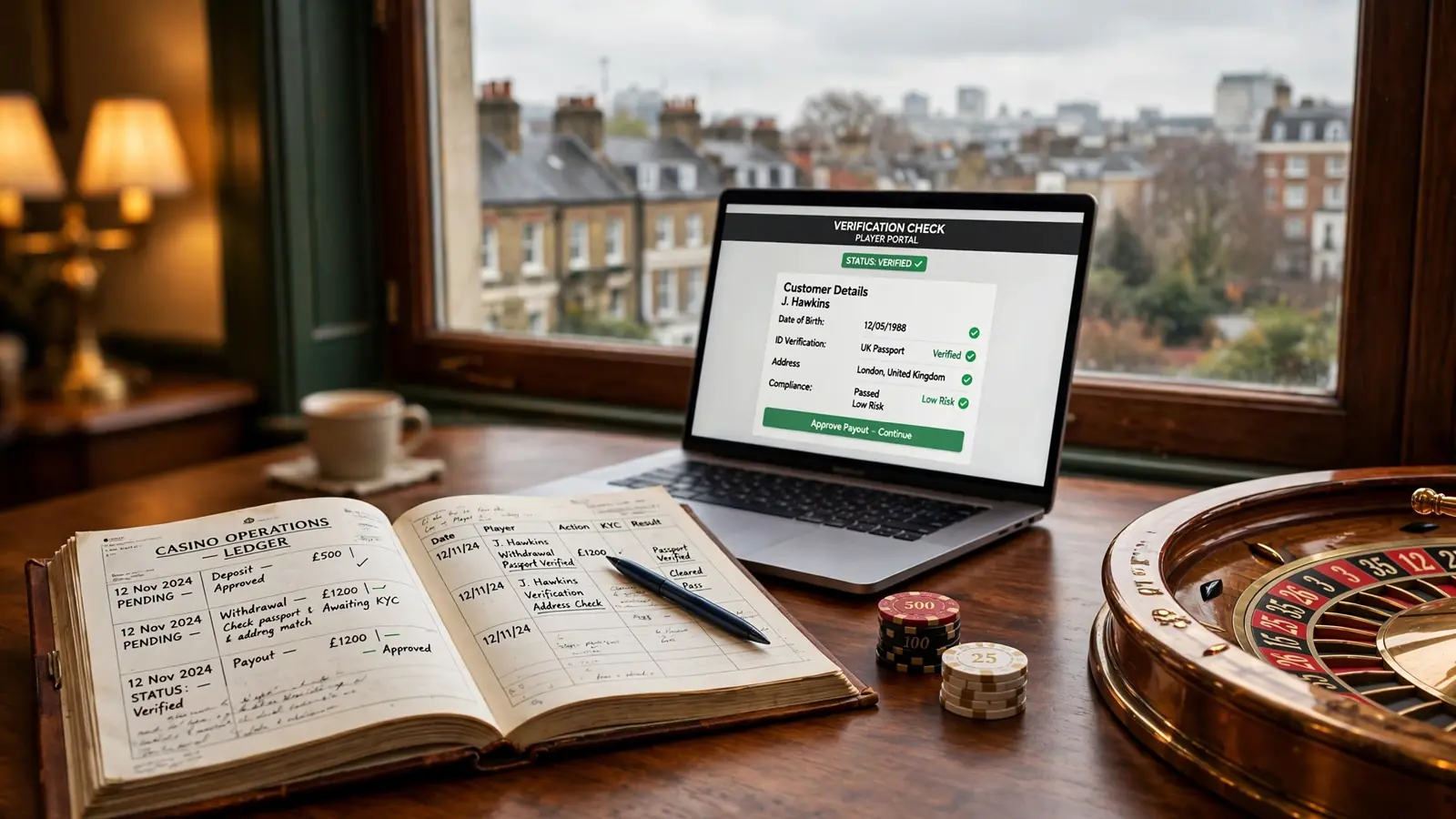
Fastest Payout Online Casinos in the UK: Claims Explained
This is why it helps to follow a spin in order instead of judging the display at a glance. Check which symbols are present, then consider whether their positions form a qualifying pattern on a payline. Only after that check can you tell whether a win has been made and whether a cascade follows. The exact appearance of a line on screen may differ between games, so the game’s displayed payline information is the reference for reading its layout.
What a cascade changes
When a winning pattern triggers a cascade, its winning symbols disappear and new symbols replace them. The result is a changed layout that can be checked again. If the new positions create another qualifying pattern, that can lead to a further winning event within the same sequence. A replacement layout that does not meet the payline rule does not, by itself, create another win.
The cascade mechanism means that one initial spin can involve more than one symbol arrangement. It does not mean that every replacement will produce a win, or that a cascade guarantees another qualifying pattern. Each new layout still has to meet the same basic test: the required number of identical symbols must land on a payline.
When watching the sequence, separate the original result from what happens after winning symbols vanish. Otherwise, it is easy to mistake a later arrangement for part of the first evaluation, or to assume that any newly visible match counts. The relevant question at each stage is whether the current positions satisfy the payline condition.
Understanding the cascade
When a winning pattern triggers a cascade, its winning symbols disappear and new symbols replace them. This can lead to a further winning event within the same sequence.
Reading the game screen
The displayed symbols show the outcome, while the payline information explains how positions are assessed. If a result is unclear, use the game’s rules or paytable to identify the qualifying patterns and the way paylines are shown. Do not infer a win solely from two similar symbols appearing next to one another: adjacency on the screen is not the same thing as meeting a payline rule.
The same principle applies when comparing Deal or No Deal video slots. A title or theme does not tell you how a particular symbol arrangement is evaluated. The reliable reading order is: identify the symbols, check their positions against a payline, confirm whether the required count is present, and then watch for any cascade caused by a win. This describes the symbol sequence without assuming that every title uses an identical layout or presentation.
If you are considering playing a Deal or No Deal online slot game, this distinction helps you interpret what the screen is showing; it does not predict what the next spin will produce. A cascade is a change to the symbol layout after a win, not evidence that a later pattern is due. Each displayed arrangement still has to be assessed on its own against the game’s stated payline condition.
How Deal or No Deal Megaways Changes the Reel Structure
Deal or No Deal Megaways uses a changing reel layout rather than a fixed number of symbol positions on every reel. As the visible layout changes, the number of possible symbol paths changes too. That is the central difference between the Megaways format and a conventional fixed-layout slot: the structure of a spin affects how many routes across the reels could form a win.
Online Keno Casinos in the UK: What to Compare
The headline figure for this version is a maximum of 117,649 ways to win. Treat that as a ceiling for the number of available ways, not as a promise that every spin has that many, or that a spin with more ways will return a larger amount. The count describes possible routes through the displayed symbols. Whether any route forms a winning combination depends on the symbols that appear and the game’s pay rules.
A “way” is a path made by matching symbols across the reel layout. More available positions can create more possible paths, but those paths are not separate guaranteed prizes. A win still depends on the required matching symbols appearing in a qualifying arrangement. The maximum figure therefore describes the format’s combinatorial capacity, not a prediction of frequency, value or outcome.
This distinction matters when reading a review or comparing descriptions of Deal or No Deal Megaways. A large maximum ways figure can sound like a measure of how often the slot pays, but it is not. It does not tell you how frequently winning symbols land, what an individual combination pays, or how the balance of a session will change. Those are separate properties and cannot be inferred from the maximum number of ways.
The changing reel structure also means that two spins need not present the same number of possible paths. The exact count depends on the layout shown for that spin. So, when you see the maximum quoted, read it as the top end of the format’s possible ways count, rather than the count for every screen. That is a useful way to interpret the headline without treating it as a forecast.
Deal or No Deal Megaways offers a maximum of 117,649 ways to win.
A demo or free-play session, where available, can help you see the layout change and understand how the ways count relates to the screen. It cannot establish what a real-money session will return. A short run of results only shows those particular outcomes; it cannot turn the maximum ways figure into a reliable measure of future results. For a review, look for a clear distinction between the reel structure, the game’s stated pay rules and any claims about performance.
Names containing “Golden Box”, “Golden Case” or “The Big Hit” should not be treated as interchangeable with Deal or No Deal Megaways simply because they share the franchise wording or mention Megaways. A title name alone does not establish that it has the same reel structure, pay rules or maximum ways count. Check the exact game title and its own displayed information before applying a figure from one version to another. The same caution applies to searches that combine “What’s in Your Box” with Megaways: shared branding does not prove that the titles are the same game.
The practical point is narrow but important: Deal or No Deal Megaways has a stated maximum of 117,649 ways to win, and the number of possible paths can vary with its reel layout. That explains what the headline figure measures. It does not, by itself, tell you how often you will win or what a session will produce.
Aviator Casino Game UK: Access, Rules and Payments
Playing the Slot on a Machine or Online
“Deal or No Deal slot machine” can refer to a physical cabinet in a venue or to a digital slot opened through a website or app. Those are different ways of accessing a game, not proof that a particular version is currently installed somewhere or offered by a specific operator. A title may be associated with a brand, but its name alone does not establish where you can play it.
With a physical machine, you use the cabinet’s controls and display at the venue where it is installed. Before playing, check the title shown on the machine and the information displayed on its screen: similar names do not necessarily mean that two versions have the same rules or features. Do not assume a cabinet is available at a particular location without confirming that directly with the venue.
Online, you access the game through a casino’s website or app on a compatible device. The screen replaces the cabinet, but the device is only the interface; it does not establish which version the operator provides. Check the displayed game title and its own information before starting. This is also where the practical distinction between a physical machine and an online slot matters: online play takes place through an account with an operator, so account and payment rules apply.
In Great Britain, remote gambling operators serving consumers must hold the relevant UK Gambling Commission licence, even if their equipment is located elsewhere. Online gambling is legal in the UK for adults aged eighteen or over when the operator holds a UK Gambling Commission licence. Operators must verify a customer’s age before allowing a deposit. Before depositing, check the operator’s licence on the Commission’s public register; a game’s branding is not evidence that the site is licensed.
UK Gambling Commission
Online gambling is legal for adults aged eighteen or over when the operator holds a UK Gambling Commission licence. Always check the Commission’s public register.
Online slots are subject to controls that do not depend on which device you use. Autoplay is not permitted in Britain, and at least two and a half seconds must pass from the start of one game cycle before the next can begin. The maximum stake in a slot game cycle is two pounds for customers aged eighteen to twenty-four, and five pounds for customers aged twenty-five or over. These limits concern online slot play, rather than a claim about a particular Deal or No Deal version.
A casino may present a game for real-money play, but do not treat that as confirmation that a free mode is available too. A free session, if offered, is a separate access option; it does not establish that the same title can be found on a physical cabinet, or that its conditions match real-money play. Check what the screen says before selecting a mode, and do not deposit on the assumption that a particular version or access option will be available.
Whether you are looking at a cabinet or a screen, identify the exact title and the setting before you play. The machine-versus-online distinction tells you how you reach the game; it does not, by itself, confirm availability, licensing, or the rules of a named edition.
What Free Play Can and Cannot Tell You
A free-play session and real-money play are different kinds of activity. In a no-stakes session, you can interact with the game without risking a gambling deposit. That can help you learn where controls are, how the screen responds and what information is displayed. It cannot show whether you would make money by playing for cash.
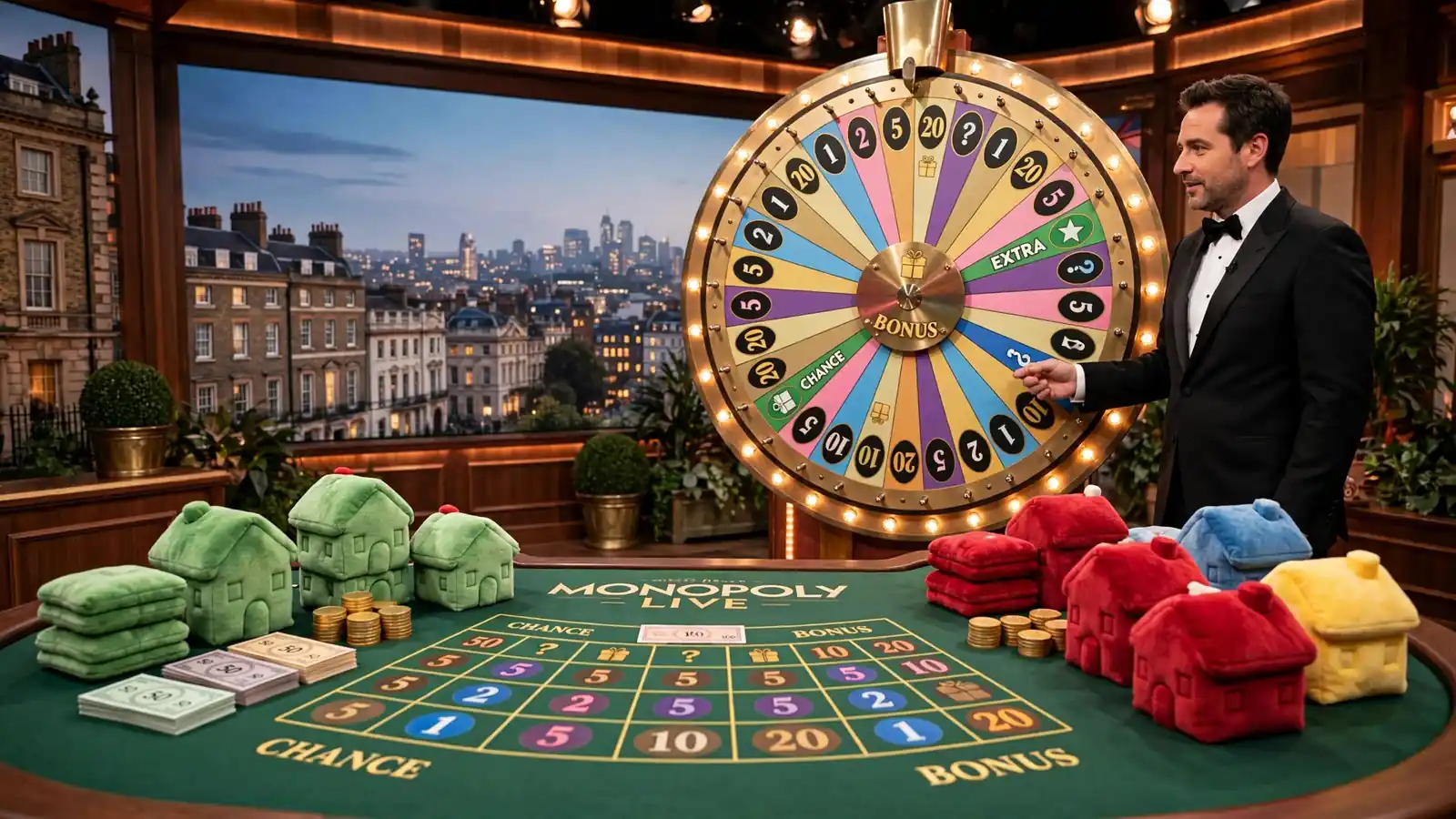
Monopoly Live Casino UK: How the Game Works
Treat the session as a way to inspect the interface, not as a test of likely results. A sequence of wins or losses in free play does not establish what will happen in a later session, and it does not provide a reliable forecast of cash outcomes. Nor does familiarity with the controls change the uncertainty involved in gambling with money.
The distinction also matters when you encounter the phrase “free spins”. It can refer to spins granted as part of an offer, rather than a no-stakes version of a game. Those are not automatically the same as unrestricted demo play: an offer may have its own rules governing who can use it and what happens to any resulting balance. Read the operator’s terms before accepting an offer, and do not assume that the word “free” means there are no conditions.
Before depositing, check that the casino is fully licenced in the UK. Remote operators serving consumers in Great Britain need a Gambling Commission licence, even if their key equipment is located elsewhere. Legal online gambling in the UK is for people aged 18 and over, and operators must verify a customer’s age before allowing a deposit.
There is also a practical limit to what a demonstration can tell you about a real-money session: it does not reproduce the financial consequence of staking your own funds. If you move from free play to gambling for money, the relevant decisions change. You are choosing how much to stake and accepting the possibility of losing it; comfort with the interface does not reduce that risk. Set a financial limit before depositing and use the account controls provided by the operator.
Free Play vs Real Money
Free play is a tool to inspect the interface, but it cannot predict the financial outcomes of a real-money session.
A useful way to assess a free session is to separate observations from assumptions. You can note whether the controls are understandable and whether the game’s displayed information is clear. You cannot infer from a short, no-stakes run that a particular result is due, that a cash session will behave favourably, or that a promotional spin has the same conditions as ordinary play.
If you cannot find a free-play option, do not treat a deposit offer or promotional spins as an equivalent substitute. Check the game and operator information directly, and make a decision about real-money play separately from any desire to try the interface.
Deal or No Deal Double Action: What to Check
The name Deal or No Deal Double Action identifies a particular slot variant, but the title alone does not tell you how it plays. “Double Action” might sound like a description of a feature, yet it is not enough to establish the rules, bonus mechanics, reel layout or relationship to another game. Treat those as questions to verify, not assumptions to build into a decision.
If you find a casino listing for the game, start with the exact title and the game information shown there. Check whether the rules or help screen identify the provider and explain the game’s features. Read the information attached to that specific version rather than transferring details from another Deal or No Deal slot. Similar branding does not prove that two titles share the same mechanics.
Live Baccarat Online Casinos in the UK: What to Check
A review can help you locate questions to investigate, but its verdict is not a substitute for the game’s own rules. Look for concrete descriptions that can be checked in the game itself. If a review claims a special feature, find out whether the rules explain when it can occur and what it changes. If those details are absent or unclear, the claim does not establish how the feature works. The same applies to claims about returns or gameplay advantages: do not infer them from the variant’s name or from another title in the series.
Availability is a separate issue from game identity. A page describing Double Action does not, by itself, show that the game is currently offered to you by a particular operator. Before making an account or depositing, confirm the listing directly and check that the casino holds a current UK Gambling Commission operating licence. Online gambling in the UK is legal for adults aged 18 and over at licensed and regulated sites; the Commission’s public register lets you check an operator’s licence.
Keep the decision tied to what you can verify: the exact game title, its own rules and the operator’s UK status. If the rules do not explain a claimed feature, or the listing does not clearly match the title, you do not have a sound basis for treating that claim as a fact. A cautious review should distinguish confirmed game information from interpretation, and should not present an unverified verdict as evidence that the slot suits you.
What’s in Your Box: RTP and Game Details
The name Deal or No Deal: What’s in Your Box? identifies a particular title, but it does not establish its return to player (RTP), provider, paytable or other game specifications. Treat a number shown on an unaffiliated page as unverified unless it can be matched to the game’s own information or rules.
RTP
RTP is a theoretical measure of the proportion of stakes a game is designed to return over extensive play, not a forecast for a single session.
RTP is a theoretical measure of the proportion of stakes a game is designed to return over extensive play. It is not a forecast of what you will receive in a session, nor does it determine the result of an individual play. Even a correctly reported RTP would not tell you whether a particular session will produce a return.
If you encounter a claimed figure, check that it refers to What’s in Your Box? specifically, rather than another Deal or No Deal game with a similar name. Also check whether the information is tied to the version offered to you. A title match alone is not enough to confirm that its settings or rules are the same.
The same care applies to feature descriptions. Do not assume that a title’s name reveals its bonus rules, symbols, paytable or available settings. Confirm those details in the game’s information panel or published rules before deciding whether to play. If the panel does not provide a detail, you cannot reliably infer it from another game in the series.
For real-money play in the UK, use fully licenced UK slot sites. The Gambling Commission’s public register lets you check whether an operator holds the relevant licence. This is a separate check from confirming an RTP: an operator’s regulatory status does not establish the return or rules of a particular title.
The useful distinction is between a confirmed game specification and an unsubstantiated listing. Without a title-specific source that supports the number, an RTP claim should not be used to compare What’s in Your Box? with other games or to predict what a session might return.
Casino Dice Games in the UK: How the Wagers Work
The Perfect Play Slot: Separate the Title from the Strategy
“Perfect Play” is a name, not evidence that a Deal or No Deal slot has a particular strategy, feature or set of rules. A title can suggest that skill determines the outcome, but the wording alone cannot tell you how the game operates or whether any decision changes what happens.
If you encounter a game described as Deal or No Deal: The Perfect Play, check the game’s own information panel and the listing on the site offering it. Confirm the full title and the provider shown there. Those details help distinguish a named product from a strategy guide, a promotional phrase or a similarly named game. Do not assume that a familiar Deal or No Deal title means the rules match another slot in the series.
The same care applies to claims about “perfect” decisions. Without confirmed rules for the specific game, advice about when to accept an offer, select a box or make another choice cannot be treated as guidance for that title. A strategy label does not establish that the player can predict an outcome or improve it.
Before playing for money, make sure the game is offered by a fully licenced UK slot site. A site’s description is not a substitute for the game’s own rules: read those rules before staking funds, especially if they explain choices or features that affect play. If the title or its operating details are unclear, do not rely on the name to fill in the gaps.
This keeps two different ideas separate: a slot called The Perfect Play, if offered under that name, and the broader notion of a perfect way to play. The first is a product label that needs to be checked against the game listing. The second is a claim that requires evidence about the actual rules and how they work. Until those details are clear, the title alone cannot support a conclusion about strategy.
Strategic Misconceptions
- A title alone does not establish specific game mechanics or rules.
- Strategy labels do not mean a player can predict an outcome.
- Always verify game rules through the in-game information panel.
Checking a Deal or No Deal No-Deposit Bonus Claim
A no-deposit bonus is a promotional offer, not a free-play version of a slot. The claim implies that an operator may provide some form of bonus without requiring an initial deposit, but that wording alone does not establish that an offer exists or explain what it provides.
There is no confirmed Deal or No Deal no-deposit offer or set of eligibility rules to rely on here. Before acting on a promotion, look for its terms on the operator’s own website. The terms should identify the offer, explain who can claim it and state any conditions that affect its use or withdrawal. If those details are absent, unclear or presented only in an advert, you cannot determine what the claim means in practice.
Check the operator as well as the promotion. In Great Britain, a business offering remote gambling to consumers must hold the relevant UK Gambling Commission licence, regardless of where its equipment is located. Online gambling is legal only through licensed and regulated sites, and operators must verify your age before allowing you to deposit. You can check an operator’s licence on the Commission’s public register before opening an account or paying in.
Do not treat a bonus label as evidence that you will receive cash, that a particular game is eligible, or that any winnings can be withdrawn. Those points depend on the published offer terms; they cannot be inferred from the name of the slot or the phrase “no deposit”. If the operator does not clearly publish the applicable rules, avoid making a payment or sharing account details on the assumption that the promotion is genuine.
This is a different question from whether a slot can be opened in a no-stakes setting. A bonus claim concerns a promotional benefit connected with an operator account; it does not, by itself, confirm access to a demo or provide a substitute for one.
Live Blackjack Online at UK Casinos: Rules and Play
Deal or No Deal Scratchcards Are a Separate Format
A Deal or No Deal scratchcard is not automatically the same product as a Deal or No Deal slot. The shared name may suggest a connection, but the format determines how you interact with the game: a scratchcard is presented as a ticket whose covered areas are revealed, while a slot is played through spins. Do not assume that a slot’s symbols, bonus rounds or other mechanics also apply to a scratchcard.
The name alone does not establish whether a particular scratchcard is available in the UK, how it works or what prizes it offers. Those details need to come from the product’s own description and rules. Check that the title matches the product you intend to play, and read its rules before paying for a ticket. If the rules do not explain how a result is determined or how a prize is claimed, do not fill in the gaps by relying on what you know about a similarly named slot.
For an online, real-money product offered to customers in Great Britain, the operator must hold the relevant UK Gambling Commission licence. The Commission regulates remote gambling offered to consumers in Great Britain, including when key equipment is located elsewhere. You can check an operator against the Commission’s public register before depositing. A familiar game name is not evidence that a site is licensed or that a specific product is offered there.
Keep the format distinction in mind when comparing information. Slot details such as reels, paylines, cascades or spin settings do not describe a scratchcard unless its own rules explicitly say so. Equally, a scratchcard’s prize information cannot be used to infer anything about a slot with the same branding.
If you are looking for a Deal or No Deal scratchcard, treat each named product as a separate game and verify its rules, availability and prize details with the licensed operator offering it. Without product-specific information, those points remain unconfirmed.